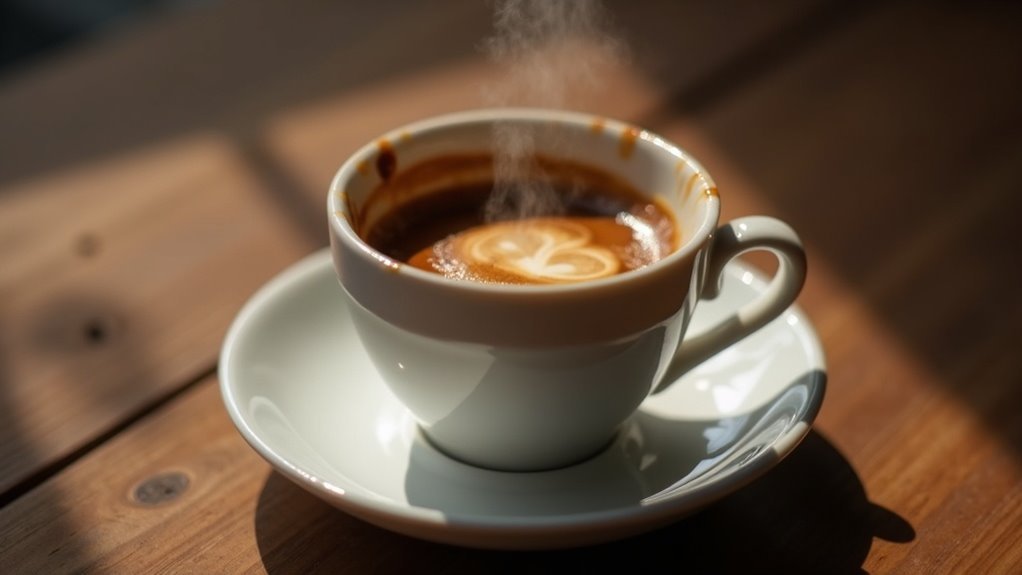
Espresso tastes burnt mainly due to over-extraction, high brewing temperatures, and the roast level of your coffee beans. When the brewing time exceeds 25-30 seconds or the temperature goes above 96°C, you risk extracting harsh flavors that can ruin your cup. Dark roasts, with their caramelized sugars, can also contribute to a charred taste. Additionally, grinding coffee too finely increases bitterness, leading to an unpleasant experience. By adjusting these factors, you can significantly enhance your espresso. There’s always more to explore in the pursuit of the perfect shot of coffee.
Key Takeaways
- Over-extraction occurs when brewing time exceeds 25-30 seconds, leading to unpleasant burnt flavors in espresso.
- Brewing temperatures above 96°C can scorch the coffee, resulting in a bitter, burnt taste.
- Using fine grind sizes can slow down extraction and enhance burnt flavors.
- Darker roasts often yield stronger burnt notes due to the caramelization and carbonization of sugars during the roasting process.
- Inconsistent grinder settings and dull burrs can lead to uneven extraction, further contributing to burnt flavors in your espresso.
Understanding the Burnt Taste in Espresso
When you enjoy your espresso and detect a burnt taste, it’s commonly due to over-extraction. This happens when the extraction time extends beyond the optimal 25-35 seconds, resulting in a dark, bitter flavor profile.
Detecting a burnt taste in your espresso often signifies over-extraction, typically caused by exceeding the ideal brewing time.
If your grind size is too fine, it can slow down the extraction process, which may amplify the burnt taste. Furthermore, brewing at temperatures exceeding 96°C can scorch the coffee and contribute to that unpleasant flavor.
Ensure you’re using the correct amount of coffee and avoid overfilling the basket, as uneven extraction can increase the likelihood of burnt flavors.
Maintaining a consistent machine temperature and performing regular cleaning are essential for achieving maximum flavor extraction from your coffee.
Causes of Burnt Espresso Flavors
Although many factors can influence the taste of your espresso, burnt flavors primarily arise from over-extraction, which occurs when the brewing time exceeds the ideal 25-30 seconds.
- A slow, dark pour that drips like molasses
- A fine grind size that resembles powdered sugar
- A bitter taste that overwhelms the palate
To avoid these burnt notes, regularly check your grind size and ensure your brewing time stays within that ideal range.
Remember, maintaining the right balance will create a harmonious espresso experience for those you serve, elevating their enjoyment with each cup.
Enjoy the rich, nuanced flavors that well-prepared coffee can bring to your day!
The Role of Brewing Temperature
Brewing temperature plays an essential role in the flavor profile of your coffee.
If you brew above 96°C, you risk over-extracting the coffee, leading to undesirable burnt flavors.
Sticking to the ideal range of 94-96°C helps you achieve a balanced cup without the bitterness that high heat can introduce.
Optimal Brewing Temperature
Understanding the ideal brewing temperature is essential for crafting the perfect cup of coffee, as it directly influences flavor extraction. The best brewing temperature ranges from 94-96°C, ensuring you avoid a burnt taste. Consistency is key; fluctuations can ruin your brew.
- Picture the rich aroma of freshly brewed coffee filling the air.
- Imagine the smooth, balanced flavors dancing on your palate.
- Visualize a perfectly extracted cup of coffee with a velvety crema on top.
Allow your brewing equipment to stabilize for about 10 minutes to prevent sour notes.
Heat Impact on Flavor
When brewing espresso, the temperature at which you extract the coffee directly influences its flavor profile. The ideal brewing temperature ranges from 94-96°C, ensuring optimal extraction and a well-balanced taste.
If the temperature is too high, you’ll encounter over-extraction, leading to undesirable burnt flavors due to the release of harsh compounds. Consistency is crucial; any fluctuations can introduce bitterness, spoiling your shot.
Additionally, be cautious of ambient conditions, such as direct sunlight on the machine, which can elevate brewing temperatures. Monitoring and adjusting the brewing temperature is vital for crafting a delightful, flavorful espresso while avoiding the negative effects of excessive heat.
Impact of Coffee Bean Roast Level
The level of roast significantly impacts the flavor profile of coffee, particularly espresso, as darker roasts can often lead to a burnt taste.
When choosing coffee beans, consider the following:
- A rich, smoky aroma that might dominate the palate.
- Bitter notes that can overshadow the subtle sweetness of the bean.
- A lingering charred aftertaste that may detract from the overall coffee experience.
Dark roast beans are subjected to longer roasting times, which results in the caramelization and carbonization of sugars.
This roasting process can obscure more delicate flavors, leaving behind a strong presence of burnt characteristics.
Over-Extraction and Its Effects
Although many factors influence the flavor of espresso, over-extraction stands out as a primary culprit behind the burnt taste that can ruin an otherwise good cup.
When water passes through coffee grounds for too long, typically exceeding 25-30 seconds, it extracts undesirable flavors, leading to a burnt profile.
If you notice a soggy coffee puck post-extraction, it’s a sign of over-extraction. Fine grind sizes and brewing temperatures above 94-96°C exacerbate this issue, breaking down coffee oils.
To serve a delightful espresso shot, monitor extraction time, adjust grind size, and maintain ideal brewing temperatures to avoid that burnt taste.
Importance of Grinder Settings
Grinder settings play a crucial role in achieving the perfect cup of coffee, as they directly influence the extraction process. A precise grind setting can prevent over-extraction, which leads to that undesirable burnt flavor.
Consider the following:
- Finer grinds increase contact time with water, heightening the risk of bitterness.
- Coarser settings reduce exposure, promoting balanced extraction without burnt notes.
- Consistent grind size is essential; dull burrs lead to uneven results, exacerbating over-extraction.
Experimenting with these settings helps you find the ideal balance for your beans, ensuring a delightful coffee experience for those you serve.
Regular Maintenance for Optimal Flavor
Maintaining your espresso equipment is just as crucial as perfecting your grind. Regular upkeep ensures that you serve the finest flavor to your guests. Clean your espresso machine frequently, backflushing the filter to prevent oil buildup. Keep an eye on the brewing temperature, ideally between 94-96°C, to avoid over-extraction. Make sure your grinder’s burrs are sharp for a consistent grind size.
| Maintenance Task | Frequency | Impact on Flavor |
|---|---|---|
| Clean espresso machine | Weekly | Prevents burnt flavors |
| Check grinder burrs | Monthly | Ensures consistent grind |
| Store coffee beans | Daily | Preserves freshness |
Tips for Achieving a Balanced Cup
Achieving a balanced cup of espresso requires attention to several key factors that influence flavor.
Focus on these essential elements to enhance your brew:
- Monitor brew time, aiming for 25-30 seconds to prevent over-extraction.
- Adjust your grinder to a coarser setting to avoid burnt tastes.
- Use filtered water, guaranteeing purity to elevate taste and reduce undesirable flavors.
Additionally, maintain a brewing temperature of 94-95°C and regularly clean your espresso machine.
By integrating these practices, you’ll secure a harmonious balance in your espresso, delighting those you serve with each sip.
Enjoy the journey of perfecting your coffee craft!