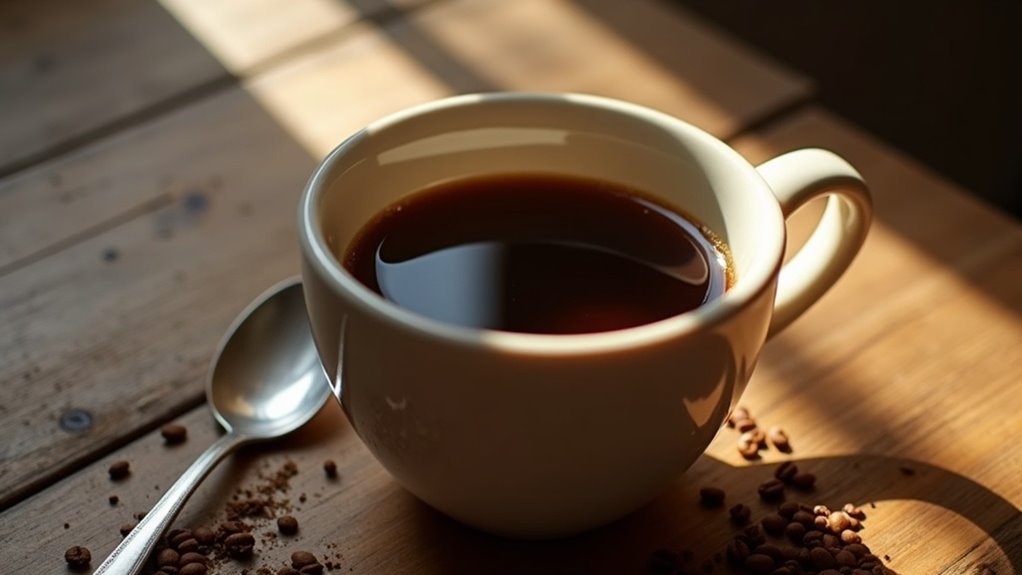
If your coffee tastes watery, it’s likely due to under-extraction. This can happen from using an improper coffee-to-water ratio, typically between 1:15 to 1:17, or by having a grind size that’s too coarse. Additionally, short brewing times and poor water quality can strip away flavor. Ensuring the right brewing parameters enhances extraction. By adjusting these factors, you can achieve a richer taste, and there’s more to uncover about optimizing your coffee experience.
Key Takeaways
- Under-extraction from insufficient coffee grounds or improper brewing time can lead to a thin, watery coffee flavor.
- A coffee-to-water ratio below 1:15 typically results in a weak brew that lacks depth and richness.
- Using a coarser grind size can cause the water to flow too quickly through the coffee, preventing optimal flavor extraction.
- Brewing temperatures below 195°F may contribute to a flat and weak taste in your cup of coffee.
- Poor water quality, including issues like hardness or excessive bicarbonates, can significantly impact the overall flavor of your coffee.
Understanding Under-Extraction
When you brew coffee, under-extraction can greatly impact the flavor profile, making your cup taste weak and watery. This occurs when coffee grounds don’t have enough contact time with water, often due to an incorrect grind size.
Coarser grounds allow water to flow too quickly, preventing ideal flavor extraction. Additionally, brewing at temperatures below 195°F can hinder the process, leading to a flat taste.
To achieve the best results, consider the coffee-to-water ratio and ensure adequate pressure in espresso machines. By addressing these factors, you can enhance the extraction and deliver a more flavorful cup of coffee to those you serve.
The Importance of Coffee-to-Water Ratio
The coffee-to-water ratio plays an essential role in determining the strength and flavor of your brew. Ideally, you should aim for a ratio between 1:15 to 1:17, meaning for every gram of coffee, you use 15 to 17 grams of water.
This balance is critical; insufficient coffee grounds can lead to weak coffee that lacks depth. For drip coffee makers, a 1:16 ratio, approximately 30 grams of coffee for 16 ounces of water, is recommended.
The Role of Grind Size in Flavor Extraction
Grind size plays a crucial role in flavor extraction, as it affects how quickly water interacts with coffee grounds during the brewing process.
Finer grinds slow down the water flow, allowing for more flavor compounds to be extracted, while coarser grinds speed up water passage, which can lead to under-extraction.
For coffee brewed in drip coffee makers, a medium grind size is recommended, striking a balance between extraction time and water flow to avoid a watery cup.
If the grind is too coarse, you may end up with a weak, diluted taste.
Using a burr grinder ensures a consistent grind size, which is essential for even extraction and enhancing the overall flavor profile of your coffee, tailored to your specific brewing method.
How Brewing Time Affects Your Coffee
Brewing time is crucial for achieving the perfect flavor extraction in your coffee.
If you brew for too short a period, you risk ending up with under-extracted, watery coffee; on the other hand, over-extraction can lead to bitterness.
Optimal Brewing Time
While experimenting with different coffee-making methods, you’ll discover that ideal brewing time plays an essential role in flavor extraction.
Here’s how it impacts your coffee experience:
- Pour-over: Aim for a brewing time of 3-4 minutes for balanced extraction, allowing the flavors to shine.
- French press: A brew time of 4-6 minutes is recommended to fully develop the rich flavors of your coffee.
- Grind size: Remember that finer grounds require shorter brew times, while coarser grounds necessitate longer steeping to achieve the best taste.
- Consistency: It’s important to monitor your brewing time closely; even a few seconds can significantly affect the flavor, leading to undesirable bitterness if not managed properly.
Effects of Over-Extraction
When coffee grounds are steeped for too long, over-extraction can occur, leading to an undesirable bitterness that masks the drink’s inherent sweetness and complexity.
The ideal brewing time varies by method; pour-over requires 3-4 minutes, while French press should steep for 4-6 minutes.
As brewing time increases, extracted flavors shift, resulting in a taste that overshadows the coffee’s natural profile.
To mitigate over-extraction, consider using a coarser grind, allowing for quicker water flow and reduced contact time.
Water Quality and Its Impact on Taste
The mineral content in your water significantly influences the flavor of your coffee.
Hard water, which contains higher levels of calcium and magnesium, can introduce undesirable flavors that detract from the richness of your brew.
On the other hand, using soft water or filtered options can enhance extraction and improve your coffee’s overall taste profile, resulting in a more enjoyable cup.
Mineral Content Importance
Mineral content in water significantly impacts the taste and quality of your coffee, influencing aspects such as flavor complexity and mouthfeel. Here are some key points to consider:
- Elevated magnesium levels can enhance the earthy tones in your brew, enriching the overall flavor profile.
- Excess bicarbonates found in soft water may introduce sour notes, especially noticeable in low-acidity roasts.
- Water that’s excessively soft lacks essential minerals, resulting in a flat, watery cup of coffee.
- Hard water can lead to scale buildup, which impairs extraction and may produce weak flavors.
To achieve the best coffee experience, it’s important to regularly test and adjust your water quality. This ensures a balanced water to coffee ratio, optimizing extraction and elevating the flavor of each cup you serve.
Soft vs. Hard Water
While both soft and hard water can significantly influence your coffee’s flavor, understanding their distinct characteristics is essential for achieving the perfect brew. Soft water, characterized by low mineral content, often results in sour or flat-tasting coffee due to a lack of magnesium. In contrast, hard water, which is rich in calcium and magnesium, enhances flavor extraction but may lead to scale buildup in your coffee machine.
| Water Type | Benefits | Drawbacks |
|---|---|---|
| Soft | Smooth taste, low acidity | Sour flavors, flat profile |
| Hard | Enhanced flavor, rich profile | Scale buildup, machine maintenance |
Choosing the right water is crucial for brewing high-quality coffee.
Equipment Maintenance for Optimal Brewing
To achieve the best flavor in your coffee, maintaining your brewing equipment is essential. Neglecting this can lead to watery coffee.
Here are key maintenance steps to keep in mind:
- Regularly clean your coffee maker to prevent the buildup of oils and residue, ensuring ideal water flow for a perfect brew.
- Descale your coffee maker every few months to remove mineral deposits that can affect water temperature and extraction quality.
- Check and replace worn or clogged filters to maintain consistent flow through the coffee grounds, resulting in a balanced cup.
- Clean your grinder frequently to avoid stale grounds mixing with fresh coffee, preserving the integrity of flavors in each brew.
These practices enhance your brewing process, delivering a richer coffee experience every time you enjoy a cup.
Troubleshooting Watery Coffee: Common Issues and Solutions
Even with well-maintained equipment, you might still find your coffee tasting watery.
Start by checking your coffee-to-water ratio; aim for 1:15 to 1:17 for ideal extraction. Insufficient brewing time can also contribute to this issue, so make sure your brew lasts between 3 to 6 minutes, depending on your brewing method.
Check your coffee-to-water ratio (1:15 to 1:17) and brew for 3 to 6 minutes for optimal flavor extraction.
Additionally, evaluate your grind size; if it’s too coarse, water flows too quickly, leading to under-extraction.
Finally, maintain brewing temperatures between 195°F and 205°F to guarantee effective flavor extraction.
Addressing these factors will greatly improve the overall quality of your coffee, enhancing the experience for you and anyone you serve.