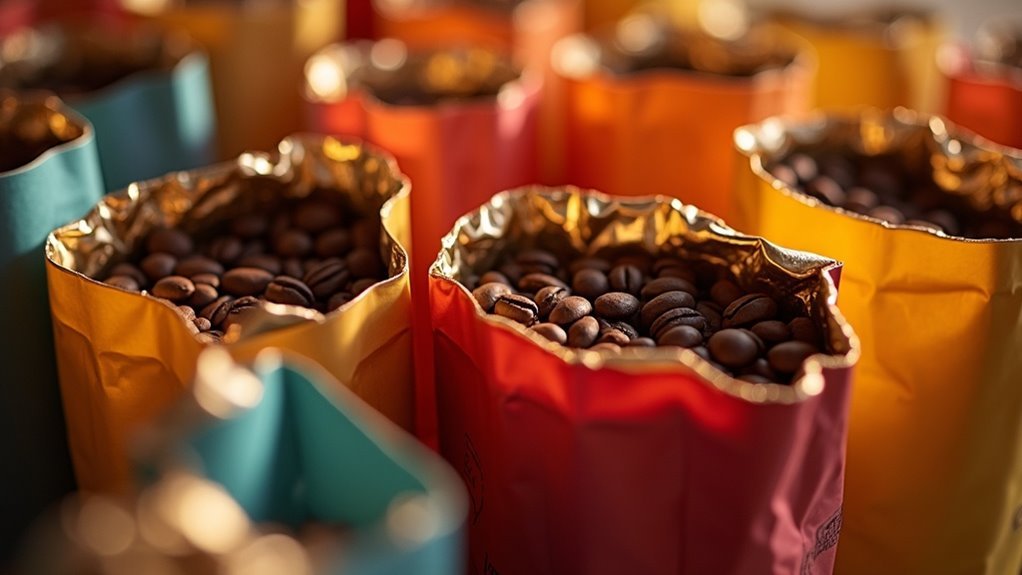
Some coffee bags use foil lining because it effectively blocks oxygen and moisture, which can quickly degrade coffee’s quality and flavor. Foil acts as a barrier, preserving aromatic compounds and preventing stale flavors. Additionally, the multi-layered construction, including a degassing valve, allows carbon dioxide to escape without compromising freshness. This protective packaging ultimately extends the shelf life of your coffee. To understand the environmental implications of such packaging, you might want to explore further.
Key Takeaways
- Foil lining serves as an effective barrier against oxygen and moisture, ensuring that your coffee remains fresh for longer.
- It helps prevent rapid oxidation, thereby preserving the aromatic compounds and flavor integrity that make coffee enjoyable.
- The inclusion of a degassing valve enables carbon dioxide to escape without compromising the integrity of the packaging, ensuring optimal freshness.
- Foil also protects coffee beans from harmful UV light exposure and lowers the risk of mold growth, keeping your coffee safe and delicious.
- The multi-layered construction, which includes foil, significantly extends the shelf life of coffee products, allowing you to savor each cup to the fullest.
The Importance of Foil Lining for Coffee Freshness
When you consider how quickly coffee can lose its freshness, the role of foil lining in coffee bags becomes essential.
Foil-lined coffee bags act as a barrier against oxygen and moisture, which are primary culprits in the degradation of flavor. The aluminum foil helps prevent rapid oxidation, preserving the aromatic compounds that define high-quality coffee.
Foil-lined coffee bags protect against oxygen and moisture, preserving the rich flavors and aromas of high-quality coffee.
Additionally, these bags often feature degassing valves, allowing carbon dioxide to escape without compromising the packaging integrity. This multi-layered construction greatly extends the shelf life of coffee, ensuring that you deliver a superior consumer experience while maintaining the coffee’s original attributes.
Quality packaging truly matters for preserving coffee freshness.
How Foil Protects Against Environmental Factors
Foil lining in coffee bags serves as a critical defense against various environmental factors that threaten the quality of your favorite brew.
This robust barrier effectively blocks oxygen, preventing oxidation that can lead to stale flavors in your coffee. It also shields the beans from moisture, which can promote mold growth and degrade taste.
Furthermore, the foil protects aromatic compounds from UV light exposure, preserving the rich flavor profile that coffee lovers cherish. With its multi-layered construction, foil enhances freshness by minimizing environmental impacts.
Additionally, the degassing valve allows carbon dioxide to escape, maintaining packaging integrity without compromising flavor.
The Anatomy of a Foil Lined Coffee Bag
When you examine a foil lined coffee bag, you’ll notice its multi-layered construction is essential to preserving the rich flavors and freshness of your favorite coffee.
The aluminum foil acts as a primary barrier, while inner food-grade plastics and outer kraft paper enhance protection and aesthetic appeal, making your coffee experience even more enjoyable.
However, understanding the recycling challenges these materials pose and exploring potential solutions is vital for promoting sustainable coffee packaging practices.
Multi-layered Barrier Construction
The construction of foil lined coffee bags is essential for preserving the quality of coffee beans. This design utilizes a carefully engineered multi-layered barrier that protects the beans from harmful environmental factors.
At the core of this barrier is aluminum foil, which acts as a shield against oxygen, moisture, and light—elements that can diminish freshness. The inner layers are typically made from food-grade durable plastic films, ensuring the beans remain safe and intact, while the outer layers feature kraft paper that adds both strength and visual appeal.
Protective Functions of Foil
While many factors contribute to the effectiveness of foil lined coffee bags, the protective functions of the aluminum foil layer are paramount for preserving coffee freshness.
This layer effectively shields your coffee from oxygen, moisture, and light, all of which can compromise its quality. By preventing oxidation and moisture-related mold growth, it ensures that the aromatic compounds remain intact, thereby preserving the coffee’s rich flavor and enticing aroma.
Additionally, many foil lined bags come equipped with degassing valves, which allow carbon dioxide from freshly roasted beans to escape without damaging the packaging.
This multi-layered design not only maintains the high quality of the coffee but also enhances its visual appeal, making it a preferred choice among coffee enthusiasts.
Recycling Challenges and Solutions
While foil lined coffee bags are crucial for keeping your coffee fresh, their intricate material composition poses significant recycling hurdles. The combination of materials, particularly aluminum foil, makes it difficult to separate during recycling processes, resulting in many used coffee bags ending up in landfills.
Unfortunately, most recycling programs don’t accept these bags due to their bonded layers. Although some specialized recycling initiatives are available in select locations, they aren’t widespread, which limits environmentally friendly options for coffee packaging.
To tackle these recycling issues, consider looking into packaging solutions that emphasize a single-material design or utilize commercial composting environments. This approach can enhance the sustainability of your coffee enjoyment while minimizing waste.
The Environmental Impact of Foil Packaging
When you consider the environmental impact of foil packaging in the coffee industry, it’s essential to recognize that aluminum is a finite resource, raising concerns about its long-term availability for packaging coffee products.
Additionally, the recycling challenges associated with foil-lined coffee bags complicate proper disposal, as many recycling facilities don’t accept mixed materials.
Understanding these issues highlights the need for innovative packaging solutions in the coffee sector to mitigate waste and conserve resources while maintaining product freshness.
Resource Limitations of Aluminum
As the demand for convenient coffee packaging grows, the environmental impact of aluminum foil lining in coffee bags becomes increasingly concerning.
Aluminum is a finite resource, and its mining contributes to environmental degradation. While aluminum boasts a high recycling rate, many foil-lined coffee bags end up in landfills due to improper disposal.
The mixed-material construction of these bags complicates recycling, limiting their sustainability. Shifting to flexible packaging could reduce over 20 million tons of materials in the EU, underscoring the need for sustainable alternatives in the coffee industry.
Recycling Challenges and Solutions
While many coffee lovers appreciate the convenience of foil-lined coffee bags, the recycling challenges they present are significant. Their mixed material composition complicates separation, leaving most recycling facilities unable to process them effectively.
Consequently, valuable aluminum resources are wasted, and improper disposal can lead to increased methane emissions from decomposing materials in landfills. Many consumers are unaware of how to dispose of these bags properly, which exacerbates the issue.
Transitioning to environmentally sustainable options like PLA or kraft paper can enhance compostability and recyclability, providing solutions that benefit both coffee enthusiasts and the planet.
Opting for recyclable packaging is crucial for reducing the environmental impact associated with coffee consumption.
Challenges in Recycling Foil Lined Bags
How can we tackle the challenges posed by recycling foil lined coffee bags?
These bags’ composite nature complicates recycling, as many local programs don’t accept them, leading to increased landfill waste.
Consumer unawareness plays a significant role in improper disposal, with many unaware of the recycling challenges associated with foil lined coffee bags.
Specialized recycling facilities that can effectively process aluminum foil and other materials are limited in availability, further complicating the issue.
Additionally, the thinner aluminum can develop tears, compromising the freshness of the coffee and making recycling efforts even more difficult.
Raising awareness and advocating for better recycling infrastructure is essential in addressing these issues related to coffee packaging.
Sustainable Alternatives to Foil Lining
What sustainable alternatives can effectively replace foil lining in coffee bags?
Polylactic acid (PLA) is a standout option, derived from renewable resources like corn and sugarcane, and it decomposes within 90 days in commercial composting.
Kraft paper bags are another eco-friendly choice, offering biodegradability and easier recycling while maintaining the freshness of your coffee.
Additionally, flat bottom ziplock bags made from recyclable materials provide convenience while supporting recycling efforts.
Biodegradable bags made from naturally breaking down materials further enhance sustainability, ensuring your coffee stays protected without harming the environment.
Shifting to mono-material packaging simplifies recycling processes, potentially increasing recycling rates and minimizing landfill waste associated with mixed-materials packaging.
Embracing these alternatives not only preserves the quality of your coffee but also benefits our planet.
Best Practices for Disposal of Used Coffee Bags
Although many coffee lovers enjoy their brews, the disposal of used coffee bags often poses a challenge due to their mixed materials. Most recycling facilities are unable to accept foil-lined bags, complicating recycling efforts.
Always verify your coffee packaging is completely empty to avoid contamination. Check your local recycling guidelines, as acceptance varies by region.
If recycling isn’t an option, consider repurposing used bags for storage or crafts related to your coffee experience.
To promote sustainability in your coffee habits, explore biodegradable materials or recyclable kraft paper bags for your coffee needs, as packaging must be sustainable to minimize environmental impact.
Choosing the Right Packaging for Sustainability
As you consider the packaging for your coffee, prioritizing sustainability can significantly reduce your environmental impact. Selecting the right materials is crucial; here are some options to think about:
- Use kraft paper or PLA liners that offer biodegradable properties, helping to minimize waste.
- Opt for packaging that maintains freshness while ensuring recyclability, so your coffee stays delicious without harming the planet.
- Steer clear of multi-layered foil-lined bags, as they pose challenges in the recycling process.
- Include clear disposal instructions to promote responsible waste management among your customers.
- Collaborate with suppliers committed to sustainable packaging solutions, reinforcing your dedication to eco-friendly practices.