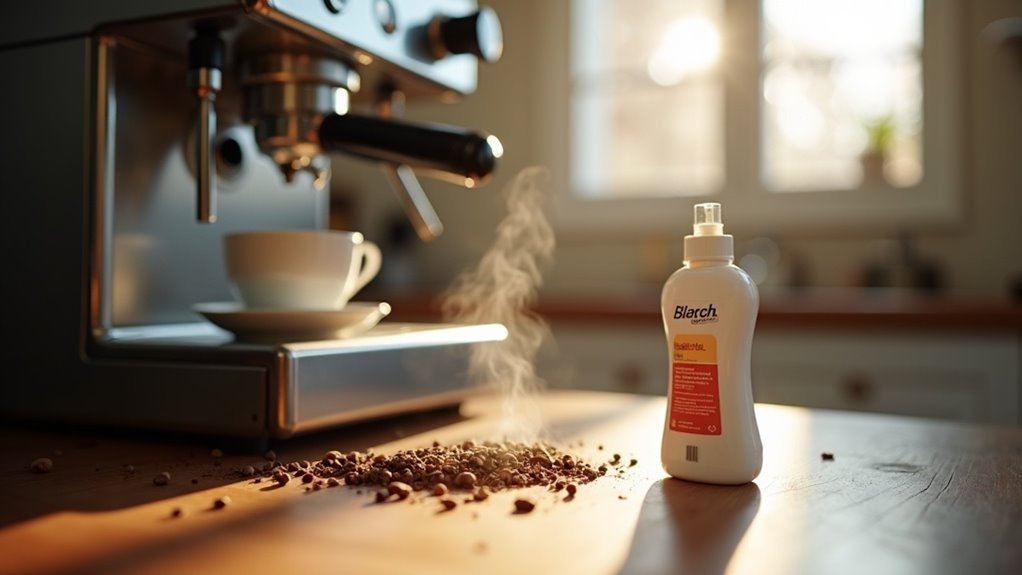
You should avoid using bleach on coffee equipment due to severe health risks and its negative impact on flavor. Bleach can leave toxic residues that may lead to gastrointestinal issues and respiratory problems. Furthermore, it alters the taste of your coffee, making it bitter and unpleasant. In addition, bleach can damage essential components of your coffee maker, resulting in costly repairs. Instead, consider safer cleaning alternatives. There are effective methods for maintaining your coffee maker that not only keep it clean but also enhance the quality of your brews, which you’ll discover next.
Key Takeaways
- Using bleach on coffee equipment can leave toxic residues that contaminate your brew, potentially causing gastrointestinal irritation and off-putting flavors.
- The harsh chemicals found in bleach can damage the components of your coffee maker, leading to leaks and costly repairs.
- Inhaling bleach fumes can pose serious health risks, including respiratory issues and chemical burns.
- Bleach reacts negatively with coffee oils, resulting in bitter brews that detract from the rich taste and aroma you love.
- Opt for safer alternatives like vinegar and baking soda, which can effectively clean your coffee makers without compromising your health or the quality of your coffee.
The Risks of Bleach Exposure
While bleach may seem like an effective cleaning solution for coffee equipment, its risks far outweigh any potential benefits.
Exposure to bleach can lead to chemical burns and can cause permanent vision damage if it gets in your eyes. Inhalation of bleach fumes considerably heightens the risk of lung disease, particularly for those who frequently use it.
Residual bleach can contaminate your coffee, leading to serious health issues such as gastrointestinal tract irritation and skin damage. Ingesting bleach can result in severe symptoms, including vomiting and diarrhea.
How Bleach Affects Coffee Flavor
Using bleach to clean your coffee equipment can significantly compromise the flavor of your brew.
Bleach leaves a toxic residue that can contaminate your coffee, introducing unpleasant flavors that detract from the overall coffee experience. The chemical compounds in bleach react with coffee oils, resulting in bitter, off-tasting brews. Regular use can lead to a buildup of chlorine compounds, negatively impacting both taste and aroma.
Using bleach can introduce toxic residues and unpleasant flavors, ruining the taste and aroma of your coffee.
Studies reveal that coffee made from equipment cleaned with bleach exhibits undesirable chemical flavors that can ruin an otherwise perfect cup. Additionally, residual bleach can foster an environment for microbial growth, further contributing to off-flavors and odors.
To ensure the best quality and integrity of your coffee, it’s essential to avoid using bleach for cleaning your equipment.
Damage to Coffee Maker Components
Bleach can cause serious damage to your coffee maker’s components, leading to costly repairs or replacements. It can corrode and dry out gaskets, resulting in leaks and reduced efficiency.
Harsh chemicals like bleach damage delicate seals and metals, compromising your machine’s integrity. Additionally, residues from bleach may linger on components, impacting the taste of your coffee and posing health risks if ingested.
Regular use of bleach can inflict long-term damage on espresso machines and grinders, forcing you to confront expensive repairs. Many manufacturers explicitly warn against the use of bleach, urging you to follow their instructions and use cleaning products designed specifically for coffee equipment.
For optimal performance and to preserve the quality of your brew, stick to recommended cleaning methods that protect your coffee maker.
Safe and Effective Cleaning Alternatives
To maintain your coffee maker’s longevity and performance, consider safe and effective cleaning alternatives that won’t compromise its integrity.
Vinegar is a natural cleaning agent that kills 99.998% of kitchen bacteria, making it ideal for cleaning coffee makers without leaving harmful residues.
Another excellent choice is baking soda; it reduces bacteria while effectively removing stains and odors.
Unlike commercial cleaning products laden with harsh chemicals, these natural solutions are safe for your coffee maker.
Regularly clean your coffee maker with these methods to enhance the taste and quality of your brews, ensuring a hygienic and enjoyable coffee experience.
Steps for Proper Coffee Maker Maintenance
While regular cleaning is essential for maintaining your coffee maker’s performance, following a proper maintenance routine guarantees it operates efficiently over time.
To start, regularly clean your machine at least once a month to prevent mineral deposits and bacteria buildup. Rinse all removable parts with warm, soapy water after each use to eliminate coffee oils.
Regularly cleaning your coffee maker at least monthly prevents mineral deposits and bacteria, ensuring a better brew every time.
Use natural cleaning methods like vinegar instead of harsh chemicals, as they’re safer for both your machine and the environment. For deeper cleaning, apply descaling solutions as recommended to keep your coffee tasting its best.
Finally, run 2-3 cycles of clean water through the machine after cleaning to flush out any residue, ensuring a fresh taste in your next brew.
The Importance of Regular Cleaning Schedules
Establishing a regular cleaning schedule is essential for maintaining the performance and flavor of your coffee maker.
Daily tasks like backflushing and surface cleaning, combined with monthly deep cleaning and inspections, ensure your machine operates efficiently and has a longer lifespan.
Consistency in these practices prevents buildup and reduces the risk of costly repairs, ultimately preserving the quality of your coffee brew.
Daily Maintenance Tasks
Regularly cleaning your coffee equipment is vital to maintaining peak performance and ensuring a superior brew.
Establishing a consistent cleaning schedule allows you to perform essential tasks, like backflushing group heads and purging steam wands, which are crucial for your coffee machines. This daily maintenance prevents the buildup of coffee oils and reduces microbial growth, ensuring ideal brewing temperatures and flavor consistency.
Neglecting these tasks can lead to increased wear on internal components and costly repairs. By avoiding harsh chemicals and focusing on routine upkeep, you’ll extend the lifespan of your equipment and deliver exceptional coffee to your customers.
Monthly Deep Cleaning
To maintain the quality and flavor of your brewed coffee, incorporating a monthly deep cleaning into your maintenance routine is essential. This cleaning schedule removes mineral deposits, coffee oils, and bacteria that can compromise your coffee machine’s performance.
Studies show that at least 37 types of microbes can thrive in neglected coffee makers, potentially leading to health issues for those who enjoy your coffee. Regularly cleaning components like the water reservoir and filter basket prevents bitter or stale flavors, ensuring peak flavor in every cup you serve.
Consistency for Longevity
While many coffee enthusiasts focus on the brewing process, maintaining a consistent cleaning schedule is equally essential for the longevity and performance of your coffee equipment.
Regular cleaning prevents the buildup of coffee oils, mineral deposits, and bacteria that can negatively impact the taste of your brews.
Establishing a cleaning routine that includes daily tasks, such as backflushing, along with monthly deep cleaning, ensures consistent maintenance that helps extend the lifespan of your equipment.
Neglecting these routines can pose health risks and compromise the flavor of your beverages.