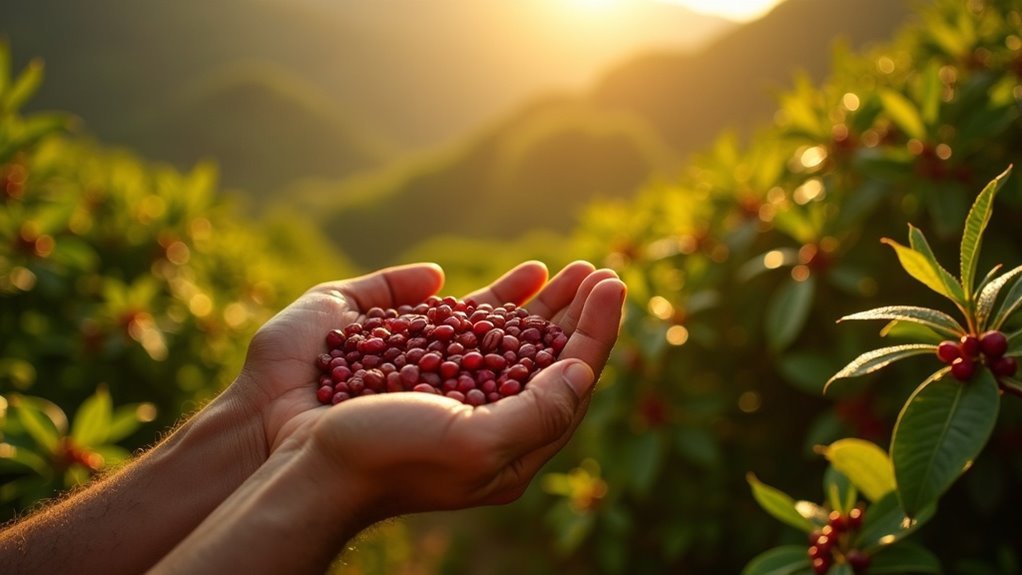
Micro lots are sourced from specific regions renowned for their unique coffee flavors, such as Ethiopia, Colombia, and Rwanda. Each area, like Yirgacheffe and Sidamo, showcases distinct characteristics shaped by ideal growing conditions and meticulous processing methods. Single estate farms and cooperatives often produce these lots, emphasizing sustainable practices and traceability. The result is exceptional coffee quality that reflects the terroir. Exploring these sourcing methods reveals the fascinating stories behind the exceptional coffees you enjoy.
Key Takeaways
- Micro lots are primarily sourced from specific plots on coffee farms, showcasing unique flavors influenced by local terroir.
- Key regions known for exceptional coffee micro lots include Ethiopia, Colombia, and Rwanda, each offering distinct flavor profiles in their brews.
- In Ethiopia, notable sourcing areas include Yirgacheffe, Sidamo, and Harrar, recognized for their diverse and complex coffee flavors.
- Colombia’s Santa Barbara Estate and Huila region are celebrated for balanced coffees with notable caramel and chocolate notes, appealing to a wide range of palates.
- Rwanda emphasizes cooperative farming initiatives, sourcing micro lots from high-elevation areas to enhance flavor complexity and elevate the coffee experience.
Defining Micro Lots and Their Importance in Specialty Coffee
Micro lots represent a captivating aspect of the specialty coffee industry, embodying both exceptional quality and traceability. Defined as coffees sourced from a specific plot on a farm, micro lot coffees exhibit unique flavors that arise from ideal growing conditions.
Initially introduced as a marketing strategy to promote transparency, these lots have evolved into a crucial means of showcasing extraordinary quality and exclusivity. Their limited availability enhances their perceived value, enabling producers, often small family farms, to command higher prices.
Notably, there’s been a 30% increase in demand for lots under 1,000 lbs from 2016/17 to 2022/23, illustrating a growing consumer appetite for unique, high-quality coffee offerings.
Key Regions Known for Exceptional Micro Lots
When exploring key regions for exceptional micro lots, Ethiopia stands out with its rich coffee heritage and diverse flavor profiles.
Colombia’s microlots, particularly those from the Santa Barbara Estate, offer a balanced taste with enticing notes of caramel and chocolate.
Meanwhile, Rwanda’s emphasis on women growers and cooperative farming initiatives not only enhances the quality of their coffee but also underscores a commitment to sustainability and ethical sourcing.
Ethiopia’s Coffee Heritage
Ethiopia’s coffee heritage embodies a rich tapestry of flavors and traditions, particularly evident in key regions renowned for their exceptional micro lot coffees.
Yirgacheffe stands out with its bright acidity and floral notes, achieved through meticulous handpicking and processing.
Sidamo offers diverse profiles, ranging from fruity to earthy, thanks to smallholder farmers employing sustainable methods.
Harrar captivates with its wild, complex flavors, where natural processing imparts fruity, wine-like qualities.
Each micro lot reflects a commitment to quality, often supported by cooperatives that emphasize traceability and sustainability.
This ensures that every cup of Ethiopian coffee tells a story of heritage and craftsmanship, making it a unique experience for coffee lovers around the world.
Colombian Flavor Profiles
Exploring the world of coffee reveals that Colombia stands as a beacon of diversity, particularly in its micro lot offerings.
Here are key regions known for their exceptional micro lot coffees:
- Huila: Renowned for balanced coffees that delight with caramel and fruit notes, Huila coffees boast bright acidity and a smooth finish, making them a favorite among coffee enthusiasts.
- Antioquia: This region offers rich chocolatey and nutty flavors, often accompanied by a sweet, fruity undertone that adds depth to the tasting experience.
- Sierra Nevada: Known for its complex profiles, Sierra Nevada coffees feature floral and citrus notes, deeply rooted in traditional practices that enhance their unique character.
- Sustainability: Many micro lots are sourced from small family-owned farms, emphasizing quality and fair trade relationships that support the local community.
Each region contributes to a rich tapestry of flavors, showcasing the diverse and vibrant world of Colombian coffee.
Rwandan Women Growers
Rwandan women growers play a critical role in the coffee industry, particularly in the micro lot sector, yet they often remain underrepresented in the wider coffee narrative. Concentrated in the Southern Province near Ibisi Mountain, these dedicated growers focus on cultivating high-quality varietals such as Red Bourbon.
The Ibisi Mountain washing station, bolstered by collaborations with organizations like Rwanda Trading Company, significantly enhances the quality of their coffee and increases revenue for these women. Their innovative processing techniques, including natural and honey processing, highlight unique flavor profiles, thereby elevating Rwandan micro lot coffees in the specialty coffee market.
This empowerment not only leads to superior coffee quality but also fosters sustainable practices within their communities.
The Role of Single Estate Farms in Microlot Production
Single estate farms play an essential role in microlot coffee production by showcasing the unique terroir of specific plots, which directly influences the flavor profile of the brew.
Their commitment to sustainable farming practices not only enhances the quality of the coffee but also guarantees traceability and transparency throughout the supply chain.
Unique Terroir Influence
The distinct flavors of microlot coffees emerge from the unique terroir found in single estate farms, where the interplay of soil composition, climate, and farming practices shapes each bean’s profile.
- Small, carefully cultivated plots allow for meticulous attention to detail in coffee production.
- Unique land conditions contribute to exceptional flavor profiles that coffee enthusiasts cherish.
- Limited production highlights the distinct characteristics of specific coffee varieties.
- Innovative techniques enhance the microclimate’s influence on taste and aroma, resulting in a superior coffee experience.
Sustainable Farming Practices
Microlot coffees thrive not only because of their unique terroir but also due to the sustainable farming practices employed by the single estate farms that cultivate them.
These farms prioritize environmentally friendly methods, such as organic farming and minimal pesticide use, which enhance both the local ecosystem and the quality of the coffee.
The unique microclimates and soil conditions on these estates allow for distinctive flavor profiles and innovative processing techniques, including specialized fermentation.
By committing to sustainable practices, these farms not only elevate the coffee experience but also support the livelihoods of farmers, ensuring fair wages and fostering social responsibility within their communities.
This dedication makes each microlot a true reflection of its origin, allowing coffee enthusiasts to appreciate the intricate connection between the coffee they enjoy and the sustainable practices behind its cultivation.
Traceability and Transparency
While exploring the world of specialty coffee, you’ll find that traceability and transparency are vital components in microlot production.
Single estate farms uphold these principles by offering clear information about the coffee’s origin.
Here’s why this is important for coffee lovers:
- Identifies the specific plots of land used for cultivation
- Reflects unique flavor profiles associated with distinct terroir
- Strengthens the connection between farmers and consumers
- Enables buyers to taste and assess quality through cupping competitions
Cooperative Farming Initiatives and Their Impact on Quality
Cooperative farming initiatives significantly enhance the quality of micro lot coffees by fostering collaboration among small-scale farmers.
By pooling resources and sharing knowledge, these groups improve cultivation and processing techniques, ensuring sustainability and high standards. Members receive training in agronomy and processing, resulting in superior beans that command premium market prices.
Furthermore, cooperatives empower farmers with better market access and negotiation skills, increasing incomes and enabling reinvestment in their farms.
The focus on traceability allows consumers to appreciate the stories behind their coffees, creating a connection to the farmers. This bond elevates the perceived value of the coffee, enriching the experience of enjoying micro lot offerings.
Unique Processing Methods Used in Sourcing Micro Lots
When sourcing micro lots, the selection of processing methods is crucial in shaping the coffee’s flavor profile and overall quality. Unique coffee processing techniques enhance these limited batches, making them particularly appealing:
- Natural fermentation brings out fruity notes
- Honey processing adds sweetness and body
- Anaerobic fermentation contributes complex flavors
- Controlled drying on elevated beds promotes sustainability
These careful methods enable farmers to highlight their terroir, resulting in exceptional quality coffees.
The Influence of Terroir on Flavor Profiles
Understanding the influence of terroir on flavor profiles is essential for appreciating the complexity of micro lot coffees. Terroir encompasses unique environmental conditions like soil, climate, and altitude, which shape the taste of coffee.
For instance, the high elevation of 5,500 feet for Rwanda’s Ibisi-Natural coffee enhances its acidity and flavor complexity. Micro lot coffees, sourced from specific plots, showcase distinct characteristics tied to their terroir.
Additionally, processing methods, such as the natural fermentation used for Ethiopian varieties, further amplify these flavors. By recognizing terroir’s importance, you can better appreciate and select coffees that reflect their unique origins, enhancing your coffee experience.
Traceability and Transparency in Microlot Sourcing
Micro lot coffees not only showcase the unique flavors shaped by terroir but also underscore the importance of traceability and transparency in their sourcing.
By choosing microlots, you’re supporting a system that values:
- Direct connections between coffee lovers and individual producers
- Traceability back to specific farms and their unique growing practices
- A focus on quality over quantity in coffee production
- Sustainable and innovative farming techniques
This commitment ensures that you’re not just savoring exceptional coffee but also contributing to ethical sourcing practices.
With microlots, every sip tells a story, deepening your appreciation for the craft behind each delightful cup.
The Future of Micro Lots: Trends and Innovations
As the coffee industry evolves, the future of micro lots is poised to embrace exciting trends and innovations that cater to the discerning palate of coffee enthusiasts.
You’ll likely see the emergence of ‘nano lots,’ enhancing exclusivity for those seeking unique coffee experiences. As demand grows, producers may explore ‘macro lots’ with special processing techniques, balancing quality and scale while still delivering rich flavors.
Innovations in sustainable practices will diversify flavor profiles, appealing to your taste. Furthermore, micro lots could integrate into high-end blends or single origin espressos, providing options that satisfy both uniqueness and consistency, ensuring your coffee offerings resonate with lovers of this beloved beverage everywhere.