First Crack in coffee roasting typically occurs around 196°C (385°F), marked by a distinct popping sound that begins about 53 seconds into the roast. This crucial phase lasts roughly 1:30 to 1:45 and indicates significant exothermic reactions within the beans. The timing can vary based on factors like moisture content and batch size. Understanding this process is essential for refining your coffee roasting technique and enhancing flavor profiles.
Key Takeaways
- First Crack typically occurs around 196°C (385°F) during the coffee roasting process, marking a significant milestone in developing the flavors of coffee.
- The distinct popping sound begins approximately 53 seconds into the roast, indicating the beans are undergoing crucial changes.
- The critical moment of First Crack lasts about 1:30 to 1:45, during which the beans release moisture and expand.
- Factors such as moisture content and batch size can influence the timing of First Crack, making each roasting experience unique.
- Accurate monitoring of First Crack timing is essential for optimal flavor development in coffee, allowing roasters to achieve their desired profile.
Understanding First Crack in Coffee Roasting
When roasting coffee, understanding First Crack (FC) is essential for achieving the desired flavor profile. FC typically occurs around 196°C (385°F) and signifies significant exothermic reactions within the beans.
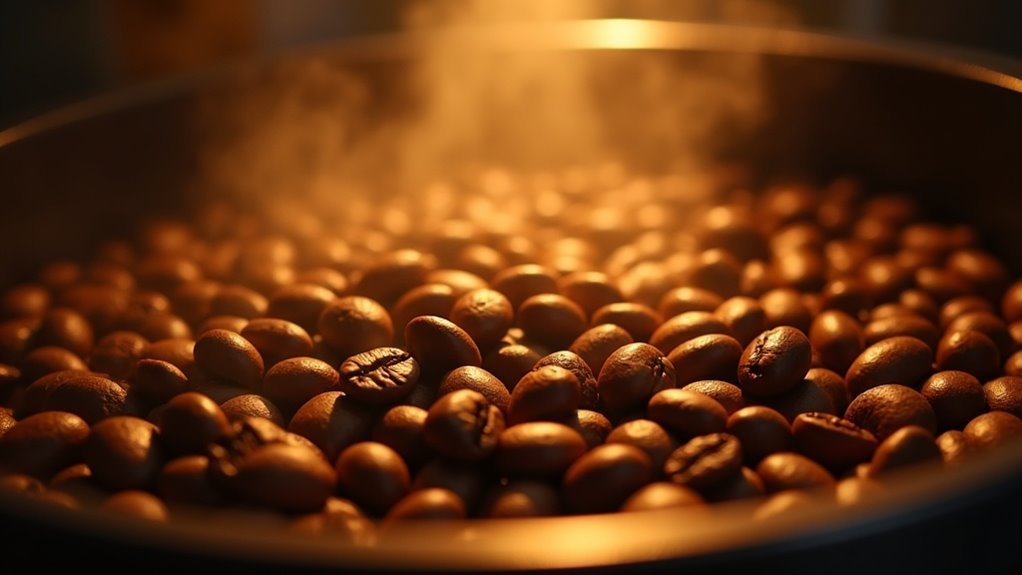
As the temperature of the beans rises, you’ll hear a distinct popping sound, similar to popcorn, which begins approximately 53 seconds into the roast. This critical moment lasts about 1:30 to 1:45, reaching an average end temperature of 420°F (216°C).
During FC, chemical changes occur that release moisture and gases, enhancing aromatic compounds in the coffee. Properly monitoring FC is crucial, especially for lighter roasts, as it highlights acidity and brightness in your final brew.
Factors Influencing the Timing of First Crack
Understanding the factors that influence the timing of the First Crack is essential for achieving consistent coffee roasting results.
The moisture content of your green coffee plays a significant role; higher moisture levels often lead to an earlier First Crack.
Additionally, the Rate of Rise (ROR) impacts when this event occurs, as a rapid temperature increase can create a more pronounced crack sound.
The size of your roasting batch also matters; larger loads may delay the First Crack due to heat absorption dynamics.
Finally, different coffee beans behave uniquely at First Crack, with low-density beans producing a less distinct sound compared to high-density varieties.
Measuring the Duration of First Crack
Measuring the duration of First Crack is essential for fine-tuning your coffee roasting process and achieving desired flavor profiles. Typically occurring around 196°C (385°F), first crack marks a pivotal moment in flavor development.
You should time it accurately, starting when two or more coffee beans snap closely together, ensuring you avoid stray early pops. Aim for a duration of 1:30 to 1:45, as this window allows for optimal flavor extraction before transitioning to the second crack.
Effects of First Crack on Flavor Development
First Crack plays a vital role in shaping the flavor development of coffee during the roasting process. Occurring around 196°C (385°F), it marks an exothermic reaction that releases steam and carbon dioxide, enhancing the coffee’s acidity and brightness in lighter roasts.
As a specialty roaster, you’ll want to complete the roast shortly after First Crack to preserve fruity and floral notes. The 1:30 to 1:45 duration of First Crack signifies a shift from grassy to sweet, aromatic profiles, while the Maillard reaction continues to deepen flavors.
Therefore, timing is essential for achieving a well-rounded cup of coffee.
Best Practices for Monitoring First Crack During Roasting
How can you effectively monitor First Crack during the coffee roasting process?
Start timing when you hear two or more beans snap together, ignoring stray early pops for accuracy. First crack typically occurs around 196°C (385°F) and lasts between 1:30 and 1:45, ending at approximately 420°F.
To enhance precision, utilize real-time bean temperature monitoring and pay attention to visual and auditory cues. Consistent observations across various roasts will refine your timing, while understanding the specific characteristics of your coffee beans will further improve your technique.
Enhance your roasting precision by monitoring bean temperatures and noting visual and auditory cues for optimal flavor development.
These practices guarantee you accurately monitor first crack, ultimately enhancing the flavor profile of your coffee.