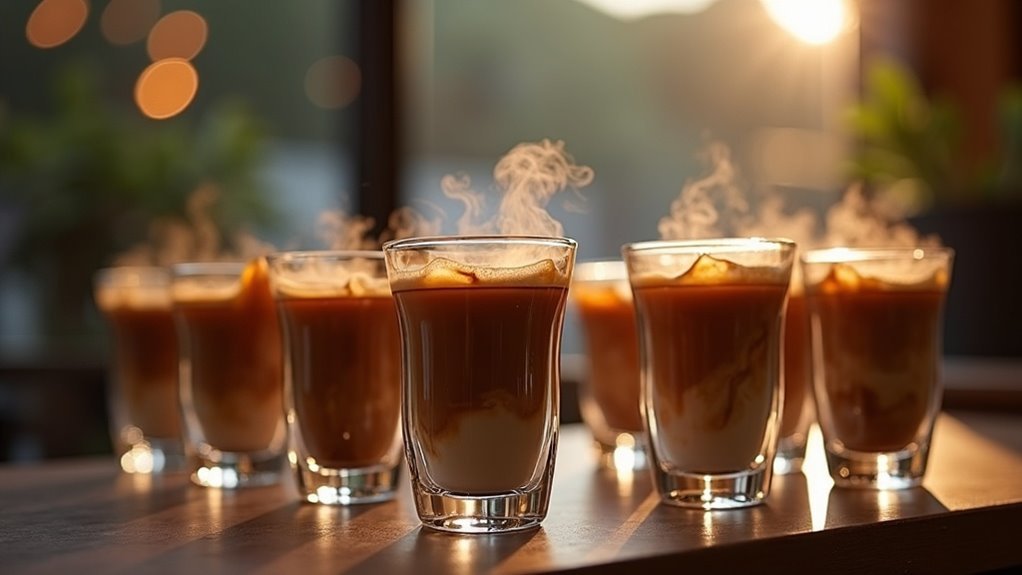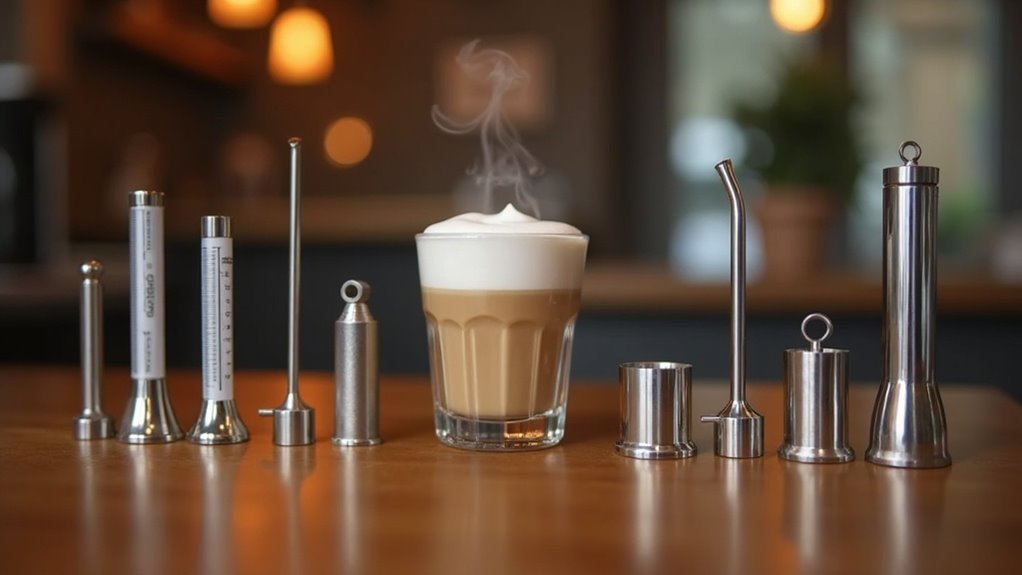
Volumetric dosing is a precise method that measures the exact amounts of coffee and water for brewing the perfect cup. This technique ensures consistent flavor extraction, regardless of coffee variety or roast level. To get started, you’ll need tools like a digital scale, measuring cups, and proper storage to maintain freshness. Temperature control during brewing is crucial to prevent bitterness and achieve the ideal taste. By mastering volumetric dosing, you’ll enhance your coffee-making accuracy and elevate your overall coffee experience, allowing you to discover the intricate flavors and aromas in each brew.
Key Takeaways
- Volumetric dosing measures precise volumes of coffee and water to achieve consistent flavor extraction in your brews.
- It is essential to calibrate your brewing system when experimenting with new coffee varieties or adjusting grind sizes to maintain optimal taste.
- Utilizing volumetric calculators can help you determine the correct amounts of coffee and water needed for your perfect cup.
- Accurate measurement techniques, such as using digital scales, ensure that you achieve the desired flavor and concentration in your coffee.
- Proper storage and labeling of your coffee beans are crucial to maintaining their freshness and quality for effective volumetric dosing.
Overview of Volumetric Dosing
Volumetric dosing is a method that measures the volume of coffee and water to ensure precise control over brewing amounts, which is essential for achieving the perfect cup of coffee.
This technique is particularly valuable when working with different coffee beans and roast levels, allowing for consistent flavor extraction.
This method is essential for achieving consistent flavor extraction across various coffee beans and roast levels.
To achieve the desired strength of your brew, it’s important to calibrate your volumetric system regularly, especially when using new coffee varieties or adjusting grind sizes.
Additionally, utilizing volumetric dosing calculators can streamline the brewing process, helping you determine the correct amounts of coffee and water, thereby enhancing the accuracy of your coffee preparations.
Required Materials
To successfully brew coffee with precision, you’ll need several key materials tailored to guarantee the perfect cup.
A digital scale is essential for accurately measuring coffee grounds, especially when aiming for specific brew ratios.
You’ll also require liquid measurement devices such as a coffee carafe, measuring cups, or a pour-over kettle to ascertain the correct volume of water needed for your brew.
Proper storage containers are important to keep your coffee beans fresh and protected from light and moisture.
Finally, labeling materials like tags or markers can be useful for identifying different bean varieties or roast dates, ensuring you enjoy the best flavors from your coffee.
Solvent Selection
Choosing the right solvent for brewing coffee greatly impacts the flavor and extraction of your beverage.
Start by evaluating the solubility of your coffee grounds; some compounds may not dissolve well in cold water but extract more effectively with hot water or other brewing methods.
Evaluate the solubility of your coffee grounds, as hot water can unlock flavors that cold water may miss.
Research the optimal brewing temperature and time to avoid under-extraction or over-extraction.
Remember, gentle agitation during brewing can enhance extraction, ensuring a well-balanced cup.
Adding small amounts of certain additives like salt or sugar may also enhance flavor, facilitating a more enjoyable coffee experience.
Opting for different brewing methods can provide versatility, as they often highlight different flavor profiles of your coffee beans, optimizing your brew.
Measurement Techniques
Accurate measurement techniques are crucial for achieving the desired flavor and concentration in your coffee brewing process.
Utilizing measuring tools like oral syringes guarantees precision, especially for small liquid volumes. Graduated cylinders and measuring cups help you convert measurements easily, such as 1/4 tsp to 1.25 ml.
When dosing potent coffee extracts or flavorings, insulin syringes, where 1 cc equals 1 ml, provide excellent accuracy. Before dissolving coffee grounds or flavoring powders, weigh your ingredients meticulously to maintain correct concentrations.
After combining the weighed material with your measured water or milk, thorough mixing is essential. Consider using a heat bath to enhance solubility while avoiding temperatures that might alter the coffee’s flavor profile.
Dissolution and Storage
While brewing your coffee, it’s essential to ensure that the coffee grounds are fully saturated for a uniform extraction.
Using hot water as a solvent may require careful temperature control to achieve optimal flavor extraction. A heat source can aid this process, but be cautious of excessive heat that might scorch the coffee and lead to bitterness.
Careful temperature control is key to optimal flavor extraction; avoid excessive heat to prevent bitterness.
Once brewed, store your coffee in sealed containers, shielded from light, and clearly labeled to maintain freshness and prevent confusion.
Periodically check for any changes in flavor or aroma, as these may indicate degradation. Ensuring proper handling enhances the quality of your coffee.
This page was last updated to reflect these important practices.