Thermal shock in glass coffee servers occurs when rapid temperature changes induce mechanical stress, leading to cracks or fractures. For instance, pouring hot coffee into a cold glass server can trigger this issue. Float glass can tolerate only a 40°C temperature differential, while toughened glass can withstand up to 200°C. It’s crucial to understand these limits to maintain the integrity of your coffee servers. Explore further to discover effective prevention strategies and safe handling practices to ensure your coffee experience remains enjoyable.
Key Takeaways
- Thermal shock refers to the mechanical stress that glass experiences due to rapid temperature changes, which can result in cracks or fractures.
- For instance, when cold glassware is suddenly filled with hot coffee, it can lead to thermal shock, particularly with standard glass types.
- Float glass has a low thermal shock resistance, tolerating temperature changes of up to 40°C, whereas toughened glass can endure much higher temperatures, up to 200°C.
- To prevent thermal shock and potential breakage, it’s advisable to implement gradual temperature changes and preheat glass servers before use.
- For safely serving coffee, it is recommended to choose glass types that exhibit high thermal shock resistance, such as borosilicate or toughened glass.
Definition of Thermal Shock in Glass Servers
Thermal shock in glass coffee servers refers to the mechanical stress induced by rapid temperature changes, which can lead to cracks or fractures in the glass.
This phenomenon primarily occurs when you introduce hot coffee into cold glass servers or vice versa, as the resulting temperature difference can exceed the glass’s tensile strength.
Different types of glass exhibit varying susceptibility to thermal shock; for instance, float glass is prone to breakage with temperature differences as small as 40 degrees Celsius.
In contrast, toughened glass can withstand differences up to 200 degrees Celsius, making it a safer choice for your coffee serving needs.
Causes of Thermal Shock in Kitchen Settings
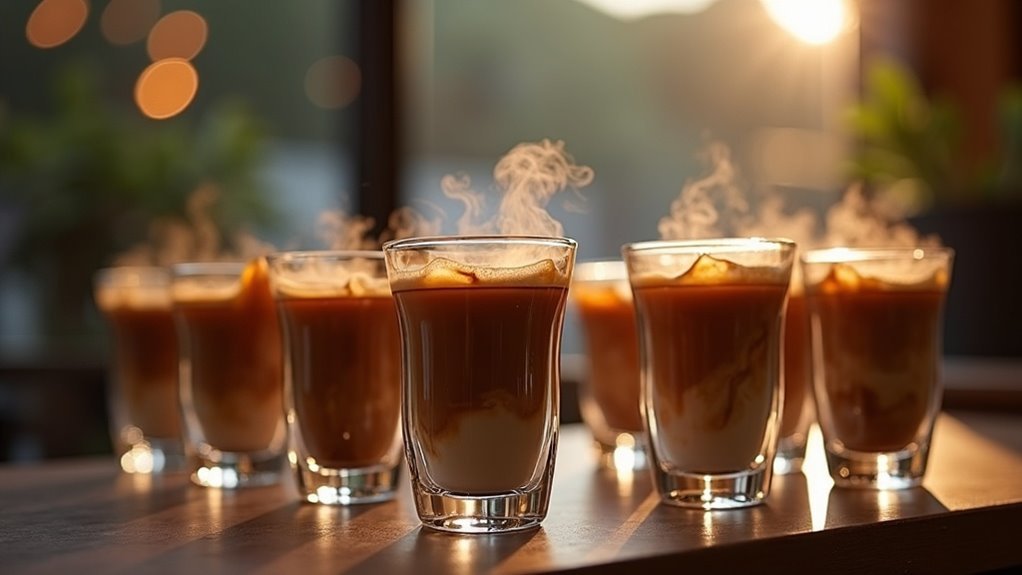
When cold glass coffee servers encounter hot coffee, the drastic temperature change often leads to thermal shock, resulting in cracks or even complete shattering.
The temperature differential (ΔT) that ordinary glass can withstand is approximately 40°C, making it particularly vulnerable in coffee brewing environments.
Placing cold glassware directly into hot coffee or filling it with boiling water heightens the risk of thermal stress. Additionally, high-stress points, like thin edges or decorative inclusions, can exacerbate this risk.
To avoid thermal shock, opt for toughened glass coffee servers, which can endure temperature differences of up to 200°C, ensuring safer serving practices in your coffee routine.
Impact of Thermal Shock on Glass Integrity
Rapid temperature changes can greatly compromise the integrity of glass coffee servers. When subjected to thermal shock, glass can fracture if temperature differentials exceed its tensile strength.
For instance, float glass easily succumbs to cracks with just a 40 degrees Celsius difference, which can occur when pouring hot coffee into a cold glass server. This triggers localized stress concentrations, escalating the risk of fractures and potentially ruining your coffee experience.
Float glass can crack with just a 40°C temperature difference, risking your coffee experience with localized stress concentrations.
In contrast, toughened glass coffee servers can endure temperature differentials up to 200 degrees, enhancing durability and making them ideal for hot beverages.
To mitigate these risks, regular quality testing for thermal shock resistance is essential during production, ensuring that the glass is made to withstand the challenges of varying temperature conditions often encountered in coffee preparation.
Types of Glass and Their Thermal Shock Resistance
Understanding the various types of glass and their thermal shock resistance is essential for selecting the right material for coffee servers. Different glass types exhibit distinct thermal expansion properties and resistance levels, which can significantly impact your coffee service experience.
| Type of Glass | Thermal Shock Resistance |
|---|---|
| Float Glass | Low (up to 40°C) |
| Toughened Glass | High (up to 200°C) |
| Laminated Glass | Moderate (similar to float) |
| Borosilicate Glass | Enhanced |
| Fused Silica Glass | Superior |
Choosing the appropriate glass type for your coffee server is vital in preventing thermal shock and ensuring durability, which ultimately makes your coffee service more reliable and enjoyable.
Prevention Strategies for Thermal Shock
To prevent thermal shock in glass coffee servers, implementing strategic measures is vital for maintaining their integrity and functionality.
Gradual temperature changes are key; preheating your glass coffee servers before adding hot coffee minimizes the temperature differential (ΔT), ideally kept under 35°C.
Gradual temperature changes are essential; preheating glass coffee servers helps reduce thermal shock and ensures a flawless brew.
Opt for glass types with high thermal shock resistance, such as borosilicate or toughened glass, to enhance durability during your coffee brewing process.
Additionally, employing thermal barriers can help maintain consistent temperatures, reducing localized damage from rapid temperature changes when serving hot beverages.
Finally, conducting regular quality checks and adhering to industry guidelines guarantees your glass coffee servers remain safe and effective, mitigating the risks associated with thermal shock and ensuring a perfect cup of coffee every time.
Common Examples of Thermal Shock Failures
While many people enjoy using glass coffee servers for their aesthetic appeal, they often overlook the risks associated with thermal shock failures. For instance, pouring hot coffee into a cold glass can cause cracks due to rapid temperature changes. Common examples include:
| Item | Scenario | Outcome |
|---|---|---|
| Coffee Mug | Placed in hot water | Cracks due to thermal shock |
| Glass Carafe | Exposed to sudden temperature changes | Shatters under stress |
| Glass Coffee Pot | Hot coffee poured after cold storage | Cracks from thermal shock |
| Regular Glass | Hot coffee served in cold glass | Fractures with a 40°C differential |
| Toughened Glass | Hot coffee within limits | Resistant to thermal shock |
Understanding these risks helps you serve your coffee safely.
Safe Handling Practices for Glass Servers
When handling glass coffee servers, it’s crucial to prioritize practices that minimize the risk of thermal shock.
Always avoid exposing glass surfaces to rapid temperature changes; for instance, don’t pour hot coffee into cold glassware. Preheating your glass server with warm water before adding hot coffee can greatly reduce the temperature differential, thereby preventing cracks.
Avoid rapid temperature changes with glass coffee servers; preheat with warm water to prevent cracking.
Additionally, let glass coffee servers cool to room temperature before washing them with hot water, as sudden heat exposure can cause thermal stress.
Opt for toughened or borosilicate glass, designed to withstand greater temperature variations, and always adhere to manufacturer guidelines regarding safe temperature limits to ensure the best coffee experience.
Recommendations for Choosing Glassware
When selecting coffee glassware, opt for toughened or borosilicate glass due to their excellent thermal resistance, which helps prevent thermal shock while brewing or serving hot beverages.
Ensure the design is free from weak points that could weaken the glass during temperature changes.
Glass Type Selection
Selecting the right type of glassware for coffee is essential for guaranteeing safety and performance, especially in environments where temperature fluctuations are common.
Toughened glass is ideal for coffee enthusiasts, as it can withstand thermal shock from hot beverages by handling temperature differences up to 200 degrees.
Borosilicate glass offers superior thermal shock resistance compared to standard soda-lime glass, making it suitable for those who enjoy rapid temperature changes, such as when brewing different coffee styles.
Avoid float glass, as it can fracture with just a 40-degree difference, which isn’t ideal for coffee preparation.
For enhanced safety, consider toughened laminated glass, which combines durability and thermal shock resilience, ensuring your coffee experience is both enjoyable and safe.
Always verify thermal shock ratings to confirm the glass meets safety standards for your specific coffee needs.
Thermal Resistance Considerations
To ensure optimal performance and safety in your coffee brewing experience, it’s important to consider the thermal resistance properties of the glassware you choose. Selecting the right type of glass can help minimize the risk of thermal shock, ensuring durability during use.
- Opt for borosilicate glass for its superior thermal shock resistance and ability to handle a wide range of temperature differentials, making it ideal for coffee brewing.
- Toughened glass can withstand temperature differences of up to 200 degrees Celsius, making it suitable for the demanding conditions of hot coffee preparation.
- Steer clear of float glass, as it can fracture under just 40 degrees Celsius temperature differences, which isn’t suitable for coffee applications.
Always refer to the manufacturer’s specifications for thermal shock limits to ensure your glassware meets industry standards for safety and performance in coffee brewing.