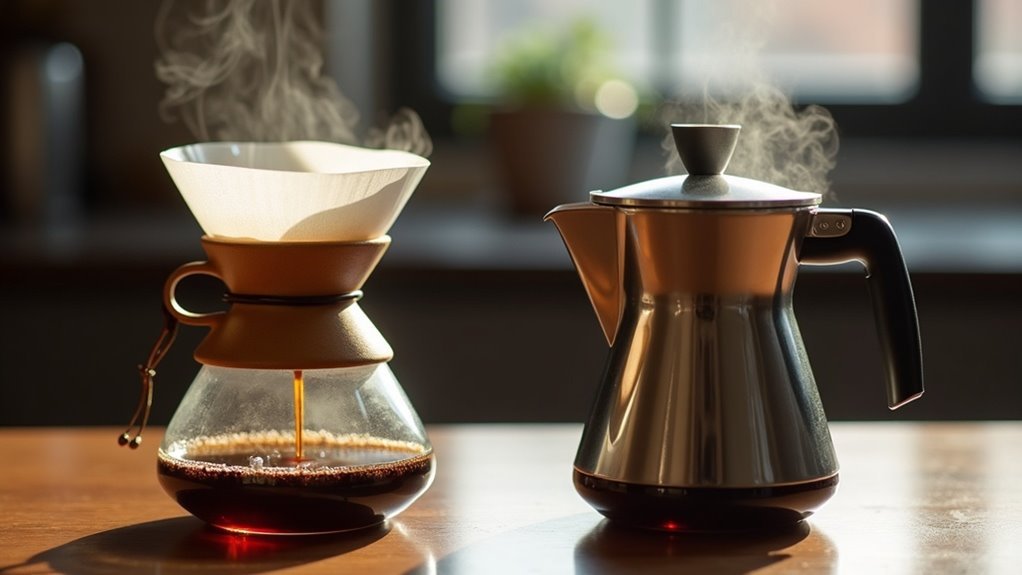
Pour-over and drip coffee differ mainly in control and flavor. With pour-over, you can customize water temperature and pouring speed for enhanced flavor extraction, resulting in a unique brew that highlights the nuances of your coffee beans. On the other hand, drip coffee machines automate the brewing process, ensuring consistency but often leading to less complex flavor profiles. Additionally, pour-over setups tend to be more durable and easier to maintain, as they consist of fewer intricate parts. If you’re interested in learning more about the various brewing methods and their maintenance practices, you’ve come to the right place!
Key Takeaways
- Pour-over brewing provides you with manual control over the extraction process, allowing for the customization of flavor profiles and brewing variables to suit your taste.
- In contrast, drip coffee machines automate the brewing process, offering convenience but often resulting in a flavor profile that is less complex and nuanced.
- Pour-over setups are typically simpler and more durable, while drip coffee makers consist of more complex components that may require more frequent replacements.
- Cleaning pour-over equipment is straightforward and easy, whereas drip machines require regular maintenance to prevent bacterial growth due to moisture retention.
- Additionally, pour-over methods significantly reduce the risk of bacterial growth, promoting better hygiene compared to drip coffee machines, which can retain moisture and create an environment for bacteria to thrive.
Understanding Pour-Over Coffee
When you explore pour-over coffee, you’ll discover a brewing method that offers unparalleled control over the extraction process. This manual brewing technique allows you to adjust variables like water temperature and pouring speed, enhancing the extraction of flavors from coffee grounds.
Originating with Melitta Bentz in 1908, pour-over coffee uses paper filters for ideal results. By utilizing a gooseneck kettle, you can precisely control your pour, resulting in a rich flavor profile that coffee enthusiasts crave.
This hands-on brewing process typically takes 5–10 minutes, creating a ritual that deepens your connection to the coffee you’re serving.
Exploring Drip Coffee
When you use a drip coffee maker, you benefit from a straightforward brewing process that automates water heating and extraction, allowing you to focus on savoring your coffee.
This method provides a consistent flavor profile, though some may find it lacks the intricacy that manual techniques offer.
Additionally, it’s important to consider the durability and ease of maintenance of the equipment, as these factors can significantly impact your overall coffee enjoyment.
Brewing Process Overview
While drip coffee makers might appear to be simple devices, their brewing process entails a series of meticulously controlled steps that significantly affect the final cup’s flavor.
- Water is heated to approximately 190 degrees, which plays a crucial role in taste.
- Coffee grounds engage with water for 10 to 13 minutes, allowing you to multitask while brewing.
- Utilizing gravity, this method ensures efficient extraction into a carafe.
Although this process may offer less customization compared to pour-over techniques, it shines in speed and efficiency, making it ideal for brewing larger quantities.
Keep in mind that selecting the right brewing method can enhance the coffee experience for both you and your guests.
Flavor Profile Consistency
The brewing process of drip coffee is meticulously designed to deliver a consistent and reliable flavor profile, making it a favorite among coffee enthusiasts who appreciate uniformity in their daily cup.
Drip coffee machines typically maintain a stable brewing temperature around 190 degrees Fahrenheit, which can lead to a medium-to-low complexity in the coffee’s taste. The use of disposable filters simplifies cleanup but may influence the flavor based on their material.
Additionally, the machine’s performance is crucial; inconsistent water pouring can unevenly saturate the coffee grounds, ultimately affecting the overall consistency and enjoyment of your drip coffee experience.
Enjoying a perfectly brewed cup of coffee every time is the goal for many, and understanding these elements can enhance your coffee ritual.
Equipment and Durability
While many coffee lovers prioritize flavor, the equipment and durability of drip coffee machines also play an essential role in your brewing experience.
Drip coffee makers offer a self-contained brewing method, but their longevity can vary considerably due to the materials used. Consider these points:
- Plastic Components: Commonly found in electric drip coffee machines, these can impact the lifespan of the machine.
- User-Friendly Design: The simplicity of drip coffee makers allows for consistent operation without the need for manual brewing adjustments.
- Programmable Timers: Perfect for busy mornings, these features enhance convenience and make coffee preparation effortless.
Key Differences Between Pour-Over and Drip Coffee
When comparing pour-over and drip coffee, you’ll notice distinct differences that cater to varying preferences and lifestyles among coffee lovers.
Pour-over brewing offers greater control over brewing variables like water temperature and pour speed, enhancing the flavor profile and complexity of each cup.
In contrast, drip coffee machines provide convenience, quickly brewing larger quantities, making them ideal for busy environments where time is of the essence.
While coffee enthusiasts relish the hands-on experience and art of pour-over, drip coffee prioritizes ease of use through automation, allowing anyone to enjoy a good cup without much effort.
Cleanup also differs: pour-over requires careful washing of each component to maintain quality, while drip machines simplify the process but may need occasional descaling to ensure optimal performance.
Each method effectively serves its unique audience, satisfying distinct coffee experiences.
Brewing Quality: Pour-Over vs. Drip
Brewing quality plays a significant role in the overall coffee experience, and the differences between pour-over and drip methods become apparent when you examine their respective capabilities.
- Pour-over allows for precise control over brewing variables, making it ideal for coffee enthusiasts.
- Drip coffee often produces a uniform flavor profile, which can appeal to those looking for convenience.
- The manual processes involved in pour-over enhance the extraction of nuanced flavors, leading to a richer tasting experience.
With pour-over, you can customize water temperature and pouring speed to extract complex flavors from your coffee beans.
Customizing water temperature and pouring speed in pour-over brewing allows for the extraction of complex flavors from your coffee beans.
Conversely, drip coffee machines may yield inconsistent results, which can sometimes lead to sour or flat brews.
For those seeking intricacies in flavor, pour-over typically reigns supreme in quality, offering a more personalized and elevated coffee experience.
Control and Customization in Brewing
Control and customization in coffee brewing significantly influence the final flavor profile, especially when contrasting pour-over and drip methods.
The pour-over technique allows you to adjust variables such as water temperature, pour speed, and saturation, giving you comprehensive control to emphasize specific flavor notes.
In comparison, drip coffee machines usually restrict you to basic adjustments, primarily the coffee-to-water ratio.
While drip coffee highlights convenience and consistency, it often lacks the nuanced complexities that the pour-over method can achieve.
Mastering pour-over brewing encourages experimentation, enhancing your ability to create a coffee experience that genuinely delights your guests.
Time and Convenience in Brewing Methods
While you might appreciate the intricacies of coffee flavor, the time and convenience of your brewing method can greatly impact your daily routine.
Consider these factors:
- Drip coffee machines brew a full pot in about 10 to 13 minutes, making them ideal for multitasking during your busy day.
- Pour-over coffee requires about 5 minutes for heating and 3 to 4 minutes of focused brewing, demanding your active participation and attention to detail.
- Drip coffee makers often feature programmable timers, simplifying the process for those with hectic schedules.
Ultimately, if convenience is key, opting for drip coffee is your best bet.
For those who cherish the ritual of coffee making, pour-over offers a more hands-on experience to create the perfect cup.
Durability and Cleanliness Considerations
When choosing between pour-over and drip coffee, it’s important to consider durability and cleanliness alongside convenience. Pour-over devices, crafted from durable materials like stainless steel or ceramic, can last a lifetime with proper care. In contrast, drip coffee makers often have a shorter lifespan due to their complex components.
When it comes to cleaning, pour-over setups are simpler; fewer parts mean easier maintenance. Drip machines, on the other hand, can retain moisture, which increases the risk of bacterial growth if not cleaned regularly. Here’s a quick comparison:
| Feature | Pour-Over | Drip Coffee Makers |
|---|---|---|
| Durability | High | Moderate |
| Cleaning Effort | Low | High |
| Reliability | High | Variable |