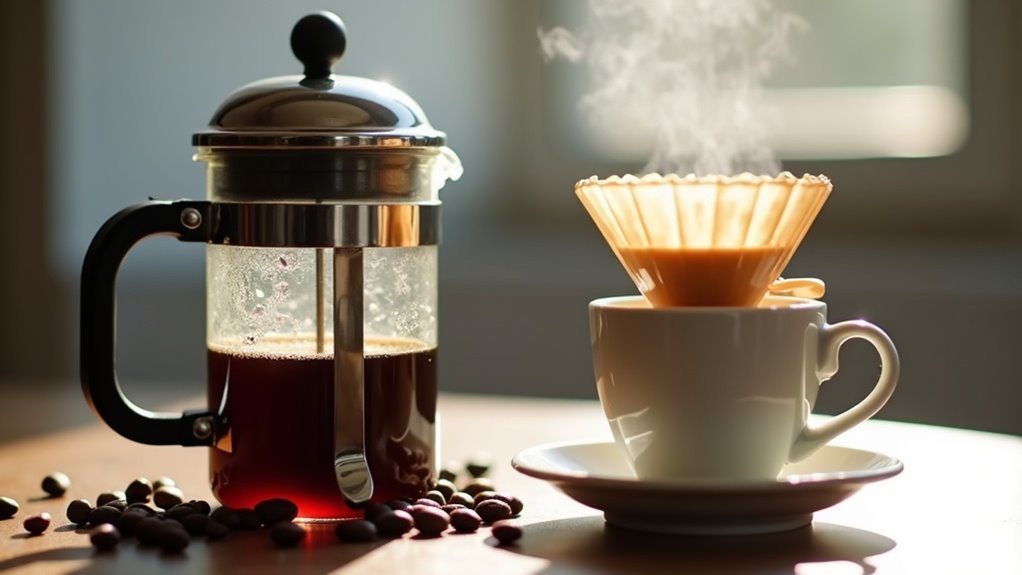
The French press brews a rich, full-bodied coffee through immersion, while pour-over utilizes gravity for a cleaner, more nuanced cup. The French press is great for multitasking, but its mesh filter can make cleanup more time-consuming. In contrast, pour-over requires a precise technique, but cleanup is simplified with paper filters. Flavor-wise, the French press is ideal for bold roasts, while pour-over highlights delicate notes. Explore the nuances between these brewing methods to discover which best fits your taste and lifestyle in your coffee journey.
Key Takeaways
- The French press utilizes immersion brewing, resulting in a rich and full-bodied coffee, whereas pour-over utilizes gravity, producing a cleaner and more nuanced flavor profile.
- Both methods typically follow a coffee-to-water ratio of 16:1, but the grind size varies: a coarser grind is used for French press, while a medium grind is preferred for pour-over.
- French press requires a longer steeping time of 4-5 minutes, while pour-over takes only 2-4 minutes, which influences the flavor extraction process.
- Cleanup for the French press is more complex, as it requires disassembly, while pour-over allows for the quick disposal of used paper filters.
- Equipment costs for a French press range from $20 to $50, whereas pour-over setups can start as low as $10, though ongoing costs for paper filters should be considered.
Brewing Methods Overview
When comparing brewing methods, the French press and pour-over techniques stand out for their unique approaches to extracting flavor from coffee.
The French press uses immersion brewing, steeping coarse coffee grounds directly in hot water for 4-5 minutes, resulting in a rich, full-bodied cup.
In contrast, pour-over employs gravity, allowing water to flow through medium coffee grounds in 2-4 minutes, producing a clean, bright brew.
Each method requires careful consideration of coffee-to-water ratios—typically 16:1 for both, with adjustments possible.
Understanding the appropriate grind size is crucial; coarser for French press and medium for pour-over, as this optimizes flavor extraction in each process.
Brewing Process Comparison
When you compare the brewing processes of French press and pour-over, you’ll notice the stark contrast between immersion and gravity brewing techniques.
Each method emphasizes the blooming phase, which is essential for releasing carbon dioxide from the coffee grounds, but they differ notably in steeping times.
Understanding these distinctions can enhance your coffee experience, as the chosen brewing method directly influences the flavor and body of your coffee.
Immersion vs. Gravity Brewing
Immersion and gravity brewing represent two distinct approaches to coffee preparation, each with unique characteristics that influence flavor and body.
The French press employs immersion brewing, steeping coffee grounds in hot water for 4 to 5 minutes, resulting in a fuller-bodied cup with rich flavors and oils that coffee lovers enjoy.
On the other hand, pour-over utilizes gravity brewing, where water flows over coffee grounds in a filter for 2 to 4 minutes, producing a cleaner, more nuanced flavor profile with less sediment, appealing to those who prefer a crisp taste.
While the French press requires a coarser grind to avoid bitterness, pour-over benefits from a medium grind for ideal flavor extraction, making it a favorite among coffee enthusiasts looking to perfect their brewing technique.
Blooming Phase Importance
The blooming phase is crucial for achieving the best flavor and quality in both French press and pour-over coffee brewing methods. During this phase, introducing a small amount of hot water to the coffee grounds helps release carbon dioxide, which enhances the overall flavor extraction.
In the French press method, allowing a 30-second bloom results in a fuller flavor profile. Conversely, in pour-over techniques, proper blooming ensures even saturation, leading to balanced extraction and a cleaner cup of coffee.
Timing is key; insufficient blooming can lead to under-extraction, while over-blooming may result in over-extraction. By mastering the blooming phase, you can significantly elevate your coffee experience and impress those you serve.
Steeping Time Differences
While both French press and pour-over methods prioritize flavor, their steeping times create distinct differences in the final cup.
The French press typically requires a steeping time of 4-5 minutes, allowing for full immersion brewing, which extracts rich flavors and oils, resulting in a fuller-bodied coffee.
In contrast, the pour-over method takes about 2-4 minutes, focusing on a slow pour that enhances clarity and brightness. This technique includes a bloom phase of 30 seconds, ensuring peak flavor extraction.
Ultimately, the longer steeping time of the French press deepens flavor, while pour-over emphasizes a cleaner, more nuanced brew, making each method unique in its contribution to the coffee experience.
Convenience Factors
When considering convenience factors in coffee brewing, the French press stands out for its simplicity and minimal time commitment, allowing you to brew coffee while attending to other tasks.
In contrast, pour-over methods require your full attention and precise technique, making them less suitable for those in a hurry.
Cleanup also varies greatly; while the French press can leave grounds stuck in the filter, the quick disposal of a paper filter with pour-over makes it a breeze.
Brewing Time Comparison
Brewing coffee can often reflect your lifestyle, and the choice between a French press and pour-over method highlights this perfectly.
The French press typically requires about 4 to 5 minutes, offering a hands-off approach that allows you to multitask. In contrast, the pour-over method takes 2 to 4 minutes but demands your full attention during the precise pouring and blooming phases.
While both methods yield similar total brewing times, the French press excels in convenience, making it ideal for busy mornings. On the other hand, pour-over appeals to coffee enthusiasts who relish the controlled extraction process and deeper engagement with their brew.
Whether you prefer the simplicity of a French press or the artistry of pour-over, both methods provide unique ways to enjoy your coffee.
Cleanup Effort Required
Cleaning up after brewing coffee can greatly influence your overall experience, especially when comparing the French press and pour-over methods.
- The French press requires disassembling the plunger and rinsing the mesh filter, which can often trap coffee grounds.
- Pour-over cleanup is simpler: just discard the paper filter and rinse the carafe or dripper.
- While the French press may lead to grit in your coffee cup, the pour-over offers a cleaner finish.
Though the French press demands more effort, its reusable filter can save you money over time compared to the ongoing purchase of paper filters for pour-over brewing.
Ease of Use
Choosing between a French press and a pour-over method often hinges on convenience factors, especially during busy mornings. For coffee lovers seeking ease of use, the French press shines. It allows you to brew multiple cups without constant attention, making it more convenient for serving guests. In contrast, the pour-over method requires precision and can feel like a ritual, appealing to those who enjoy control over their brew.
| French Press | Pour-Over |
|---|---|
| Hands-off brewing | Engaging but time-consuming |
| Serves multiple cups | Single cup at a time |
| More cleanup effort | Simple cleanup |
| Quick preparation | Requires precision |
| Ideal for busy mornings | Perfect for the ritual |
Ultimately, your choice will depend on how much time you want to invest in your coffee-making process and whether you prefer a straightforward brew or a more hands-on experience.
Taste and Flavor Profiles
When it comes to taste and flavor profiles, the differences between French press and pour-over coffee are quite pronounced.
The French press delivers a rich, full-bodied taste, embracing oils and sediment, while pour-over coffee provides a cleaner, more nuanced flavor.
Here’s a quick breakdown:
- French Press: Strong, intense taste, ideal for bold, dark roasts.
- Pour-Over: Smooth, crisp profile that highlights delicate flavors, perfect for lighter roasts.
- Personal Preference: Some coffee lovers enjoy the robust nature of French press; others prefer the clarity and subtlety of pour-over.
Ultimately, your choice may depend on your guests’ preferences and the coffee experience you wish to create.
Whether you lean towards the hearty richness of a French press or the refined elegance of a pour-over, both methods offer unique and enjoyable ways to savor your cup of coffee.
Cleanup and Maintenance
Maintaining your brewing equipment is just as crucial as the coffee you choose to make. For the French press, cleanup involves disassembling the plunger and strainer to ensure no coffee grounds get stuck. It’s important to rinse the parts with warm, soapy water to prevent bitterness in future brews.
In contrast, cleaning a pour-over system is straightforward; simply dispose of the used paper filter and give the carafe a quick rinse.
While both brewing methods are generally dishwasher-safe, keep in mind that the French press eliminates the need for ongoing filter purchases, making it a more sustainable choice in the long run.
Cost Analysis
The cost analysis of French press and pour-over brewing methods reveals significant differences that can affect your decision based on budget and brewing habits.
- French press brewers typically range from $20 to $50, with minimal ongoing costs due to a reusable mesh filter. This makes it a great choice for those who enjoy rich, full-bodied coffee without frequent expenses.
- Pour-over setups can start at $10 but require regular purchases of paper filters, leading to accumulating expenses over time. This method is often preferred for its ability to produce a clean, nuanced cup of coffee but comes with ongoing costs.
While pour-over equipment is more accessible initially, the French press may prove more economical in the long run, especially for avid coffee drinkers.
Ultimately, consider your brewing frequency and budget when choosing between these two methods for serving delightful coffee.
Recommended Equipment
Choosing the right equipment can greatly influence your coffee brewing experience, whether you prefer a French press or pour-over method. Here’s a quick comparison of the essential tools you’ll need:
| French Press Equipment | Pour-Over Equipment |
|---|---|
| French press coffee maker | Pour-over coffee maker |
| Kettle for heating water | Gooseneck kettle |
| Coarsely ground coffee | Medium-fine ground coffee |
Using fresh, filtered water enhances flavor extraction for both methods. A timer is also crucial for ensuring precise brewing times, especially if you’re using the Fellow Ode Grinder for that perfect pour-over grind. Remember, the right equipment can elevate your coffee experience to new heights!
Choosing the Right Method for You
When deciding between the French press and pour-over methods for your coffee, it’s essential to consider your coffee preferences and brewing style. Each method offers unique benefits:
When choosing between French press and pour-over, reflect on your coffee tastes and brewing approach for the best experience.
- Flavor Profile: The French press produces a rich, full-bodied coffee, while the pour-over method delivers a cleaner, more nuanced cup.
- Brewing Experience: The French press allows for hands-off brewing, while pour-over requires precision and engagement throughout the process.
- Cleanup: Pour-over is easier to clean, as it only involves discarding a filter, whereas the French press requires more disassembly for a thorough clean.
Consider these factors to choose the coffee brewing method that best aligns with your ritual, ensuring that you can serve others a delightful experience tailored to their tastes.