Arabica and Robusta are the two primary types of coffee beans, each with unique characteristics that cater to different palates. Arabica beans are known for their smooth, sweet flavor profile and lower caffeine content, typically around 1.5%. In contrast, Robusta beans deliver a bolder, more bitter taste and contain higher caffeine levels, approximately 2.7%.
Arabica thrives at high elevations and requires careful, labor-intensive harvesting, which contributes to its higher price point. On the other hand, Robusta is easier to grow and generally more affordable. Understanding these differences can help enhance your coffee selection and enjoyment. There’s a rich world of coffee to explore beyond just these essentials.
Key Takeaways
- Arabica coffee is celebrated for its sweeter, smoother flavor profile, while Robusta offers a bold, earthy taste characterized by its bitterness.
- In terms of caffeine content, Arabica beans contain around 1.5%, while Robusta beans boast a higher caffeine concentration of approximately 2.7%.
- Arabica thrives at higher elevations in cooler climates, whereas Robusta prefers lower elevations and warmer conditions, making each suitable for different growing environments.
- When it comes to pricing, Arabica beans are generally more expensive, costing between $3 to $6 per pound, in contrast to Robusta, which is typically priced between $1 to $3 per pound.
- Arabica beans represent about 70% of global coffee production, while Robusta is increasingly favored in espresso blends, highlighting its growing popularity among coffee enthusiasts.
What Is Arabica Coffee?
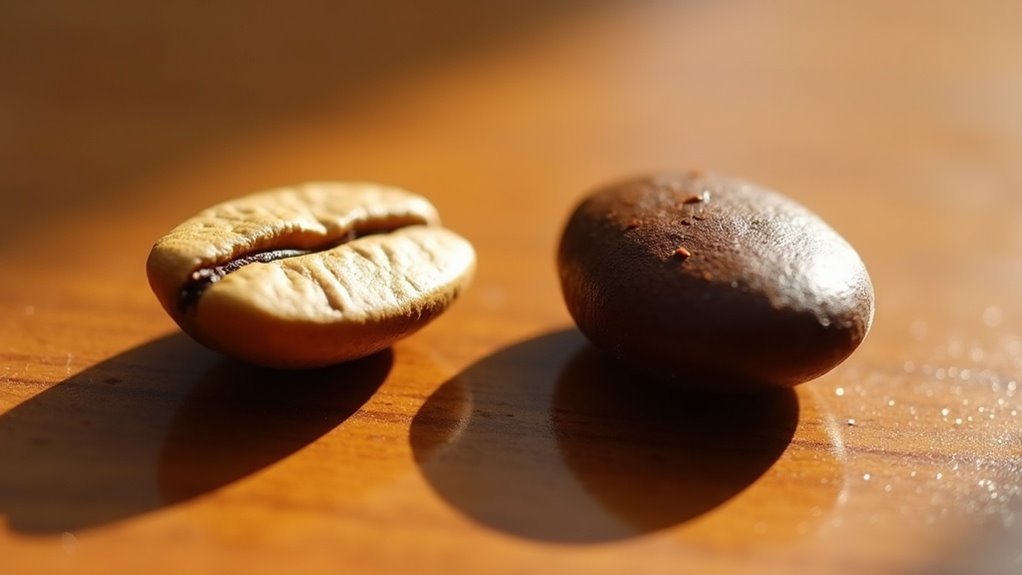
Arabica coffee, celebrated for its unique flavor and aroma, is a favored choice among coffee lovers around the globe. Its beans are characterized by a flatter, oval shape and a higher oil content, contributing to a sweet, zesty, and fruity flavor profile, often enhanced by delightful chocolate notes.
With a caffeine content of approximately 1.5%, Arabica coffee offers a milder taste and less bitterness compared to other coffee varieties. This type of coffee thrives in subtropical climates at elevations above 3,000 feet, necessitating careful farming practices, which result in lower yields.
As the most revered species of coffee, Arabica makes up about 70% of global coffee production, establishing it as a staple for those with discerning tastes.
What Is Robusta Coffee?
Robusta coffee, sourced from the Coffea canephora plant, is a robust alternative to Arabica coffee, attracting enthusiasts with its bold flavor profile. With a caffeine content of approximately 2.7%, Robusta beans offer a stronger and more bitter taste experience. These beans are smaller and rounder, making them easier to cultivate, as they thrive at lower elevations and exhibit greater resistance to pests. Economically, green Robusta beans are about half the cost of Arabica, appealing to budget-conscious coffee roasters. The earthy and nutty flavors of Robusta contribute to its distinctive character, with significantly lower sugar and fat content—60% less than Arabica.
| Characteristic | Robusta | Arabica |
|---|---|---|
| Caffeine Content | 2.7% | 1.5% |
| Taste | Bitter, earthy | Sweet, complex |
| Bean Size | Smaller, rounder | Larger, oval |
Key Differences in Flavor Profile
When comparing different types of coffee, the flavor profiles are crucial in determining personal preferences.
Arabica coffee beans typically deliver a sweeter, smoother experience with fruity and floral notes, making them appealing to those who appreciate complexity in their cup.
Arabica coffee beans offer a delightful sweetness and complexity, featuring fruity and floral notes for a refined tasting experience.
On the other hand, Robusta coffee beans provide a bold, earthy taste with a more bitter finish, often characterized as nutty or chocolatey.
The higher sugar content and lipids in Arabica enhance its natural sweetness, while Robusta’s stronger flavor is often intensified through its processing methods.
Understanding these distinctions is key when serving coffee, as it allows you to cater to the unique tastes and preferences of your guests.
Caffeine Content Comparison
Caffeine content plays a pivotal role in distinguishing Arabica from Robusta coffee beans. Understanding this difference can enhance your appreciation for both types of coffee.
- Arabica beans contain about 1.5% caffeine, making them ideal for those who prefer a milder cup.
- Robusta beans have a higher caffeine content of around 2.7%, contributing to their bolder flavor profile.
- The increased caffeine in Robusta not only intensifies the taste but also results in a stronger kick, appealing to those who enjoy a robust experience.
- Conversely, Arabica is favored for its smoother, less acidic flavor, perfect for a more subtle coffee experience.
- Consumer choices often lean toward Robusta for its boldness and Arabica for its nuanced characteristics.
As coffee enthusiasts, recognizing these distinctions allows you to select the perfect brew, whether you’re serving others or enjoying a cup yourself.
Growing Conditions and Cultivation
Understanding the growing conditions and cultivation of Arabica and Robusta coffee is essential for appreciating their unique characteristics.
Arabica thrives at elevations above 3,000 feet, requiring cooler climates and nutrient-rich soil, making it sensitive to environmental factors. In contrast, the Robusta coffee plant grows well from sea level up to about 2,600 feet, demonstrating resilience to varying climates.
The difference between Arabica and Robusta becomes evident in cultivation; Arabica is labor-intensive, needing shade and hand-picking due to uneven ripening. Meanwhile, Robusta is easier to tend, enjoying full sun and allowing for mechanized harvesting, thereby reducing costs and labor demands.
Economic Aspects: Pricing and Availability
When comparing the prices of Arabica and Robusta coffee, you’ll find that Arabica typically commands a higher price due to its complex growing requirements and the perception of superior quality.
In contrast, Robusta presents a more economical option, often priced at about half that of Arabica, making it an attractive choice for budget-conscious coffee lovers.
Furthermore, market availability trends indicate regional production dominance, with Brazil being the leading producer of Arabica and Vietnam specializing in Robusta, which significantly influences pricing dynamics in the coffee market.
Price Comparison
When exploring the world of coffee, it’s important to understand the notable price differences between Arabica and Robusta beans.
- Arabica beans typically range from $3 to $6 per pound, which reflects their premium quality.
- On the other hand, Robusta beans are more economical, priced between $1 to $3 per pound.
- The disparity in pricing is largely due to Arabica’s lower yield and the more challenging conditions required for cultivation.
- In contrast, Robusta’s higher yield and cultivation in cost-efficient regions, like Vietnam, contribute to its more affordable price point.
- Many consumers opt for Robusta when it comes to instant coffee products because of its budget-friendly nature.
Market Availability Trends
As the coffee market continues to evolve, the availability trends of Arabica and Robusta beans provide valuable insights into consumer preferences and economic influences.
Currently, Arabica coffee holds a dominant position with approximately 70% market share, largely due to the increasing demand for its smooth and nuanced flavor profile.
On the other hand, Robusta beans are gaining popularity, particularly in espresso blends, where they enhance crema and deliver a robust strength. This trend illustrates a shift in market dynamics, as Robusta’s resilience contributes to stable pricing, making it appealing to the commercial coffee sector.
Additionally, as the specialty coffee segment expands, the contrasting availability of Arabica and Robusta beans underscores the complexities of producing high-quality coffee amid the challenges posed by fluctuating climate conditions and the need for sustainable practices.
Choosing Between Arabica and Robusta
How do you choose between Arabica and Robusta coffee? Consider these factors to guide your decision:
- Flavor: Arabica beans provide a smooth, sweet profile, while Robusta offers a bold, bitter taste.
- Caffeine Content: Arabica contains about 1.5% caffeine, whereas Robusta has around 2.7%, giving you a stronger kick.
- Price: Arabica is generally more expensive due to its demanding growing conditions; Robusta tends to be more budget-friendly.
- Blend Options: Mixing both beans can create a harmonious balance of flavor complexity and strength.
- Personal Preference: Reflect on whether you favor a delicate flavor (Arabica) or a more robust brew (Robusta).
Your choice ultimately reflects your coffee preferences and goals.