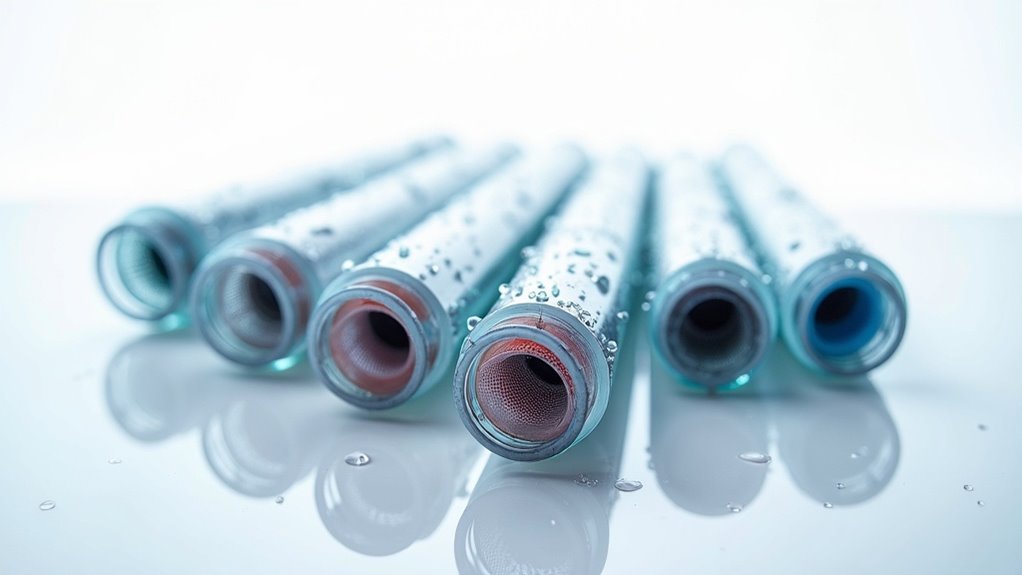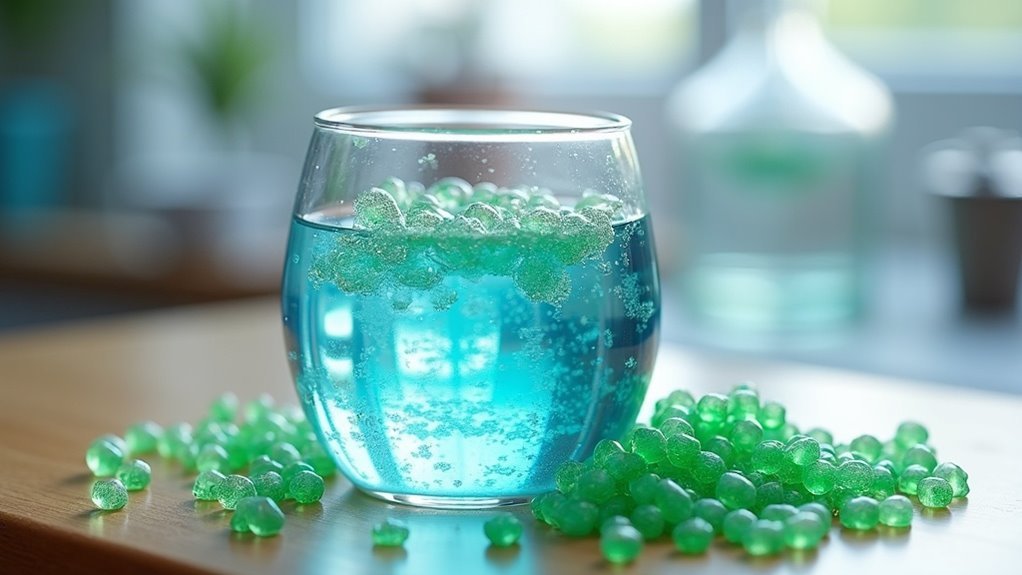
Ion exchange water is a specialized treatment process that enhances water quality for coffee brewing by removing undesirable ions and replacing them with beneficial ones. The cation exchange process swaps harmful ions, such as calcium and magnesium, for sodium, while the anion exchange focuses on removing substances like nitrates that can negatively affect the taste. This method not only improves flavor extraction but also helps preserve the desirable minerals essential for a perfect cup of coffee. If you’re interested in the specific applications and benefits of ion exchange systems in coffee, there’s a wealth of information to explore.
Key Takeaways
- Ion exchange water treatment is crucial for achieving the ideal water quality in coffee brewing, removing undesirable ions that can affect flavor.
- Cation exchange replaces harmful calcium and magnesium ions with sodium ions, while anion exchange substitutes harmful anions with chloride ions, ensuring the best possible water profile for brewing.
- This process significantly enhances flavor extraction in coffee, supporting optimal results in various brewing methods such as immersion and percolation.
- Ion exchange systems are cost-effective due to their ability to regenerate and can be tailored to target specific contaminants, making them a practical choice for coffee enthusiasts.
- However, these systems have limitations, including finite capacity, the necessity for frequent regeneration, and reduced effectiveness against organic compounds when compared to methods like reverse osmosis.
Overview of Ion Exchange Process
The ion exchange process is a fascinating method that can be applied to enhance the quality of water used in coffee brewing by removing undesirable dissolved ions and replacing them with more beneficial ones.
This reversible chemical process utilizes ion exchange resins to execute cation exchange, swapping positively charged ions like calcium and magnesium, which can affect the taste of coffee, for sodium ions. Additionally, anion exchange can replace negatively charged ions such as nitrates and sulfates with chloride ions, ensuring a purer water source.
As the resin becomes exhausted, a regeneration process occurs, often involving sodium chloride, to maintain its effectiveness.
The efficiency of this system is influenced by factors such as ion size and concentration, which are crucial in ensuring the best water quality for brewing coffee. This process is imperative for achieving optimal flavor extraction and consistency in various coffee applications.
Types of Ion Exchange
In exploring the types of coffee brewing methods, you’ll encounter two primary techniques: immersion brewing and percolation brewing.
Immersion brewing focuses on steeping coffee grounds in water for an extended period, while percolation brewing involves passing water through coffee grounds in a continuous flow.
Additionally, specialty coffee blends cater to specific flavor profiles, enhancing the overall coffee drinking experience.
Cation Exchange Mechanism
Cation exchange mechanisms play an essential role in coffee preparation by replacing unwanted positively charged ions, such as calcium and magnesium, with sodium ions from a cation exchange resin.
Strong Acid Cation (SAC) resins effectively operate across all pH ranges, removing various cations by substituting them with hydrogen ions, which can enhance the flavor profile of the coffee.
In contrast, Weak Acid Cation (WAC) resins are selective, targeting specific cations under defined conditions to fine-tune the water quality for brewing.
Regeneration typically involves sodium chloride brine to refresh the resin for repeated use.
This process is crucial for achieving the ideal water composition, ultimately enhancing the overall coffee quality and flavor experience.
Anion Exchange Mechanism
While many are familiar with cation exchange, anion exchange mechanisms are equally important in the context of coffee brewing.
Anion exchange resins play a role in enhancing the quality of water used for brewing coffee, effectively removing harmful anions that can affect flavor, such as sulfate and nitrate.
Strong base anion (SBA) resins can help neutralize undesirable flavors from strong acids, while weak base anion (WBA) resins allow for selective removal of specific organic compounds that may alter the taste.
The efficiency of the ion exchange mechanism is influenced by factors such as ion size and charge density.
This process ensures that the water used for brewing coffee is of high quality, resulting in a better tasting cup with minimal dissolved contaminants, making it essential for coffee enthusiasts and baristas alike.
Specialty Ion Exchange Resins
Understanding the various types of specialty coffee is essential for enhancing your coffee experience. These coffees are specifically sourced for their unique flavor profiles and characteristics, such as fruity, nutty, or floral notes. Their specific growing conditions and processing methods enhance their quality, greatly improving your enjoyment of each cup.
Common types include single-origin coffees, which highlight the distinct flavors of a particular region, and blends, which combine beans from different sources for a balanced flavor.
Specialty coffees can also be roasted to specific levels, ensuring peak flavor while catering to individual taste preferences and brewing methods.
Ion Exchange Resins
Coffee plays an essential role in many cultures and daily routines, offering a rich and flavorful experience for enthusiasts around the world.
You’ll find four main types of coffee beans—Arabica, Robusta, Liberica, and Excelsa—each with unique flavors and characteristics suited for different brewing methods.
Understanding these categories helps you choose the right bean for a delightful coffee experience in various settings.
Types of Ion Resins
In the world of coffee preparation, various types of brewing methods play essential roles in achieving the perfect cup.
Strong brewing techniques, such as espresso, extract rich flavors and aromas, making them suitable for those who prefer bold tastes.
Pour-over methods allow for precise control over water flow and extraction time, ideal for highlighting the coffee’s unique characteristics.
French press brewing offers a full-bodied experience by steeping coffee grounds, while cold brew techniques provide a smooth, less acidic alternative.
The efficiency of these brewing methods relies on factors such as grind size, water temperature, and brew time, which all influence the final flavor profile of the coffee.
Applications and Uses
When it comes to coffee preparation, ion exchange resins play an essential role in improving water quality across various brewing methods.
These resins effectively remove contaminants by exchanging harmful cation and anion ions, such as calcium and magnesium, with sodium ions, ensuring a smoother tasting cup of coffee.
Strong acid cation resins are ideal for water softening, which helps to prevent scale formation in coffee machines, while anion exchange resins target undesirable anions like sulfate and nitrate, resulting in better flavor extraction.
Specialty ion exchange resins address specific contaminants, enhancing the overall coffee experience.
In commercial coffee brewing applications, these systems provide high-purity water, vital for maintaining the integrity of coffee flavors and aromas, ensuring every cup meets the highest standards.
Applications of Ion Exchange Water
While many brewing methods exist, the applications of ion exchange water stand out due to their versatility and effectiveness in the coffee industry. You’ll find ion exchange water essential in water softening, where calcium and magnesium ions are exchanged for sodium to prevent limescale buildup in coffee machines. It also produces ultrapure water for extracting the finest flavors in coffee, enhances beverage quality by removing unwanted minerals, and effectively purifies water for brewing.
| Application | Purpose |
|---|---|
| Water Softening | Calcium and magnesium removal to protect equipment |
| Ultrapure Water Production | Removal of dissolved ionic contaminants for flavor |
| Coffee Brewing Purification | Targeting harmful contaminants for better taste |
Advantages of Ion Exchange Water Treatment
Ion exchange water treatment offers considerable advantages for both coffee enthusiasts and commercial coffee operations, primarily due to its efficiency in selectively removing specific ionic contaminants that can affect flavor.
Here are three key benefits:
- Cost-Effective: The regeneration process of ion exchange resins allows for repeated use, considerably lowering operational costs compared to single-use systems, making it economical for coffee shops and cafes.
- Enhanced Water Quality: Unlike reverse osmosis, ion exchange retains beneficial minerals that contribute to the overall taste profile of coffee, improving water quality without sacrificing essential nutrients.
- Versatility: Customized resins can target specific contaminants, including hardness ions, ensuring that the water used for brewing coffee meets health standards and enhances the final beverage.
These advantages make ion exchange systems an invaluable choice for effective water treatment in the coffee industry.
Limitations of Ion Exchange Systems
Despite the advantages ion exchange systems offer for treating water used in coffee preparation, they come with notable limitations that can impact their effectiveness. Their finite capacity means that high concentrations of contaminants can quickly reduce efficacy, necessitating frequent regeneration. This process incurs operational costs and generates wastewater, raising environmental concerns. Additionally, ion exchange is less effective for organic compounds, which limits its application in ensuring the perfect cup of coffee. The need for specialized expertise further complicates the design and maintenance of these systems. Moreover, competing ions can reduce selectivity, hindering the removal of targeted contaminants that can affect the flavor and quality of the coffee.
| Limitation | Impact |
|---|---|
| Finite Capacity | Ineffective with high contaminants |
| Regeneration Requirements | Increased operational costs |
| Competing Ions | Reduced selectivity |
Wastewater From Resin Regeneration
The regeneration of ion exchange resins produces wastewater that poses significant management challenges, much like the complexities of brewing the perfect cup of coffee. This regeneration wastewater contains concentrated contaminants and dissolved solids, necessitating careful handling, similar to the attention required in coffee preparation.
Key considerations include:
- Brine Solution: Just as a well-balanced coffee requires the right blend of ingredients, the regeneration process typically uses a 10% sodium chloride solution to recharge cation exchange resins, generating wastewater that needs careful treatment.
- Contaminant Levels: Elevated levels of contaminants must be addressed to meet environmental compliance, akin to ensuring that coffee beans are free from defects to produce a quality brew.
- Water Treatment Costs: Efficient management of this wastewater is essential, as improper disposal can escalate treatment costs, much like how poor brewing methods can lead to wasted resources and subpar coffee.
Comparison With Other Water Treatment Methods
Managing wastewater from resin regeneration sets the stage for comparing ion exchange with other coffee brewing methods.
Ion exchange effectively targets dissolved ionic contaminants in water, enhancing the flavor profile of coffee, while reverse osmosis (RO) excels in removing a broader range of impurities, resulting in a cleaner taste and minimizing total dissolved solids.
Although RO is suitable for complex applications like high-end coffee brewing, it incurs higher operational costs due to energy requirements and membrane maintenance.
Combining ion exchange and RO in water treatment systems can enhance the purity of water used in coffee preparation, leveraging the strengths of both methods while optimizing costs for coffee enthusiasts.