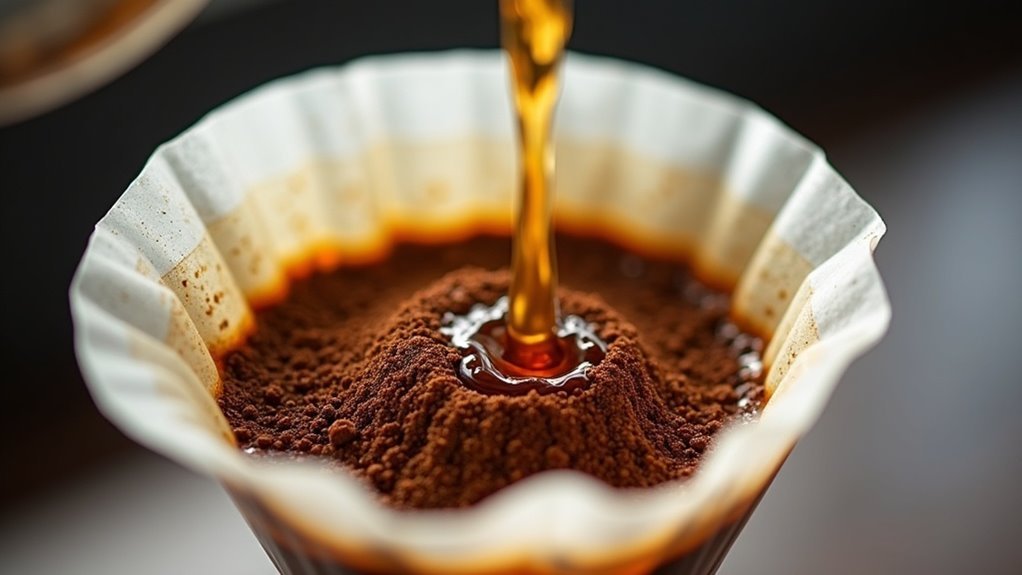
Fines migration in pour-over brewing refers to the movement of small coffee particles through the brew bed, which significantly impacts both extraction and flavor. As these fines migrate downward, they can create channels that lead to clogging near the filter, slowing water flow and resulting in uneven extraction. This accumulation may lead to over-extraction and unwanted bitterness in your cup. By carefully managing grind size and employing consistent pouring techniques, you can effectively control fines migration and enhance your brew’s flavor profile. There’s always more to explore on achieving balance in your coffee-making process!
Key Takeaways
- Fines migration refers to the movement of small coffee particles during pour-over brewing, which can significantly impact the flow and extraction of flavors.
- If migration is uneven, it may lead to clogging near the filter, slowing down the water flow and causing inconsistent extraction of flavors.
- An excess of fines can result in over-extraction, which often contributes to bitter notes in the final cup of coffee.
- To achieve a balanced extraction and improve the quality of your brew, managing grind size and selecting the right filters are essential.
- Employing techniques like pulse pouring and preinfusion can help minimize the movement of fines and maintain a consistent slurry throughout the brewing process.
Understanding Fines Migration in Pour Over Brewing
Fines migration in pour over brewing is a critical phenomenon that can greatly influence your coffee’s flavor profile.
During brewing, small particles, or fines, migrate downward through the coffee bed, affecting flow and extraction. Uneven migration can create channels that lead to clogging near the filter, resulting in slower water flow and uneven extraction.
To optimize this process, focus on achieving a balanced grind size and use appropriate filters. Techniques like pre-infusion can enhance even extraction, while the brewing container’s shape and texture can significantly impact fines migration.
Understanding these factors is essential for serving the best cup of coffee.
The Impact of Fines on Extraction Quality
In pour-over brewing, the presence of small coffee particles, known as fines, plays a crucial role in determining the quality of extraction.
Fines migration can create channels within the coffee grounds, disrupting the uniform flow of water and leading to uneven extraction. When fines accumulate, they can obstruct water flow, causing slower extraction rates and potentially resulting in bitter flavors.
Achieving an ideal balance of fines is essential; too many can cause clogging and channeling, while too few can lead to larger flow paths that diminish the strength of your brew.
Techniques to Manage Fines During Brewing
To effectively manage fines during pour-over coffee brewing, you can employ several techniques that enhance extraction quality and maintain ideal flow dynamics.
Adjusting the grind size is crucial; finding the right balance between fines and larger particles can significantly reduce clogging. Consistent pouring techniques, such as pulse pouring every 20-30 seconds, help maintain slurry consistency and limit the migration of fines.
Finding the right grind size and employing consistent pouring techniques can greatly enhance coffee extraction and reduce clogging.
Preinfusing coffee grounds with a small amount of water saturates them, minimizing fines movement and promoting even extraction. Additionally, using filters designed to restrict the formation of compact fines layers can improve water flow and further mitigate clogging.
Experimenting with different brewing methods and filter types can greatly impact fines accumulation and overall extraction quality, ensuring a delicious cup of coffee every time.
Effects of Fines Migration on Flow Rate and Flavor
While brewing pour-over coffee, the migration of fines can significantly impact both flow rate and flavor profile.
The accumulation of fines near the filter can block pore openings, slowing down the flow rate and risking over-extraction, which can lead to undesirable bitterness. Although fines can enhance extraction due to their increased surface area, an excess of fines can cause clogging, disrupting the flow dynamics and ultimately diminishing the strength of the brew.
Maintaining an ideal level of fines is crucial for achieving flavor clarity; too few fines can create larger flow paths that dilute flavor, while an abundance of fines can introduce astringency.
Techniques such as preinfusion can help manage fines migration, ensuring a consistent flow and enhancing the overall flavor experience of your coffee.
Best Practices for Achieving Balanced Extraction
Achieving balanced extraction in pour-over coffee requires careful attention to several variables that influence the brewing process.
Start with a consistent grind size, ideally medium, to minimize fines while maximizing surface area for ideal extraction.
Utilize pulse pouring techniques to maintain slurry consistency and reduce fines migration, ensuring even extraction.
Pre-wetting the coffee bed during the bloom phase for about 30 seconds helps larger particles expand, preventing fines from clogging the filter.
Experiment with different filter types, like V60 or Kalita Wave, as they affect drawdown rates and the overall flavor profile of your coffee.
Finally, monitor water temperature around 200°F (93°C) for enhanced extraction efficiency, ensuring a rich and balanced cup of coffee.