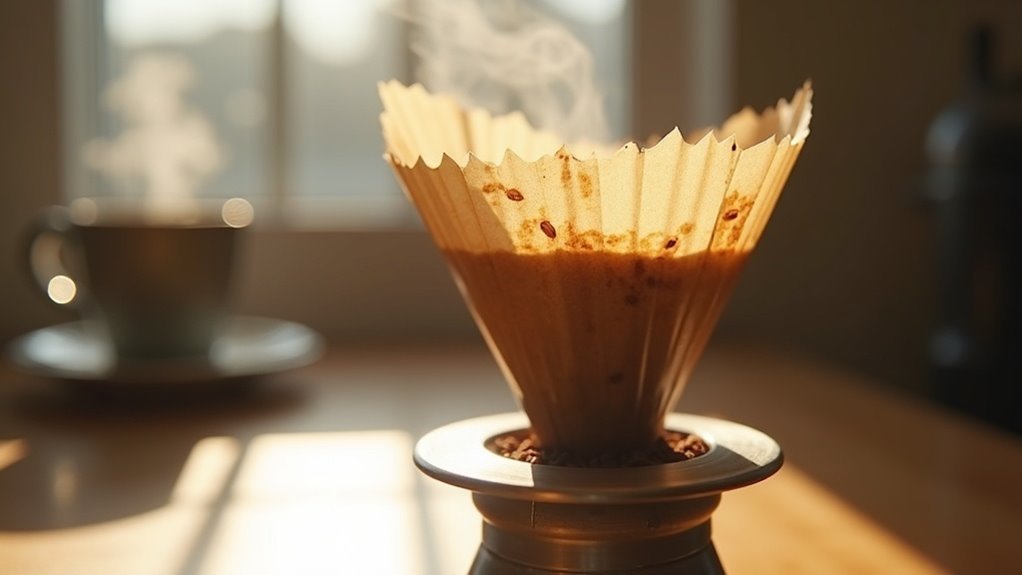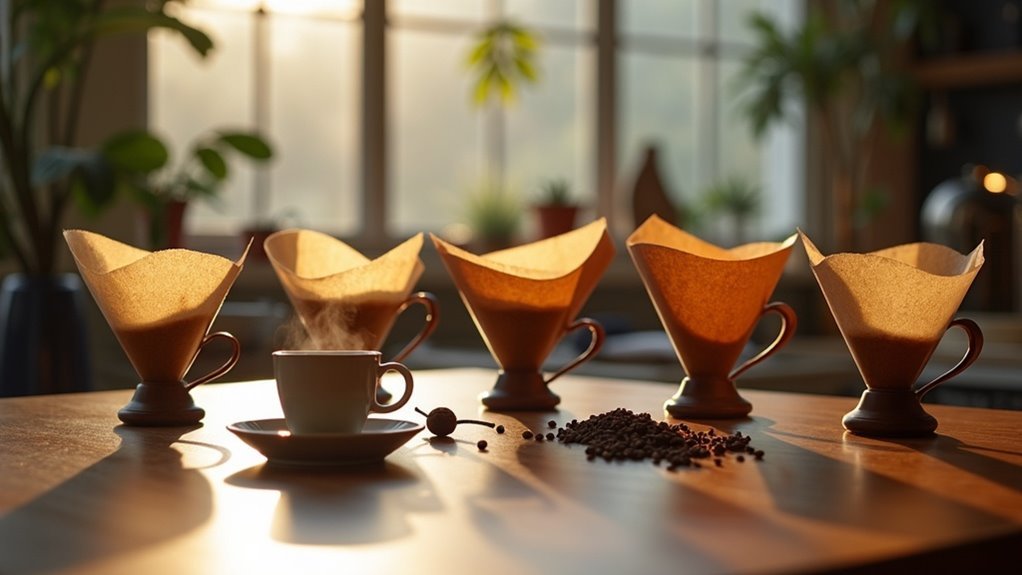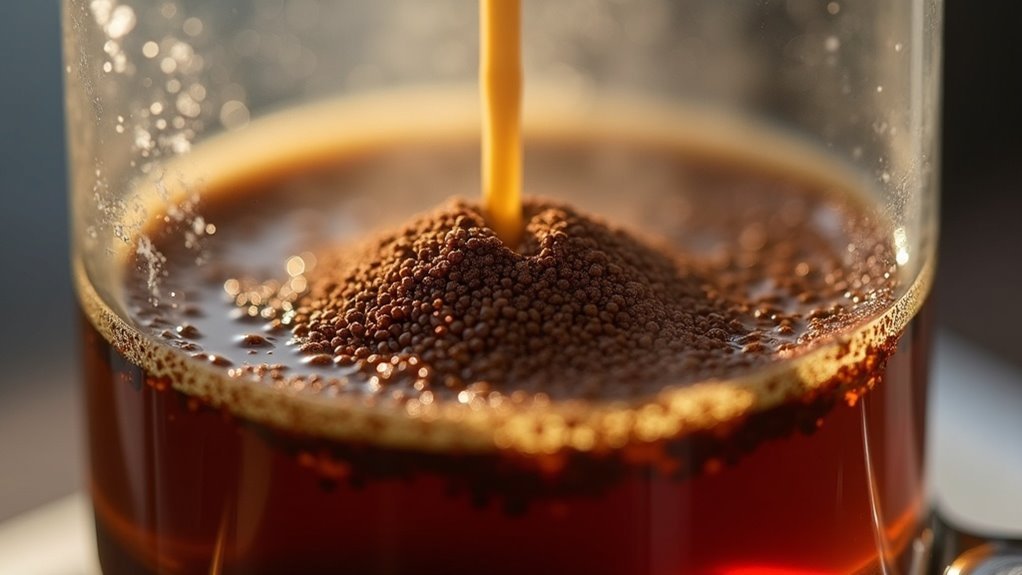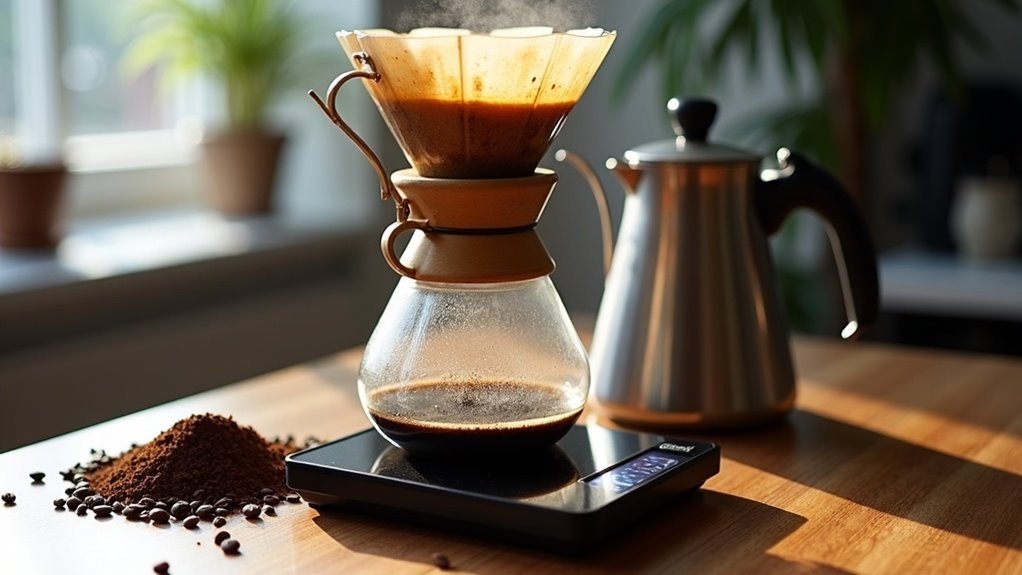
For pour-over coffee, aim for a ratio between 1:14 and 1:20, with 1:17 being a great starting point for balanced flavor. This means using about 22 grams of coffee for every 350 grams of water for a standard 12-ounce cup. Precise measurements are key to consistency, so consider using a kitchen scale for accuracy. Additionally, adjusting grind size can further refine your brew, allowing you to explore different flavor profiles. Dive deeper into these variables to elevate your coffee experience!
Key Takeaways
- A common starting point for pour-over coffee is a 1:17 coffee-to-water ratio, which provides a balanced cup.
- For a standard 12oz cup, use 22 grams of coffee with 350 grams of water to achieve this ratio.
- You can adjust the ratios based on your taste preferences: use 1:14 for a stronger coffee or 1:20 for milder flavors.
- The grind size is crucial; a medium-fine grind works well for V60, while a medium-coarse grind is ideal for Chemex brewing.
- Maintaining consistency in your measurements is essential for ensuring a balanced flavor and high-quality brew.
Understanding Coffee-to-Water Ratios
Understanding the coffee-to-water ratio is vital for achieving the perfect brew. The ideal ratio of coffee to water can greatly influence flavor.
For instance, a common starting point is 1:17, meaning for every 1 gram of coffee grounds, you’ll use 17 grams of water. Accurate measurements are essential; using weight instead of volume helps account for varying bean densities.
A starting point of 1:17 coffee-to-water ratio ensures a balanced brew; precise measurements enhance flavor consistency.
Adjusting this ratio allows you to customize strength—lower ratios yield stronger brews, while higher ratios create milder ones.
Ultimately, mastering the right amount of water guarantees consistent results, enhancing your chosen brew method and pleasing those you serve. Enjoy your coffee journey!
Recommended Ratios for Pour-Over
When brewing pour-over coffee, it’s essential to consider the coffee-to-water ratio that enhances flavor and consistency. The recommended ratio typically ranges from 1:14 to 1:20, with many starting at 1:17 for a balanced brew.
For a standard 12oz cup, this translates to about 0.75oz (22 grams) of coffee combined with 350 grams of water. Adjusting the ratio allows for personal taste—closer to 1:14 for a stronger cup and around 1:20 for a milder brew.
Consistency is key, so use precise measurements by weight to ensure optimal flavor extraction and repeatable results every time.
Measuring Coffee Accurately
Achieving the perfect cup of pour-over coffee hinges not just on the right ratio but also on accurate measurements. To guarantee precision, use a kitchen scale to weigh the amount of coffee in grams. A common starting point is a 1:16 coffee-to-water ratio; for every 16 grams of water, use 1 gram of coffee.
For a 12 oz cup, measure approximately 22 grams of coffee and 350 grams of water. Unlike volume measurements, weighing is critical since coffee beans vary in density.
High-tech scales like the Acaia Pearl can enhance accuracy, especially for precise brew methods like espresso. This careful attention to measurement ensures that every cup of coffee you brew is consistently delicious.
The Importance of Grind Size
Grind size plays a significant role in brewing pour-over coffee, directly influencing flavor extraction and overall taste. A medium fine grind is generally recommended for methods like the V60, while a medium-coarse grind suits Chemex. This balance promotes even saturation during the brewing process.
Brew time correlates with grind size; aim for 2:30-3:00 minutes with a medium fine grind. If your coffee tastes bitter, consider adjusting the grind to a coarser setting to prevent over-extraction.
Consistency is essential, as uneven grind size can lead to undesirable flavors, ultimately affecting the quality of the coffee you serve to others.
Brewing Techniques and Their Impact
When brewing pour-over coffee, understanding the variations in coffee-to-water ratios is essential for ideal flavor.
Different brew methods, such as flat-bottomed versus conical devices, significantly influence extraction and may require you to adjust your ratios for optimal results.
Ratio Variations Explained
While various brewing techniques can influence your coffee’s flavor profile, understanding the ideal coffee-to-water ratio is essential for achieving the desired taste.
For pour-over methods, a 1:16 ratio is often recommended, which involves using about 22 grams of coffee and 350 grams of water for a 12oz cup.
However, grind size also plays a critical role; a coarser grind in Chemex might suit a 1:15 ratio, while a finer grind in a V60 fits well with a 1:17 ratio.
Maintaining consistent ratios allows you to adjust strength and flavor, ensuring quality in every cup of coffee you brew.
Brew Methods Comparison
Understanding the nuances of different brewing methods is essential for enhancing your coffee experience, as each technique can markedly alter flavor extraction and overall taste.
Pour-over methods typically employ a coffee-to-water ratio of 1:14 to 1:20, often starting at 1:17 for ideal results. In contrast, full immersion techniques like French press may favor a 1:15 ratio.
The grind size plays a vital role, with finer grinds necessitating shorter brew times and coarser grinds requiring longer extraction.
Adjusting Ratios for Personal Preference
When it comes to pour-over coffee, your taste preferences can greatly influence the ideal coffee-to-water ratio.
If you enjoy a bolder cup, you might experiment with a 1:14 ratio, while those who prefer a lighter flavor may find a 1:20 ratio more appealing.
Taste Preference Variations
Adjusting the coffee-to-water ratio in pour-over brewing allows you to tailor the flavor and strength of your cup to match your unique taste preferences.
Consider these variations:
- 1:14 for a strong cup, emphasizing bold flavors.
- 1:16 for a balanced brew, perfect for most coffee lovers.
- 1:15 for a lighter brew, providing a smoother taste.
- 1:20 for a milder flavor, ideal for those who enjoy subtler notes.
Experimenting with these ratios, alongside grind size, helps you refine your brew, ensuring it meets your guests’ expectations and elevates your coffee serving experience.
Strength Adjustments
To achieve your desired coffee strength in pour-over brewing, fine-tuning the coffee-to-water ratio is key.
For a stronger brew, aim for a 1:10 ratio, while a 1:15 ratio results in a milder cup. A starting point of 1:17 typically balances strength and flavor.
If you find your coffee too bitter, consider adjusting the grind size to be coarser or reducing the brew time. Conversely, a watery taste may indicate the need for a finer grind or a higher coffee-to-water ratio.
Ultimately, personal preference drives these adjustments, helping you create that well-rounded flavor your guests will appreciate.
Experimenting With Ratios
Experimenting with different coffee-to-water ratios allows you to customize your pour-over experience to suit your taste.
The recommended starting coffee-to-water ratio is 1:17. To refine your brew, consider these adjustments:
- Use 1:15 for a stronger cup.
- Opt for 1:18 for a milder flavor.
- Try 1:20 for a lighter brew.
- Adjust by 1 gram of coffee to 2-3 grams of water for subtle changes.
These tweaks help keep your coffee enjoyable.
Keep notes on your ratios and resulting flavors, so you can replicate your perfect cup and serve others with confidence.
Enjoy your coffee journey!