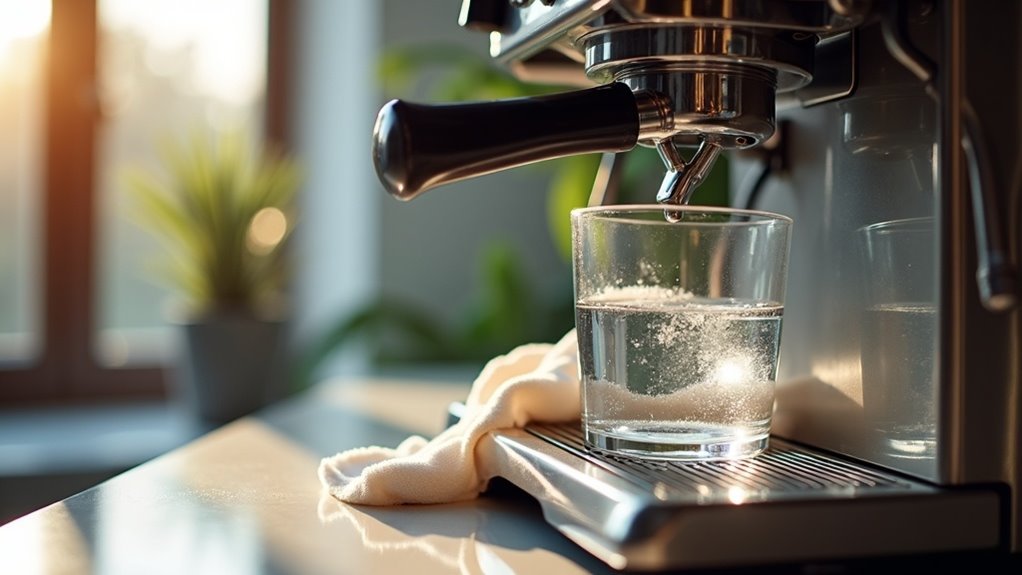
To clean your espresso machine’s water tank, start by unplugging the machine for safety. Remove the tank and inspect it for cracks or algae, which can affect the quality of your coffee. Use warm, soapy water with a non-abrasive sponge to clean it thoroughly, then rinse well to ensure no soap residue remains. For effective sanitization, swish hydrogen peroxide around the tank, allowing it to sit for a couple of minutes to eliminate any lingering bacteria. Finally, ensure the tank dries completely before reattaching it to maintain the best brewing conditions for your coffee. Interested in more tips for keeping your espresso machine in top shape?
Key Takeaways
- Power off and unplug the espresso machine before cleaning the water tank to ensure safety.
- Remove the water reservoir, inspecting it for cracks, algae, and debris before cleaning.
- Clean the tank with warm, soapy water using a non-abrasive sponge to avoid damage.
- Sanitize the tank with hydrogen peroxide, letting it sit briefly before rinsing to eliminate odors.
- Regularly inspect and clean the tank every 7 to 14 days to maintain the quality of your coffee experience.
Understanding the Importance of Cleaning the Water Tank
Cleaning the water tank of your espresso machine is essential, not just for hygiene but also for ensuring the best flavor in your coffee.
Regular cleaning prevents the buildup of contaminants in the water reservoir, which can taint your espresso’s taste. If you use your machine frequently, aim to clean it every two weeks; otherwise, weekly cleaning is ideal for less frequent use.
It’s also important to regularly inspect the tank for cracks or algae growth to maintain both the quality of your water and the longevity of your espresso machine.
A clean water tank truly enhances your brewing experience, allowing you to enjoy the rich and aromatic flavors of your coffee to the fullest.
Preparation Steps for Cleaning
Before you start cleaning your espresso machine’s water tank, ensure that the machine is powered off and unplugged for safety.
Next, carefully remove the water reservoir and inspect it for any cracks or buildup that may require your attention.
Finally, gather your cleaning supplies, which should include hot water, a mild detergent, and a non-abrasive sponge, while creating a tidy workspace to streamline the cleaning process.
Enjoy the journey to maintaining your coffee equipment for optimal brewing!
Inspect Water Reservoir Condition
To ensure your espresso machine delivers the best coffee experience, it’s essential to inspect the water reservoir for any signs of wear or damage. Look for cracks, algae growth, or a white film which may indicate limescale buildup. Regular checks guarantee you’re using fresh water, enhancing the quality of your coffee.
| Condition | What to Look For | Action Required |
|---|---|---|
| Cracks | Visible damage | Replace reservoir |
| Algae growth | Green or slimy surfaces | Clean thoroughly |
| Limescale buildup | White film | Descale immediately |
| Debris | Fragments or particles | Rinse and wipe |
| General wear | Scratches or discoloration | Consider replacement |
Gather Cleaning Materials Needed
As you prepare to clean your espresso machine’s water tank, it’s crucial to gather the right materials to ensure a smooth process.
You’ll need hot water, a mild, non-abrasive detergent, a non-abrasive sponge, and a sink. If you’re concerned about limescale buildup, having a descaler on hand is a good idea.
Additionally, set up a dish rack for drying afterward. Before you start, inspect the tank for any cracks, as damaged plastic water tanks can lead to issues.
Always refer to the manufacturer’s instructions for specific cleaning recommendations to maintain the longevity and performance of your espresso machine.
Allow the tank to sit for ideal results. Enjoy your coffee-making experience!
Power Off Machine First
Powering off your espresso machine and unplugging it from the wall outlet is essential for ensuring safety during the cleaning process. This simple step protects you from electric shock and prevents any accidental activation while you’re working.
Once the machine is off, carefully remove the water reservoir according to the manufacturer’s instructions, avoiding damage. Inspect the reservoir for cracks, algae, or limescale, which may require further attention.
Clear your workspace to minimize risks during the cleaning. With everything prepared, you’re ready to proceed, ensuring the best care for your machine and the delicious coffee you serve to others.
Inspecting the Water Tank for Damage
Inspecting your coffee machine’s water tank is essential for maintaining both its performance and longevity. Look for visible cracks that could cause leaks, which often aren’t covered by warranty. Check for algae growth or limescale, as these can affect the quality of your brewed coffee. Verify that the valve at the bottom closes correctly to avoid spills. Regularly assess for debris post-cleaning to maintain sanitation. Don’t forget to monitor the O-ring for wear that could compromise the tank’s seal.
| Issue | Effect on Performance | Action Required |
|---|---|---|
| Cracks | Leaks | Replace tank |
| Algae/Limescale | Poor coffee quality | Deep clean |
| Valve Malfunction | Spills | Replace or repair valve |
| Debris | Contaminated coffee | Clean thoroughly |
| Worn O-ring | Leakage risk | Replace O-ring |
Cleaning Process: Step-by-Step Guide
Now that you’ve inspected the coffee machine’s water reservoir, it’s time to prepare for the cleaning process.
Start by gathering your supplies, including warm, soapy water and a non-abrasive sponge, to effectively tackle the task ahead.
With a clear plan in place, you’ll ensure the reservoir is thoroughly cleaned and ready to brew your best coffee.
Preparation for Cleaning
Before you start the cleaning process for your espresso machine, it’s essential to prepare your workspace and equipment properly.
Begin by clearing the area around your espresso machine to ensure safe and easy access to the water tank.
Take a moment to inspect the tank for any visible debris, cracks, or algae, as these observations will inform your cleaning strategy.
To detach the tank, gently pull it upwards; this action will automatically close the valve, preventing any jerking motions that could potentially cause damage.
With everything organized and ready, you can begin a thorough and effective cleaning that won’t only enhance your espresso machine’s performance but also elevate the coffee experience for everyone you serve.
Cleaning Steps Overview
To ensure your espresso machine delivers the best coffee experience, follow these cleaning steps to effectively rejuvenate the water tank:
- Add 1 teaspoon of mild, non-abrasive dish detergent to the tank, then fill it with hot water until soap suds form.
- Use a clean, non-abrasive sponge to scrub both the inside and outside of the tank, removing any buildup or contaminants that could affect your brew.
- Drain the solution, rinse thoroughly under hot running water, and allow the tank to air dry upside down on a dish rack.
Regular inspections for cracks or limescale buildup will help maintain peak performance and hygiene, ensuring you serve exceptional coffee every time.
Final Inspection and Reassembly
After thoroughly cleaning the water tank and allowing it to air dry, it’s time to focus on the final inspection and reassembly of your coffee machine. First, verify that the reservoir is completely dry, then inspect it for any debris or soap residue that could affect the flavor of your coffee. Refill it with fresh, quality water, maintaining a ratio of 4 parts tap to 1 part distilled water to ensure optimal brewing conditions. Securely reinsert the reservoir, confirming it clicks into place without forcing it. Finally, check for leaks around the reservoir area to confirm proper installation, ensuring your coffee machine is ready for its next brew.
| Step | Action | Notes |
|---|---|---|
| Dry the tank | Turn upside down on a dish rack | Prevent moisture damage |
| Inspect | Look for debris or residue | Ensure coffee quality |
| Refill | Use fresh water, maintain correct ratio | Reduces scaling issues for better flavor |
| Reinsert | Click reservoir back into machine | Avoid forcing to prevent damage to brewing system |
| Final check | Inspect for leaks around reservoir area | Verify proper installation for efficient brewing |
Sanitizing Techniques for Deeper Cleaning
While regular cleaning is essential, incorporating effective sanitizing techniques can elevate the hygiene of your espresso machine’s water tank.
Follow these steps to ensure a thorough sanitization for optimal coffee flavor:
- Use hydrogen peroxide by sloshing it around the tank’s interior surfaces, and let it sit for a couple of minutes before rinsing to eliminate any coffee residue and odors.
- Apply the same method to the drip tray, effectively removing lingering flavors and contaminants that can affect the taste of your brews.
- Allow the tank to dry completely after sanitizing to prevent moisture-related issues, which can encourage bacterial growth and compromise the quality of your coffee.
Maintenance Tips for Longevity
Maintaining your espresso machine’s water tank is vital for ensuring its longevity and optimal performance, especially for coffee enthusiasts.
Clean the tank every few weeks to prevent contaminants that can affect the flavor of your brews. Regularly inspect for cracks or damage; replacing a damaged tank is essential to avoid leaks and ensure the quality of your coffee remains high.
Don’t forget to apply lubricant on the O-ring periodically to enhance the seal, guaranteeing a proper fit upon reattachment. When not in use, store the tank in a clean, dry place to maintain hygiene and avoid any unwanted flavors.
After reinstallation, monitor for leaks to ensure the tank functions correctly and to protect your machine from water damage, ultimately preserving the quality of your coffee experience.
Frequency of Cleaning Based on Usage
Cleaning your espresso machine’s water tank regularly is essential for any coffee enthusiast.
Maintaining ideal hygiene and preventing contaminants is key to enjoying your favorite brews. Here’s a suggested cleaning frequency based on how often you use your machine:
- Less than once every 3 days: Clean the tank every 7 days to prevent buildup and ensure fresh-tasting coffee.
- Used more frequently: A cleaning every 14 days is sufficient to maintain a sanitary water reservoir and optimal flavor.
- Always follow the manufacturer’s recommendations to enhance your machine’s longevity and performance.
Community Recommendations and Best Practices
Engaging with community forums can provide valuable insights into effective cleaning methods for your espresso machine’s water tank. Many coffee enthusiasts recommend using warm, soapy water or Milton tablets for disinfection. Regular inspections for debris, algae, or limescale buildup are essential for maintaining the quality of your coffee. A consistent cleaning routine, including sanitizing every few weeks, enhances your machine’s longevity and ensures a better brewing experience.
| Cleaning Method | Tips |
|---|---|
| Warm, Soapy Water | Rinse thoroughly afterward to avoid soap residue |
| Milton Tablets | Follow package instructions for optimal results |
| Soft Cloth/Sponge | Use to minimize scratches on surfaces |