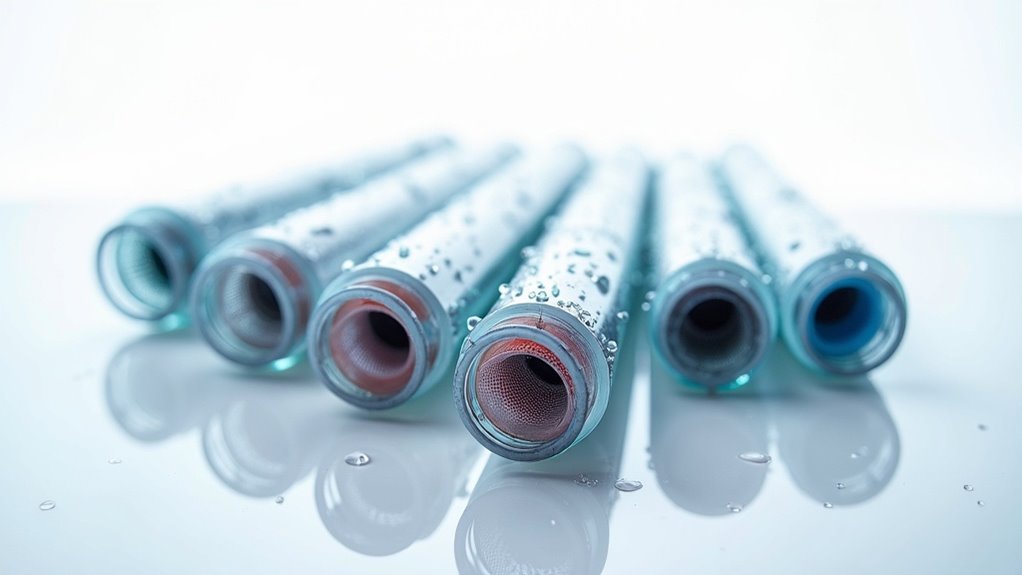
Yes, you can brew espresso with paper filters, and it offers several advantages. Using paper filters enhances flavor clarity by blocking larger oils and fats, resulting in a smoother mouthfeel. They can also improve extraction yields by 0.7% to 1.9%, making your espresso more efficient. Additionally, these filters help reduce channeling issues. If you’re curious about how different filters and techniques can elevate your coffee experience, there’s much more to discover.
Key Takeaways
- Yes, espresso can be brewed with paper filters, which enhances clarity and prevents channeling during extraction.
- Paper filters allow for finer grinds, increasing extraction yields by 0.7% to 1.9%.
- Using filters results in a smoother mouthfeel and clearer flavor profiles, as they block larger oils and fats.
- Different paper filter designs promote consistent water flow, improving overall brewing efficiency for your coffee.
- The use of filters alters extraction dynamics, providing a cleaner profile similar to that of filtered coffee.
Understanding the Use of Paper Filters in Espresso
While many coffee enthusiasts may overlook paper filters, their use can greatly impact the brewing process and the final cup. Incorporating paper filters enhances clarity by preventing channeling and allowing for finer grinds, which improves extraction yield.
Filters like Melitta or Weber’s Espresso Paper Filters (EPF) can increase extraction rates by 0.7% to 1.9%, resulting in a smoother puck. The wet crepe method of EPF promotes even extraction, particularly beneficial for delicate coffee profiles.
Benefits of Using Paper Filters
Using paper filters in espresso brewing offers distinct advantages that enhance your coffee experience.
You’ll notice improved flavor clarity and a smoother mouthfeel, as these filters effectively trap unwanted fats and solubles.
Additionally, they help reduce channeling issues, leading to increased extraction efficiency for a more satisfying cup of coffee.
Enhanced Flavor Clarity
When brewing espresso, the choice of filter can significantly enhance flavor clarity. Utilizing espresso paper filters effectively blocks larger fats and solubles while allowing finer grinds through, resulting in a cleaner, more refined cup. This method contributes to a smoother mouthfeel and a more harmonious finish. Feedback from the coffee community highlights that many enthusiasts notice substantial improvements in flavor clarity when using paper filters.
| Benefit | Description |
|---|---|
| Enhanced Clarity | Blocks larger particles for a cleaner taste |
| Smoother Mouthfeel | Results in a more rounded finish |
| Improved Extraction | Increases extraction yields (+0.7% to +1.9%) |
| Even Water Flow | Specialized design promotes consistent brewing |
Increased Extraction Efficiency
The benefits of employing paper filters in espresso brewing extend beyond enhanced flavor clarity to include significant increases in extraction efficiency.
Using these filters can boost extraction yields by 0.7% to 1.9%, thanks to their ability to prevent coffee grounds from clogging the portafilter basket holes. This allows for finer grinds and promotes even extraction, enhancing the clarity and smoothness of your espresso.
With higher total dissolved solids (TDS) measurements, shots brewed with paper filters demonstrate improved extraction efficiency.
Specialized filters, like Weber’s Espresso Paper Filters, further optimize the brewing process by facilitating faster water flow and stable extraction, resulting in a more refined coffee experience.
Reduced Channeling Issues
While many coffee enthusiasts seek to perfect their brewing technique, reducing channeling issues often proves to be a significant challenge. Using paper filters can help tackle this by filtering out fines that clog the portafilter, leading to a more consistent extraction. Specialty paper filters, like Weber’s, promote stable water flow, minimizing channeling risks. Baristas report smoother shots and improved flavor clarity thanks to these filters.
| Benefit | Description |
|---|---|
| Reduced Channeling | Filters block fines and larger solubles |
| Enhanced Extraction | Finer grinds without clogging the portafilter |
| Improved Flavor Clarity | Clearer taste profiles from smoother shots |
Experiment Overview and Methodology
To investigate the impact of paper filters on espresso extraction and flavor, this experiment utilized the Kickstep Blend from The Great North, pulling shots at ratios of 1:1, 1:2, and 1:3, both with and without filters.
Melitta basket filters were customized by cutting and folding them to create eight tailored filters per unit, enhancing usability.
A refractometer was employed to measure extraction percentages, indicating higher yields with the use of paper filters, particularly at the 1:3 ratio.
The use of paper filters notably increased extraction yields, especially at the 1:3 ratio.
Furthermore, the methodology included steam pre-infusion, which showed improved water flow and temperature stability when filters were used, highlighting their potential advantages in espresso brewing.
Results and Observations
When comparing extraction yields in coffee brewing, using paper filters can boost your results by up to 1.9%, particularly at higher brew ratios.
Furthermore, you may notice a significant difference in flavor profiles, with distinct notes like cherry or caramelized sugars emerging more clearly.
These observations indicate that paper filters not only enhance extraction consistency but also elevate the overall coffee tasting experience.
Extraction Yield Comparison
Using paper filters in espresso brewing can significantly affect extraction yields, often resulting in increases between 0.7% and 1.9%.
Without filters, typical extraction yields range from 20%-21%, while using filters can elevate this to 24%-26%, depending on the coffee type.
- Improved extraction efficiency with finer grind sizes
- Prevention of fines clogging the basket holes
- Community feedback highlights variable flavor enhancements
These factors illustrate how paper filters enhance the extraction yield in espresso.
However, individual setups and coffee types can influence the overall experience, making it essential to experiment for the best results.
This site is dedicated to exploring the nuances of coffee brewing and optimizing your coffee experience.
Flavor Profile Differences
While many coffee enthusiasts focus primarily on extraction yields, the flavor profile differences observed when using paper filters can be just as significant.
Paper filters for coffee enhance flavor clarity, allowing you to appreciate distinct notes, especially in lighter roasts. At a 1:3 brew ratio, you achieve a higher extraction yield, revealing cherry flavors over caramelized sugars.
The smoother mouthfeel mirrors filtered coffee, while still retaining the rich body that coffee lovers enjoy. By effectively removing larger fats and solubles, paper filters enable you to use finely ground coffee without channeling issues, resulting in a cleaner, more enjoyable cup.
Experimentation will reveal even more flavor potential in your coffee brewing journey.
Comparison With Traditional Brewing Methods
While traditional espresso brewing relies heavily on high pressure and flow rates, incorporating paper filters into the process can considerably alter the extraction dynamics.
- Paper filters can enhance flavor clarity by blocking larger oils and solubles, resulting in a more refined taste experience.
- You may experience a higher extraction yield, improving efficiency by up to 1.9%, allowing for better utilization of coffee grounds.
- The resultant cup can resemble filtered coffee, offering a different mouthfeel and cleaner profile that appeals to a variety of coffee enthusiasts.
Community Insights and Future Exploration
As discussions around brewing espresso with paper filters gain momentum, many coffee enthusiasts are sharing their varied experiences on forums and social media.
Some report enhanced clarity and flavor, while others see minimal differences. Significantly, using paper filters can boost extraction yields by 0.7% to 1.9%.
Baristas recommend techniques like the “filter sandwich” for ideal puck prep and to mitigate channeling. Specific filters, such as Whatman or Aeropress, are favored, encouraging experimentation to match personal setups.
Future explorations in the coffee community will likely delve into refining brewing techniques, evaluating water quality, and discovering taste improvements with diverse coffee types and filter configurations.