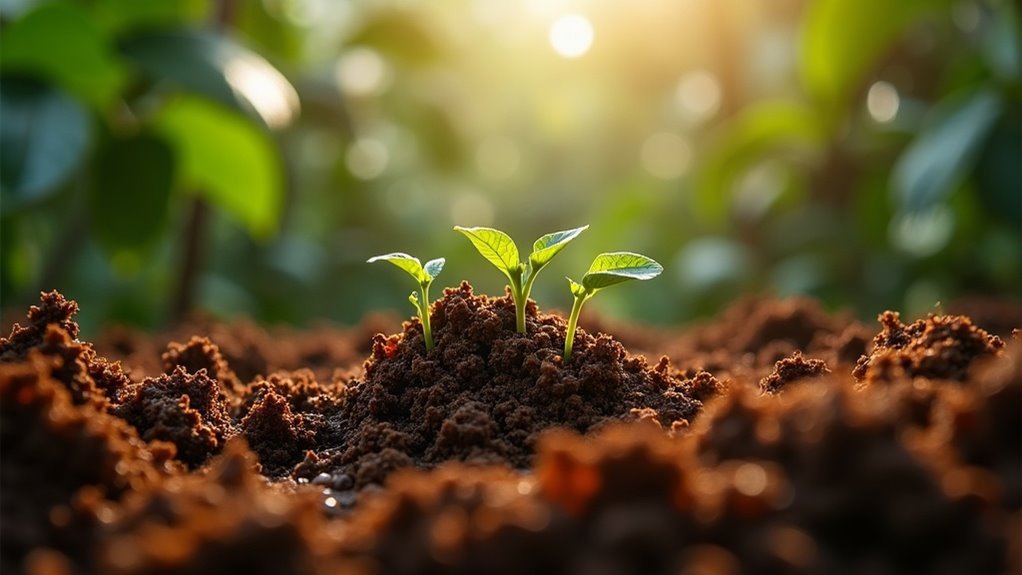
Yes, coffee pulp can absolutely be used as a fertilizer. It’s nutrient-rich, containing high levels of nitrogen, phosphorus, and potassium that enhance soil fertility. By composting coffee pulp, you transform agricultural waste into a valuable organic amendment that improves soil structure and supports sustainable practices. This not only accelerates plant growth but also boosts crop yields for farmers. Discover how this innovative use of coffee pulp can benefit your coffee cultivation practices even further.
Key Takeaways
- Coffee pulp is rich in nitrogen, phosphorus, and potassium, which are essential for plant growth and soil fertility.
- It accelerates decomposition, producing nutrient-dense compost that enhances soil health, making it particularly beneficial for coffee cultivation.
- Utilizing coffee pulp as fertilizer reduces coffee farmers’ reliance on expensive chemical fertilizers, promoting a more sustainable farming practice.
- This practice not only diverts organic waste from landfills, lowering methane emissions, but also supports environmental sustainability in the coffee industry.
- Applying coffee pulp can significantly improve the quality and yields of coffee crops, leading to better economic outcomes for farmers.
The Nutritional Benefits of Coffee Pulp
When you consider the benefits of coffee, coffee pulp emerges as a powerhouse of nutrients that greatly enhances soil health. This byproduct of coffee production boasts high levels of nitrogen, phosphorus, and potassium, essential for ideal plant growth.
Its rich carbohydrate content accelerates decomposition, resulting in nutrient-dense compost. Research shows that incorporating coffee pulp into soil can considerably improve nutrient retention and exchange, leading to healthier crops.
Studies indicate that plants can grow up to four times faster when coffee pulp is used as an amendment. By leveraging coffee pulp, you’re not just enjoying a delicious beverage; you’re also contributing to sustainable agriculture and soil fertility for future generations.
Composting Process: Transforming Waste Into Fertilizer
Composting coffee pulp is a highly effective method for transforming agricultural waste into nutrient-rich fertilizer specifically for coffee cultivation.
By employing specific composting techniques, you can optimize the decomposition process, maximizing the benefits for soil health and enhancing coffee crop productivity.
Additionally, considering the environmental impact of these practices further underscores their importance in sustainable coffee farming.
Coffee Pulp Benefits
Although coffee pulp is often viewed as waste, its transformation into compost reveals numerous benefits for soil health and agricultural sustainability.
Utilizing coffee pulp in organic compost provides:
- Enhanced nitrogen and potassium levels, essential for nutrient-rich soil.
- Accelerated decomposition, generating high temperatures that improve compost quality.
- Increased soil organic matter and cation exchange capacity, vital for effective nutrient uptake.
Farmers incorporating this practice report significant improvements in crop health and yields, showcasing coffee pulp’s role in reducing reliance on chemical fertilizers.
This sustainable approach promotes environmentally friendly farming while recycling valuable organic waste.
Additionally, coffee enthusiasts can take pride in knowing that every part of the coffee plant, including the often-discarded pulp, contributes to a more sustainable and eco-friendly coffee industry.
Composting Techniques Explained
To effectively transform coffee pulp into a valuable fertilizer, understanding the composting process is essential.
Start by layering coffee pulp with other organic materials, like pelusa, to support aerobic decomposition. This method enhances nutrient availability in your compost, particularly for coffee plants.
Utilize designated compost pits for efficient mixing and identify areas for long-term, medium-term, and ready-to-use compost. The high temperatures generated during decomposition eliminate pathogens and weed seeds, yielding a safer product for your coffee garden.
Regularly monitor soil health indicators, such as organic matter content, to assess the compost’s effectiveness, revealing improvements in soil quality over time and ensuring your efforts benefit coffee cultivation in your community.
Environmental Impact Considerations
As coffee pulp composting transforms organic waste into a nutrient-rich fertilizer, it simultaneously addresses critical environmental concerns related to coffee production.
By recycling coffee waste, you can contribute to sustainable practices that:
- Divert organic materials from landfills, specifically coffee by-products, which reduces methane emissions.
- Enhance soil structure and nutrient retention, promoting healthier coffee crops and other plants.
- Restore degraded lands often affected by coffee farming, fostering beneficial microorganisms and natural ecosystems.
This composting process not only mitigates waste but also supports agricultural sustainability within the coffee industry and environmental restoration.
Ongoing research confirms that using coffee pulp as fertilizer accelerates forest recovery, reinforcing its role in fostering a healthier planet while serving the needs of coffee-growing communities and ecosystems alike.
Practical Applications of Coffee Pulp in Agriculture
Coffee pulp is increasingly recognized in the agricultural sector as a valuable resource for enhancing soil fertility and promoting sustainable farming practices. It is rich in essential nutrients such as nitrogen and potassium, making it an excellent organic fertilizer. When composted, coffee pulp decomposes quickly, resulting in nutrient-dense compost that improves the soil’s cation exchange capacity. This process fosters healthy plant growth and decreases the dependency on chemical fertilizers. Moreover, the use of coffee pulp can aid in the rehabilitation of degraded lands, thereby enhancing overall soil quality.
| Benefit | Description |
|---|---|
| Nutrient-Rich Compost | Produces high-temperature compost that enriches soil |
| Soil Fertility | Improves nutrient retention and exchange for plants |
| Waste Reduction | Recycles byproducts from coffee production, minimizing waste |
| Regenerative Agriculture | Encourages sustainable farming methods for long-term benefits |
Environmental Impact of Coffee Pulp Recycling
Recycling coffee pulp significantly enhances soil health by increasing its organic matter and nutrient levels, which can lead to improved coffee crop yields.
By managing coffee pulp effectively, coffee growers can address waste management issues, reducing methane emissions associated with unmanaged waste.
This approach not only supports coffee agricultural productivity but also promotes a more sustainable and healthier ecosystem for coffee cultivation.
Soil Health Improvement
Utilizing coffee pulp as an organic fertilizer significantly enhances soil health by enriching nutrient content and improving overall soil structure.
By incorporating coffee pulp, you can achieve remarkable benefits:
- Increased nitrogen, phosphorus, and potassium levels, essential for robust plant growth, making it a perfect addition for coffee farmers looking to boost their crops.
- Enhanced moisture retention, ensuring coffee plants thrive even in dry conditions, which is crucial for maintaining high-quality beans.
- Improved biodiversity, as composting coffee pulp helps eliminate invasive species, allowing native flora to flourish alongside coffee plants.
Research consistently shows that these improvements lead to considerably higher nutrient levels, fostering a healthier ecosystem for coffee cultivation.
Waste Management Solutions
As coffee processing generates a substantial amount of waste, effective management solutions are critical for minimizing its environmental impact.
Implementing composting facilities allows you to recycle coffee pulp, reducing methane emissions while converting 450 tons of waste annually into valuable fertilizer. This not only enriches soil health but also decreases coffee farmers’ reliance on expensive chemical fertilizers.
Research shows that composting enhances soil organic matter and nutrient retention, promoting sustainable practices within coffee cultivation.
Economic Advantages for Farmers
Implementing coffee pulp as a low-cost organic fertilizer offers substantial economic advantages for coffee farmers.
By utilizing this resource, you can:
Utilizing coffee pulp can significantly reduce costs and enhance crop quality for coffee farmers.
- Lower cultivation costs by reducing dependence on expensive chemical fertilizers specifically for coffee crops.
- Improve soil health, leading to enhanced coffee yields and higher-quality beans.
- Transform a waste product from coffee processing into a valuable agricultural input, increasing potential revenue streams.
This sustainable practice not only boosts your income from coffee production but also promotes environmental stewardship, fostering productive coffee-growing land.
Adopting coffee pulp compost can elevate compost usage from 18% to 100%, considerably benefiting your economic viability in coffee cultivation.
Future Perspectives on Coffee Pulp Utilization
The growing recognition of coffee pulp‘s value as an organic fertilizer sets the stage for innovative practices in sustainable coffee cultivation.
As you explore its potential, consider the Volcafe project’s goal of converting 100% of coffee pulp into compost, greatly enhancing the sustainability of coffee farms.
By utilizing this waste product, coffee growers can’t only reduce dependence on chemical fertilizers but also improve soil health and fertility.
Research indicates that areas treated with coffee pulp can achieve up to 80% canopy cover in restoration efforts.
Expanding these recycling initiatives within the coffee industry can further promote effective waste management while mitigating methane emissions from coffee processing.