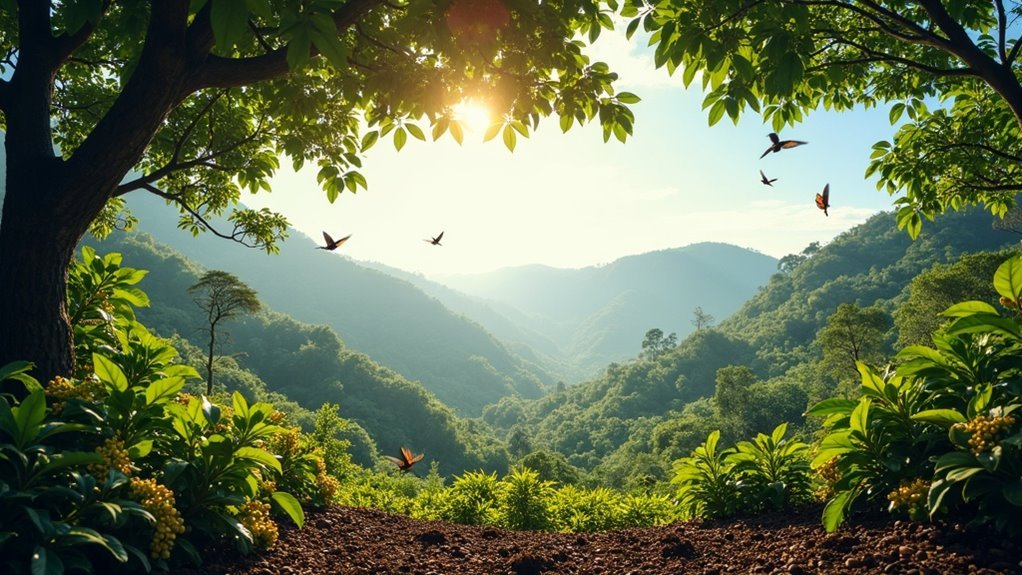
Shade trees are indeed improving biodiversity in coffee farms. They create multi-layered canopies that support over 150 bird species and enhance riverine habitats. These trees boost invertebrate populations, which play essential roles in pest control and soil health. Moreover, shade systems improve soil and water conservation, leading to greater agricultural sustainability. By fostering diverse ecosystems, shade-grown coffee farms enhance not just biodiversity but also long-term resilience. Discover the significant impacts of shade trees on coffee farming and their role in promoting a sustainable coffee industry.
Key Takeaways
- Shade-grown coffee farms support over 150 bird species, significantly enhancing biodiversity compared to sun-grown systems, which host only 5 species.
- A variety of tree species creates multi-layered canopies, improving soil health and fostering a rich ecosystem for wildlife, including insects and mammals that are beneficial to coffee cultivation.
- Shade trees enhance invertebrate biodiversity, promoting populations that contribute to natural pest control and the overall health of coffee plants.
- High levels of shade coverage help stabilize soil and water, reducing erosion and improving moisture retention, both of which are essential for sustainable coffee growth.
- Certification standards for shade-grown coffee promote biodiversity, ensuring sustainable practices that benefit ecological health and the viability of coffee farms.
The Role of Shade Trees in Biodiversity Enhancement
As you explore the role of shade trees in enhancing biodiversity on coffee farms, you’ll find that these trees serve as essential components of the ecosystem.
Shade-grown coffee farms support notably higher species diversity, with studies revealing over 150 bird species compared to just 5 in sun-grown systems.
Shade-grown coffee farms foster remarkable biodiversity, hosting over 150 bird species, in stark contrast to just 5 found in sun-grown systems.
Coffee farms with high shade coverage (30%) promote greater species richness, benefiting various wildlife, including insects and mammals.
Additionally, diverse tree species create multi-layered canopies, which improve soil health and aid in erosion control.
These factors contribute to biodiversity conservation, making shade trees vital for sustaining healthy ecosystems within coffee farming landscapes.
Benefits of Shade-Grown Coffee for Wildlife
Shade-grown coffee farms create rich habitats that greatly enhance bird diversity, supporting over 150 species compared to just 5 in sun-grown systems.
This complex canopy also provides essential environments for invertebrates, which play critical roles in various ecological processes.
Additionally, these systems contribute to ecosystem services like natural pest control, underscoring their importance for both wildlife and the sustainability of coffee agriculture.
Enhanced Bird Diversity
While conventional coffee farming often leads to notable declines in bird populations, shade-grown coffee farms provide an essential refuge for avian diversity. Supporting over 150 bird species, these farms significantly enhance biodiversity compared to sun-grown systems, which host just five species.
In Chiapas, shade coffee farms support 180 species, including 46 migratory birds, while Ethiopian farms exhibit bird diversity more than double that of forest sites. This rich bird community not only enriches ecosystems but also aids in pest control, reducing herbivorous insect populations by up to 80%.
Certification programs like Bird Friendly further ensure that sustainable practices benefit both wildlife and coffee farmers.
Habitat for Invertebrates
Invertebrates thrive in shade-grown coffee farms due to the complex agro-ecosystems these environments create. The following factors contribute to their success in coffee cultivation:
- Diverse tree species: Shade trees in coffee farms provide essential habitat and food resources, enhancing invertebrate biodiversity that’s crucial for a healthy coffee ecosystem.
- Soil health: Improved soil quality and moisture retention in shade-grown coffee systems foster populations of beneficial invertebrates like ants and beetles, which play a key role in maintaining the health of coffee plants.
- Natural pest control: Shade-grown coffee systems support natural predators, reducing the need for chemical pesticides and promoting a more sustainable approach to coffee farming.
These benefits illustrate how shade trees not only enhance biodiversity but also create a viable habitat for beneficial invertebrates, ultimately promoting ecological stability and improving coffee production in shaded environments.
Ecosystem Service Contributions
As coffee farms incorporate shade trees, they significantly enhance ecosystem services that benefit wildlife.
Shade coffee farms markedly increase bird species diversity—supporting over 180 species, including 46 migratory ones—compared to traditional farming sites. These trees create habitats for insect- and nectar-eating birds, which play essential roles in pest control and crop pollination.
In Jamaica, the economic value of these ecosystem services reaches $125 per acre annually, highlighting the financial benefits of integrating shade trees into coffee cultivation.
By fostering diverse invertebrate communities, shade cover contributes to greater biodiversity and ecological stability.
Ultimately, these advantages underscore the important role of shade trees in promoting wildlife-friendly practices within the coffee industry.
Soil and Water Conservation Through Shade Systems
Shade systems in coffee farms play an essential role in soil and water conservation, enhancing both ecological stability and agricultural productivity.
Here’s how incorporating shade cover benefits your coffee cultivation:
- Soil Erosion Control: Shade trees stabilize slopes, markedly reducing soil loss compared to sun-exposed coffee systems.
- Enhanced Soil Moisture: They improve water retention, which is vital for sustaining coffee growth and preventing drought stress.
- Better Water Management: Shaded areas maintain higher soil carbon content, boosting soil health and fertility, ensuring long-term sustainability for your coffee crops.
Pest Control and Reduced Chemical Usage
While many coffee farms rely heavily on synthetic pesticides to manage pest populations, incorporating shade trees can greatly enhance natural pest control mechanisms.
Shade coffee systems support higher biodiversity, attracting insect-eating birds that reduce herbivorous insect populations by 64-80%. These birds provide invaluable pest control, valued at an average of $1,004 per coffee farm.
By creating habitats for natural predators, shade trees diminish the need for chemical treatments common in monoculture systems.
Research indicates that shade-grown coffee promotes ecological stability, leading to healthier coffee crops and lower pest populations, ultimately benefiting both the environment and the economic sustainability of coffee farming.
Economic Advantages of Shade-Grown Coffee
When you consider shade-grown coffee, it’s clear that it can greatly boost farmer revenue, with potential increases of up to 20% through eco-certification.
Additionally, the diverse ecosystems fostered in these coffee farms create opportunities for supplementary income from non-coffee products, such as fruits and timber.
This approach not only enhances profitability for coffee growers but also leverages valuable ecosystem services, such as natural pest management, further contributing to economic stability in the coffee industry.
Increased Farmer Revenue
Adopting shade-grown coffee farming can significantly enhance farmer revenue by up to 20%, providing a strong financial incentive for those willing to implement biodiversity-friendly practices.
Here are three key benefits that contribute to this increase in farmer revenue:
- Diverse Income Streams: Farmers can also cultivate and sell fruits and medicinal plants alongside their coffee, diversifying their profit sources and enhancing overall income.
- Higher Quality Coffee: Achieving Bird Friendly certification improves marketability and ensures better prices due to the enhanced quality of the coffee produced.
- Reduced Costs: The presence of diverse bird species aids in natural pest control, reducing the need for costly pesticides and ultimately lowering production costs.
These factors work together to create a more resilient and sustainable coffee farming system for small-scale farmers.
Ecosystem Service Benefits
Shade-grown coffee farming not only boosts farmer revenue but also offers significant ecosystem service benefits that enhance economic viability.
By promoting biodiversity, these systems provide invaluable pest control and pollination services, with biological pest control valued at around $75 per hectare. This can translate to over $1,000 in savings per coffee farm in Jamaica.
Additionally, coffee farmers can diversify their income through fruits, medicinal plants, and ecotourism. Certification of shade-grown coffee can yield up to a 20% revenue increase, as consumers prioritize sustainability in their coffee choices.
Ultimately, maintaining biodiversity guarantees healthier ecosystems, making coffee farms more resilient to climate change and agricultural challenges.
Certification and Standards for Shade Coffee Practices
While many coffee farms prioritize productivity, those pursuing certification under rigorous standards like Bird Friendly are demonstrating a commitment to both biodiversity and sustainable practices.
Here are three key points about shade-grown coffee certification:
- Bird Friendly certification ensures that coffee is cultivated in conditions resembling natural forests, which fosters biodiversity.
- Farms with this certification experience increased bird populations and enhanced soil health, leading to improved sustainability metrics.
- Certified shade-grown coffee typically fetches higher market prices, providing economic benefits to farmers while aligning with environmental objectives.