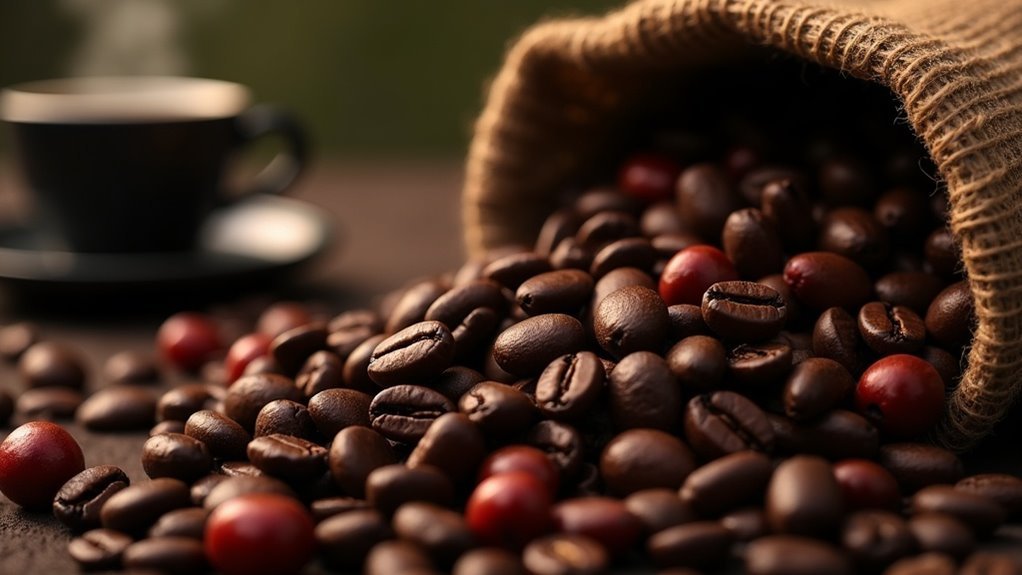
Coffee beans, derived from the Coffea plant, are naturally gluten-free. When you choose whole, unflavored coffee beans, you can enjoy your coffee without worrying about gluten, which may sometimes appear in flavored varieties due to barley-derived ingredients. However, be aware of the risk of cross-contamination in processing facilities that handle gluten products. To minimize this risk, it’s best to select brands that guarantee dedicated gluten-free practices. There’s plenty more to explore about coffee and gluten sensitivities on our site!
Key Takeaways
- Plain coffee beans, including Arabica and Robusta, are naturally gluten-free and safe for those following gluten-free diets.
- Whole beans and unflavored ground coffee typically carry minimal risk of gluten contamination.
- Be cautious with flavored coffee, as it may contain gluten if derived from barley-based flavorings; always check the labels for ingredients.
- Cross-contamination can occur during processing, so it’s best to choose brands that have dedicated gluten-free practices.
- When brewing coffee at home, opt for whole beans, ensure your equipment is clean, and verify that any additional ingredients are gluten-free.
Understanding Coffee and Gluten
When you consider coffee and gluten, it’s important to understand that plain coffee beans are inherently gluten-free, as they come from the Coffea plant, which isn’t related to gluten-containing grains like wheat, barley, or rye.
Coffee is naturally gluten-free, making whole beans and unflavored ground coffee the safest choices for a gluten-free diet.
However, flavored coffee beans can be problematic, as they may include flavorings derived from barley, introducing gluten.
Additionally, cross-contamination with gluten can occur in processing facilities.
Always check labels and choose brands that prioritize gluten-free practices to ensure your coffee remains safe and enjoyable.
Types of Coffee Beans and Their Gluten Content
Understanding the different types of coffee beans can help you make informed choices about gluten content.
Both Arabica and Robusta coffee beans are naturally gluten-free, as they derive from the Coffea plant, which is unrelated to gluten-containing grains. Whole beans are the safest option, minimizing processing and reducing the risk of cross-contamination.
However, be cautious with flavored coffees, as they may include barley-derived flavorings that could introduce gluten. For those sensitive to gluten, unflavored, freshly roasted coffee beans are 100% gluten-free and a reliable choice.
Always read labels carefully and consider sourcing from dedicated gluten-free brands to ensure safety.
The Risk of Cross-Contamination
When selecting coffee, it’s important to consider the risk of cross-contamination from processing facilities that may also handle gluten-containing grains.
Shared equipment used for grinding or brewing can unintentionally introduce gluten residues, particularly in settings that aren’t strictly gluten-free.
To reduce this risk, opt for whole beans and verify the safety measures implemented by manufacturers and coffee shops.
Processing Facility Risks
Although coffee beans are inherently gluten-free, the risk of cross-contamination during processing can pose significant challenges for those with gluten sensitivities. Facilities that also handle gluten-containing grains can inadvertently contaminate your beans. To minimize this risk, brands like Don Pablo Coffee guarantee dedicated gluten-free processing. It’s wise to check labels and inquire about processing practices, especially when enjoying coffee at cafes or shops.
| Risk Factor | Description | Mitigation Strategies |
|---|---|---|
| Shared Equipment | Equipment used for gluten products | Choose gluten-free certified coffee brands |
| Processing Facilities | Handling grains like wheat | Opt for brands that use dedicated gluten-free processing |
| Packaging Practices | Cross-contamination risks | Inquire about packaging standards |
| Brewing Environments | Shared surfaces in coffee shops | Use separate brewing gear for gluten-free coffee |
Shared Equipment Concerns
Shared equipment in coffee shops can significantly increase the risk of cross-contamination for gluten-sensitive individuals.
When grinders and brewing machines are utilized for both gluten-free and gluten-containing products, even small amounts of residue can lead to exposure. If non-gluten-free coffee is brewed in the same machine without thorough cleaning, the risk of cross-contamination rises considerably.
It’s crucial to communicate your dietary needs to the barista and request dedicated gluten-free equipment. Remember, the gluten tolerance threshold is only 20 parts per million (ppm), so being vigilant is essential.
Brands like Don Pablo Coffee prioritize gluten safety, implementing careful practices to minimize cross-contamination risks.
Home Grinding Safety
Home grinding your coffee beans is a proactive way to enhance your coffee experience and reduce the risk of cross-contamination with gluten. Store-bought ground coffee may be processed in facilities that handle gluten-containing products, increasing exposure. To ensure a safe and delightful coffee consumption, consider the following:
| Action | Benefit |
|---|---|
| Grind at home | Enhances freshness and flavor |
| Use dedicated grinders | Prevents any residue from affecting taste |
| Choose gluten-free brands | Guarantees beans are processed in gluten-free environments |
Thoroughly clean your grinder before each use, and always opt for whole beans over ground coffee to maintain the best flavor and a gluten-free experience. Enjoy your freshly ground coffee with peace of mind!
How to Brew Gluten-Free Coffee at Home
To brew gluten-free coffee at home, it’s essential to start with whole coffee beans, as these are less processed and greatly reduce the risk of gluten contamination.
Starting with whole coffee beans is key to brewing gluten-free coffee at home, minimizing the risk of contamination.
Follow these steps for a safe brewing experience:
- Grind your whole coffee beans at home to avoid cross-contamination from pre-ground options.
- Use clean, dedicated equipment for brewing to prevent exposure from shared appliances.
- Choose brewing methods like French press or cold brew, where you can control the process and guarantee no gluten is introduced.
Always check labels on any additional ingredients to confirm they’re gluten-free before adding them to your coffee.
Safe Coffee Options for Gluten Sensitivities
When considering safe coffee options for those with gluten sensitivities, understanding the source and processing of coffee is essential.
Plain black coffee made from whole coffee beans is naturally gluten-free. To minimize cross-contamination, grind your beans at home rather than using pre-ground options.
While K-Cup pods from brands like Keurig are often labeled gluten-free, some Dunkin’ varieties may not be, so always check the labels before purchasing.
When ordering at cafes, request gluten-free coffee and verify that add-ins, such as flavored syrups and creamers, are safe for consumption.
Brands like Starbucks and Dunkin’ Donuts offer certified gluten-free options, but it’s always wise to confirm ingredient safety to avoid any gluten exposure.
Enjoying Coffee: Recipes and Tips
When you’re looking to enjoy coffee while ensuring it’s gluten-free, simple recipes can elevate your experience.
Consider exploring various flavoring options that are safe, and pay attention to brewing techniques that enhance taste without any gluten risk.
Simple Coffee Recipes
Exploring simple coffee recipes can elevate your daily routine and enhance your coffee experience.
Here are three delightful options to consider:
- Iced Cappuccino: Combine brewed coffee, ice, milk, and frothy foam for a revitalizing treat that will keep you cool.
- Irish Coffee: Mix brewed coffee, Irish whiskey, and cream for a warm and comforting beverage that’s perfect for any occasion.
- Cold Brew: Steep coarsely ground coffee beans in cold water overnight for a smooth, refreshing drink that’s perfect for hot days.
Enjoy these easy coffee recipes to enrich your love for coffee!
Flavoring Options Explained
Flavoring your coffee can enhance its taste profile considerably, but it’s crucial to choose options that align with gluten-free preferences. Opt for flavored coffee beans that clearly state their gluten-free status to avoid gluten contamination. Be cautious with artificial flavoring, as it may contain gluten from barley. Homemade flavoring using gluten-free sweeteners and spices offers a safe, customizable alternative. Always check the ingredients of flavored syrups and creamers carefully.
| Flavoring Type | Gluten-Free Options | Caution |
|---|---|---|
| Natural Flavors | Yes | Verify source |
| Artificial Flavors | Possible gluten | Check for barley content |
| Homemade Spices | Yes | Use gluten-free ingredients |
| Flavored Syrups | Varies | Read labels |
| Creamers | Varies | Check for processing methods |
When selecting flavorings for your coffee, make sure they align with your gluten-free diet to enjoy your beverage without worry.
Brewing Techniques Tips
While brewing coffee at home, implementing effective techniques can greatly enhance your enjoyment and guarantee a gluten-free experience.
Here are three tips to consider:
- Choose Whole Beans: Opt for whole beans and grind them yourself to minimize the risk of cross-contamination.
- French Press Method: Brew using a French press for a rich flavor—allow the ground beans to steep for several minutes before pressing.
- Explore Gluten-Free Add-Ins: Enhance your black coffee with gluten-free add-ins like regular milk, almond milk, or certified gluten-free oat milk.
These methods ensure a delicious, gluten-free coffee experience that’s perfect for sharing with others.