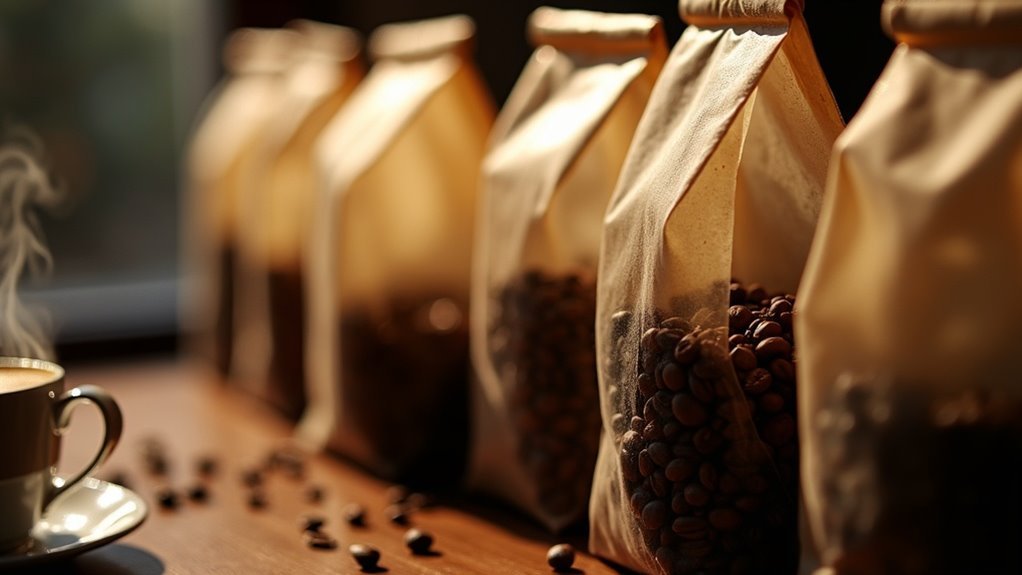
Yes, transparent coffee bags can degrade flavor over time due to their vulnerability to light and oxygen exposure. Light accelerates oxidation, which can lead to irreversible flavor loss within six months. The barrier properties of materials used in clear bags are often weaker, increasing the risk of oxygen transfer and moisture exposure. While these bags may look appealing, they pose challenges for maintaining coffee freshness. Understanding strategies to mitigate these effects can provide valuable insights into preserving the quality of your coffee.
Key Takeaways
- Transparent coffee bags expose beans to light, which can accelerate flavor degradation and oxidation over time.
- Oxygen exposure in permeable packaging leads to irreversible changes in aroma and taste within six months, affecting the overall coffee experience.
- To maintain freshness, high-barrier materials are recommended, as transparent options provide weaker protection against oxygen and light.
- Increased light exposure in transparent bags can also cause photodegradation of flavors, further impacting the quality of the coffee.
- Coffee brands must balance aesthetic appeal with effective preservation strategies to prevent flavor loss when using transparent packaging.
Understanding Transparent Coffee Bags
Understanding transparent coffee bags requires a closer look at their design and implications for coffee quality.
These bags, often made from PET or PLA, allow you to visually assess the product but can expose coffee to harmful light, risking flavor degradation.
Larger clear windows may increase light exposure and compromise barrier properties, allowing oxygen and humidity to degrade freshness.
While they enhance aesthetic appeal and consumer confidence, research shows that coffee in permeable packaging loses quality after six months.
Research indicates that coffee in permeable packaging suffers quality loss after just six months, despite its visual appeal.
Balancing sustainable materials with effective flavor preservation is essential; better barrier options can maintain higher cupping scores and overall quality longer.
The Role of Oxygen in Coffee Quality
While you might appreciate the aesthetic of transparent coffee bags, it’s crucial to understand the significant role oxygen plays in determining coffee quality.
Exposure to oxygen can lead to degradation, resulting in a decline of flavors and aromas over time. Packaging materials that are permeable, such as those with transparent windows, allow for greater oxygen infiltration, which accelerates the oxidation process.
Research shows that coffee stored in such bags can undergo irreversible chemical changes within six months, significantly impacting its flavor profile. To preserve freshness and ensure high quality, it’s advisable to use high-barrier, impermeable packaging that prevents oxygen exchange.
Additionally, regularly monitoring oxygen levels and the integrity of the packaging is essential, especially with transparent designs, to ensure that your coffee remains delightful for your customers.
How Clear Bags Affect Flavor Preservation
Clear bags might catch your eye with their appealing design, but they can seriously compromise the preservation of your coffee’s flavor.
Transparent windows expose your beans to light, which accelerates oxidation and degrades aroma and taste. Materials like PET and PLA often provide weaker barriers against oxygen, risking the integrity of your coffee’s flavor and shortening its shelf life.
Transparent packaging can expose coffee beans to light, risking flavor degradation and reducing shelf life due to inadequate oxygen barriers.
Research shows that prolonged light exposure can particularly harm light and natural processed beans, making it essential to provide better protection.
While brands aim for aesthetic appeal, they must also consider the environmental impact and balance visibility with safeguarding the quality of your coffee.
Inadequate shielding may lead to irreversible flavor changes within just six months of storage.
Comparing Barrier Properties of Packaging Materials
When you compare the barrier properties of packaging materials for coffee, it’s clear that transparent options like PET or PLA fall short against high-barrier alternatives.
This difference greatly impacts flavor stability, as weaker barriers allow oxygen and moisture to penetrate, accelerating degradation and compromising the freshness of your coffee.
Understanding these variations helps you make informed choices for preserving the rich flavor and quality of your brew.
Barrier Property Comparison
As you explore packaging options for coffee, it’s essential to assess the barrier properties of various materials, particularly in terms of preserving flavor and freshness.
Here are three key factors to consider:
- Oxygen Transfer Rate: Transparent coffee bags often have a higher oxygen transfer rate (OTR), which can accelerate oxidation and lead to flavor degradation.
- Moisture Exposure: These bags may not adequately protect against moisture, resulting in compromised coffee quality.
- Light Exposure: Transparent materials can facilitate photodegradation, further detracting from the flavor integrity.
Opting for high-barrier materials instead of transparent options can significantly enhance coffee quality, ensuring a superior experience for your customers.
Impact on Flavor Stability
While the visual appeal of transparent coffee bags can attract coffee lovers, the impact on flavor stability can’t be overlooked.
These bags, especially those made from lower barrier materials, allow increased light exposure and oxygen, which compromise the freshness and aroma of your favorite brew. Studies show significant drops in cupping scores within six months for coffee stored in such packaging.
Although transparent windows enhance consumer confidence, they sacrifice essential protective qualities, risking photodegradation of the coffee’s flavors.
To preserve the unique taste and aroma of your coffee, packaging design must balance aesthetic elements with superior barrier properties, ensuring that your coffee remains vibrant and aromatic throughout its shelf life.
Visual Appeal vs. Freshness: The Trade-off
When selecting a coffee bag, the allure of transparent packaging can be enticing, but it carries considerable risks.
Exposure to light and inadequate barrier properties can result in swift flavor degradation, jeopardizing the freshness you anticipate from high-quality beans.
Striking a balance between visual appeal and effective preservation is crucial, as the right packaging can significantly enhance your coffee experience.
Aesthetic Appeal Considerations
How can coffee brands effectively balance aesthetic appeal with the preservation of freshness in their packaging?
Transparent coffee bags enhance visual appeal by showcasing the rich colors of the beans and their freshness, but exposure to light can lead to oxidation and flavor degradation.
To navigate this trade-off, consider these key strategies:
- Use high-barrier materials alongside transparent windows to protect against light while still allowing consumers to see the product.
- Optimize the size and placement of transparent features to minimize light exposure while maintaining consumer trust in the quality of the coffee.
- Highlight the sensory qualities of the coffee in marketing efforts to educate consumers on the importance of freshness over mere aesthetics.
Balancing these elements is essential for long-term success in the coffee market.
Freshness Preservation Challenges
As coffee brands embrace transparent packaging to attract consumers, they face significant challenges in preserving the freshness of their beloved beans. Transparent coffee bags enhance visual appeal, allowing consumers to see the quality of the product inside, but this exposure to light can accelerate flavor degradation.
Materials like PET or PLA, often used for these bags, may not provide sufficient oxygen protection, putting freshness at risk over time. Research indicates that coffee stored in permeable bags can experience a decline in quality within six months due to chemical changes.
To combat this issue, coffee roasters and packaging manufacturers must find a balance between incorporating a clear window design for visibility and ensuring adequate barriers against oxidation to maintain the coffee’s flavor profile.
Furthermore, while the industry increasingly prioritizes sustainable packaging solutions, the use of transparent options may complicate these environmentally friendly efforts, creating a challenging trade-off for brands dedicated to delivering the best coffee experience to their customers.
Tips for Mitigating Degradation Risks
To effectively preserve the rich flavors and aromas of coffee stored in transparent bags, implementing strategic measures is essential.
Follow these tips to mitigate degradation risks:
- Use high-barrier materials like METPET or foil linings to lower oxygen and moisture transfer, ensuring your coffee’s flavor remains intact.
- Incorporate strategically placed clear windows with UV-protective coatings to limit light exposure, minimizing oxidation and flavor loss in your favorite brew.
- Store bags in cool, dark places while regularly monitoring storage conditions to prevent high humidity and temperature fluctuations that can accelerate coffee degradation.
Consumer Perception and Market Trends
While transparent coffee bags attract consumers with their eye-catching design, they also present challenges related to flavor preservation. Many coffee enthusiasts are increasingly concerned about flavor degradation due to light exposure.
Research shows that 67% of coffee buyers prefer recyclable packaging, which positively influences their perception of brands that prioritize sustainable practices. Clear windows in these bags can enhance trust, allowing customers to assess coffee freshness.
However, coffee brands must balance aesthetics with functionality, as higher oxygen transfer rates can shorten shelf life. Current market trends indicate a shift towards eco-friendly materials, prompting innovative packaging solutions that address these concerns while appealing to environmentally conscious coffee lovers.
Future Innovations in Coffee Packaging
Innovations in coffee packaging are set to revolutionize the industry, addressing both sustainability and flavor preservation. Here are three key advancements you should know about:
Innovative coffee packaging is transforming the industry, focusing on sustainability and enhancing flavor preservation for a better brew experience.
- Eco-friendly options like biodegradable coffee bags made from PLA and paper composites enhance sustainability while maintaining essential barrier properties, ensuring your coffee stays fresh and flavorful.
- Smart packaging technologies feature freshness sensors, providing real-time feedback on your coffee’s flavor profile, helping you make informed choices about your brew.
- Nitrogen-flushed packaging replaces oxygen with nitrogen, effectively improving shelf life and protecting flavor, so you can enjoy your coffee at its peak.
These developments promise a future where transparent packaging is both compostable and efficient, ensuring you enjoy your coffee at its best, all while caring for the environment.