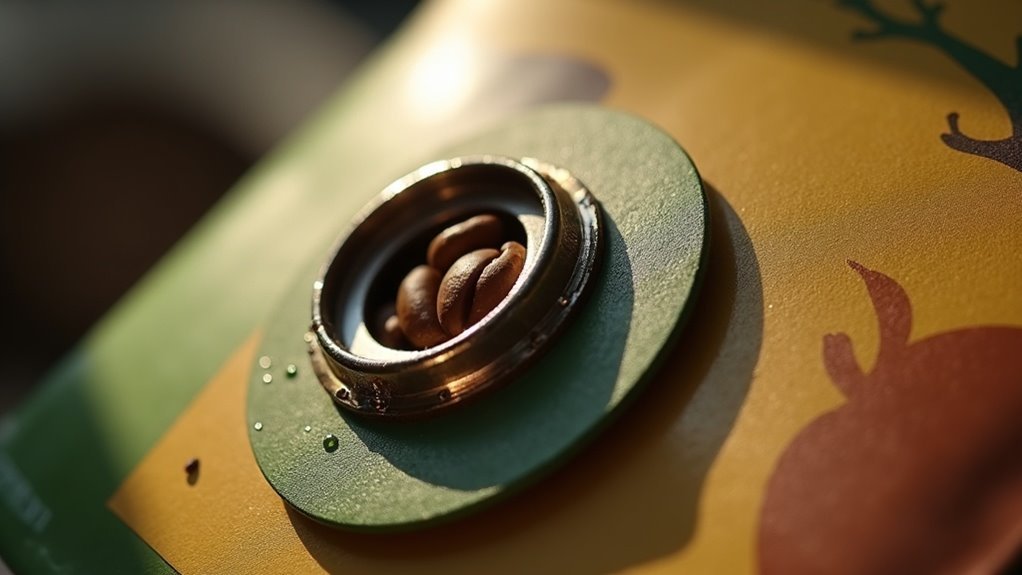
A degassing valve in coffee packaging plays a crucial role in maintaining the freshness of freshly roasted beans. It allows carbon dioxide, which is released during the roasting process, to escape while simultaneously blocking outside air. This mechanism is vital for preventing oxidation and avoiding package inflation. The valve opens when the internal pressure from the gases exceeds the external pressure, enabling a safe release of gas without letting oxygen in. By preserving the flavor and aroma of the coffee, the degassing valve significantly enhances the overall coffee experience. There’s much more to learn about the importance and functionality of these valves in coffee packaging.
Key Takeaways
- A degassing valve allows CO2 to escape from freshly roasted coffee while keeping oxygen out, which helps to preserve the coffee’s freshness and flavor.
- It prevents package inflation or bursting that can occur due to gas buildup during storage and transport.
- The valve enhances the shelf life of coffee by preventing oxidation, especially in ground coffee, which helps maintain its quality perception.
- It protects coffee from the damaging effects of oxygen, ensuring a better taste and aroma for coffee lovers.
- Properly functioning degassing valves are essential for building brand trust and ensuring consumer satisfaction by maintaining the integrity of the coffee product.
What Is a Degassing Valve?
A degassing valve is a crucial element in coffee packaging, specifically designed to regulate the release of gases from freshly roasted coffee.
This one-way valve enables carbon dioxide (CO2) and other volatile gases to escape while preventing outside air from entering, thus preserving the coffee’s freshness and quality.
When the internal pressure surpasses the external pressure, the valve opens, allowing built-up gases to escape.
It consists of a cap, elastic disc, and mesh filter, ensuring that gas can exit without letting oxygen in, which can compromise flavor.
Since its introduction in the 1960s, the degassing valve has become essential for maintaining optimal freshness in coffee products.
Why Do Roasters Use Degassing Valves?
Roasters utilize degassing valves primarily to manage the significant buildup of carbon dioxide (CO2) that occurs during the roasting process.
These valves allow CO2 to escape safely while blocking oxygen, which is essential for preserving the freshness and flavor of freshly roasted coffee.
By preventing package inflation or bursting, degassing valves maintain structural integrity.
The blooming process highlights the necessity of these valves, as fresh coffee beans release substantial gas, risking staleness.
Ultimately, one-way degassing valves extend the shelf life of coffee by preventing oxidation, protecting against the corrosive effects of oxygen, and ensuring ideal flavor retention.
How Do Degassing Valves Work?
When freshly roasted coffee is packaged, the significant buildup of carbon dioxide (CO₂) necessitates a system for gas release, which is where degassing valves come into play. These one-way vents operate on pressure differences, opening to release CO₂ when internal pressure exceeds external pressure. The valve’s construction includes a cap, elastic disc, viscous layer, polyethylene plate, and paper filter, ensuring effective gas release while preventing oxygen from entering. This mechanism not only preserves the freshness of your coffee but also prevents package inflation and oxidation.
| Component | Function | Material |
|---|---|---|
| Cap | Seals the valve | Plastic |
| Elastic Disc | Regulates pressure release | Rubber |
| Viscous Layer | Enhances sealing effect | Silicone |
| Paper Filter | Prevents particle entry | Paper |
Benefits of Using Degassing Valves in Coffee Packaging
While many may overlook the importance of packaging details, using degassing valves in coffee packaging offers significant advantages that directly impact flavor preservation and quality.
These valves allow carbon dioxide (CO2) to escape while preventing oxygen and moisture from entering, which helps maintain the coffee’s freshness.
By reducing package inflation from gas buildup, degassing valves also preserve the integrity of your coffee packaging during storage and transport.
Furthermore, they enhance shelf life by preventing oxidation, especially in ground coffee.
Incorporating high-quality degassing valves guarantees a professional presentation, boosting brand perception and consumer trust, which are essential for serving your coffee customers effectively.
When Are Degassing Valves Not Necessary?
Degassing valves aren’t necessary for single-serve coffee packs and instant coffee packaging, as these products are consumed quickly, limiting their exposure to air.
The rapid turnover reduces the risk of oxidation and gas buildup, making valves redundant.
Coffee roasters should assess their packaging strategies based on the specific characteristics of their coffee products to determine the need for such features.
Single-Serve Coffee Packs
Single-serve coffee packs typically don’t require degassing valves due to their rapid consumption cycle, which limits exposure to oxygen.
These packs are designed for immediate use, minimizing the accumulation of carbon dioxide (CO2) and reducing the risk of staleness. Since coffee is served in smaller portions, the time from roasting to consumption is considerably shortened, making one-way degassing valves unnecessary.
In contrast, larger retail coffee packaging demands these valves to efficiently manage gas release and prevent oxidation over extended periods.
When selecting coffee options, consider how quickly your customers will enjoy their brew to guarantee peak freshness.
Instant Coffee Packaging
Instant coffee packaging often doesn’t require degassing valves due to the rapid turnover of the product. Here are three reasons why:
- Quick Consumption: Single-serve instant coffee is typically consumed shortly after opening, which limits oxygen exposure and staleness, ensuring a fresh coffee experience.
- Minimal CO2 Off-Gassing: Unlike whole bean coffee, instant coffee doesn’t release significant CO2 after roasting. This characteristic makes the inclusion of degassing valves unnecessary in the packaging process.
- Airtight Containers: The use of airtight packaging effectively preserves the quality of instant coffee, reducing the need for additional degassing mechanisms and keeping your coffee fresh until it’s time to enjoy.
The Role of Degassing Valves in Preventing Oxidation
When freshly roasted coffee is packaged, it releases carbon dioxide (CO2), which can create pressure that jeopardizes the packaging’s integrity. Degassing valves are crucial in preventing oxidation by allowing CO2 to escape while preventing oxygen from entering. This function helps maintain an oxygen-free environment, preserving the coffee’s freshness and flavor.
| Function | Impact on Coffee | Importance |
|---|---|---|
| Release CO2 | Prevents pressure build-up | Maintains package integrity |
| Block oxygen | Mitigates oxidation | Extends shelf life |
| Preserve freshness | Enhances flavor | Guarantees high-quality coffee |
| Quick sealing | Improves efficiency | Reduces waiting time |
Sustainability of Degassing Valves
Although traditional coffee packaging materials often contribute to environmental degradation, degassing valves offer a sustainable alternative that aligns with eco-friendly practices in the coffee industry.
Here are three key aspects of their sustainability:
- Bioplastics: Many degassing valves are crafted from renewable bioplastics, which helps reduce reliance on fossil fuels and supports a greener coffee packaging solution.
- Recyclable Materials: These valves are designed with recyclability in mind, facilitating responsible disposal and enhancing sustainability within the coffee sector.
- Carbon Footprint: By implementing degassing valves, coffee companies can significantly minimize their carbon footprint throughout the packaging process, contributing to a more sustainable coffee industry.
Partnering With the Right Coffee Packaging Provider
Partnering with the right coffee packaging provider can significantly influence your coffee brand’s success and sustainability initiatives.
A dependable provider offers customized packaging solutions, including coffee bags equipped with BPA-free degassing valves that preserve the freshness of your ground coffee.
Partnering with a reliable provider ensures customized coffee bags with BPA-free degassing valves to maintain your coffee’s freshness.
Seek out providers that offer various formats, such as side gusset bags and stand-up pouches, designed to enhance your coffee’s presentation.
With quick turnaround times and assistance in creating unique packaging designs, you can effectively showcase your coffee brand.
Selecting a professional packaging provider not only simplifies your operations but also underscores your dedication to sustainability, helping you stand out in a competitive coffee market.