To balance cost and sustainability in coffee packaging, focus on recyclable or compostable materials like kraft paper or plant-based bags that align with the values of coffee enthusiasts. Implement digital printing for customized coffee designs that minimize waste and reduce costs. Use AI-driven solutions to optimize layouts, cutting material use and enhancing efficiency in packaging coffee products. Consider flexible packaging to lower shipping costs while maintaining the integrity of your coffee. By adopting these strategies, you can enhance your coffee brand’s reputation and appeal to eco-conscious consumers, leading to greater insights ahead.
Key Takeaways
- Choose affordable materials like kraft paper bags, which are recyclable and cost-effective, despite needing a non-recyclable lining, ideal for coffee packaging.
- Utilize flexible packaging to reduce shipping costs and material usage, enhancing sustainability without compromising the quality of your coffee.
- Leverage digital printing with water-based inks to minimize waste while allowing for customized designs that reflect your coffee brand identity.
- Consider bulk purchasing of sustainable materials to secure discounts and lower overall packaging costs for your coffee products.
- Foster long-term vendor relationships to ensure a consistent supply of packaging materials and support for sustainable practices in your coffee packaging.
Why Does Coffee Packaging Matter?
When you think about your morning cup of coffee, the packaging may not be the first thing on your mind, but it plays a vital role in preserving the quality and freshness you crave.
Effective coffee packaging protects against light, moisture, and oxygen, ensuring that the rich aroma and flavor of your coffee remain intact.
Effective packaging safeguards your coffee from light, moisture, and oxygen, preserving its rich aroma and flavor.
Unfortunately, traditional packaging methods often lead to significant waste, which poses challenges for sustainability and increases your brand’s carbon footprint.
With over 30% of landfill plastic in the U.S. attributed to packaging, adopting compostable materials or recyclable options can significantly enhance your brand’s reputation.
Cost and Sustainability in Coffee Packaging Through Material Selection
When selecting materials for coffee packaging, you can prioritize both sustainability and cost-effectiveness.
By choosing recyclable options like kraft paper or mono-material designs, you enhance recyclability while keeping expenses in check.
Additionally, exploring bulk purchasing of sustainable materials can lower costs and strengthen your supplier relationships, making your coffee packaging strategy even more efficient.
Sustainable Material Choices
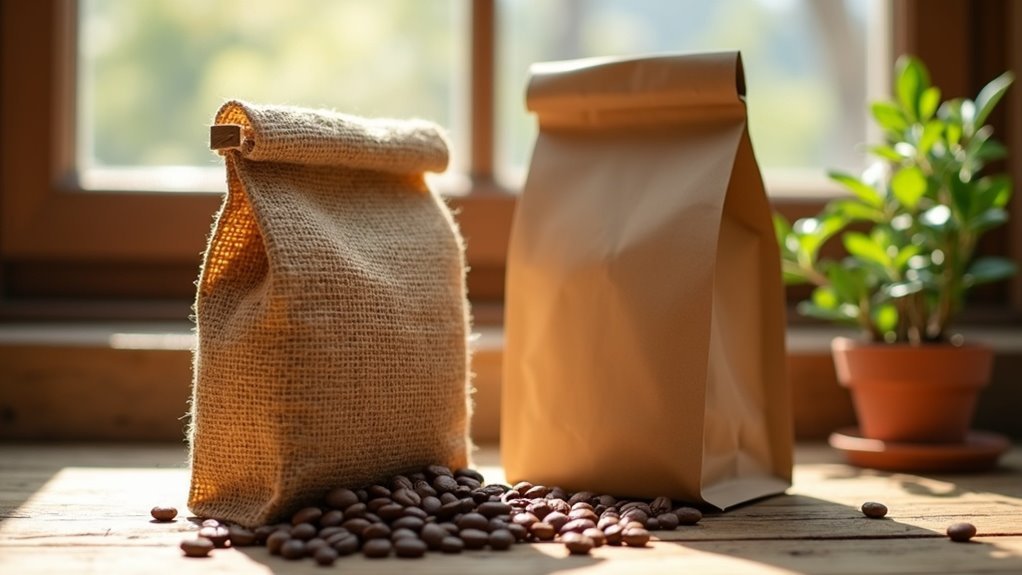
When it comes to coffee packaging, finding the right balance between cost and sustainability is crucial. It’s important to choose materials that not only protect the coffee but also align with eco-friendly practices. Options like kraft paper bags are a popular choice due to their affordability and recyclability, although they may require a non-recyclable lining. For a more sustainable option, consider plant-based bags, which offer compostable packaging, though they often necessitate industrial composting facilities. Mono-material recyclable plastics can enhance sustainability efforts, but they generally come at a higher price point. Additionally, compostable multi-layer films have strong environmental benefits, yet they tend to be more expensive and may have shorter shelf lives.
| Material Type | Cost Efficiency | Environmental Impact |
|---|---|---|
| Kraft Paper Bags | Moderate | Recyclable |
| Plant-Based Bags | Variable | Compostable |
| Mono-Material Plastics | Higher | Curbside Recyclable |
Cost-Effective Packaging Solutions
Selecting the right packaging for coffee is a balancing act between cost and sustainability, and cost-effective solutions can play a pivotal role in this equation.
Kraft paper bags offer an affordable, recyclable option but require a non-recyclable lining, making them a practical choice for coffee packaging.
Compostable packaging, such as plant-based PLA bags, helps reduce landfill waste and is an eco-friendly alternative, although it relies on industrial composting facilities for proper disposal.
Mono-material recyclable plastics simplify the recycling process, making them a convenient option for coffee roasters, though they may come at a higher price point.
Flexible packaging solutions are particularly advantageous for coffee, as they lower shipping costs and reduce material usage, enhancing overall efficiency.
Additionally, bulk ordering sustainable packaging materials can lead to significant discounts, fostering strong relationships with vendors who prioritize sustainability while effectively balancing cost and environmental impact in the coffee industry.
Cost and Sustainability in Coffee Packaging Through Sustainable Printing
As sustainability becomes a top priority for coffee consumers, embracing sustainable printing methods in coffee packaging not only aligns with ethical practices but also offers cost-effective solutions.
Utilizing digital printing and water-based inks drastically reduces waste and emissions, while providing vibrant graphics that showcase your coffee’s unique qualities. Eco-friendly labels made from biodegradable materials enhance your packaging’s sustainability without sacrificing brand visibility, allowing your coffee to stand out on the shelf.
These methods cater to consumer preferences for responsible coffee products, boosting your brand reputation in a competitive market. Additionally, digital printing allows for small production runs, minimizing costs and material waste, making it easier for coffee roasters to adapt to changing trends.
Cost and Sustainability in Coffee Packaging Through Different Strategies
Sustainable packaging strategies for coffee extend beyond just printing methods; they encompass a variety of materials and design choices that can greatly impact both cost and environmental footprint.
By utilizing eco-friendly materials like kraft paper for coffee bags and optimizing custom packaging designs, you can enhance waste reduction while maintaining cost efficiency.
Utilizing eco-friendly kraft paper and custom designs boosts waste reduction and cost efficiency in coffee packaging.
Flexible packaging solutions reduce material usage and shipping costs, making them economically viable for coffee producers.
Additionally, employing digital printing for small runs allows for high-quality, limited-edition coffee packaging without significant expenses.
Finally, bulk ordering sustainable materials not only lowers costs but also supports your commitment to sustainability in coffee packaging.
The Importance of Coffee Packaging Cost Efficiency
While you might prioritize the taste and quality of your coffee, the significance of cost-efficient packaging shouldn’t be underestimated.
Effective coffee packaging ensures that you preserve freshness and maintain profit margins by reducing losses. Consider these important factors:
- Inadequate packaging can result in quality degradation, which may negatively impact customer loyalty.
- Traditional packaging methods contribute significantly to landfill waste, particularly plastics.
- Sustainable packaging alternatives are increasingly preferred by environmentally conscious consumers.
- Striking a balance between cost and sustainability can lead to enhanced revenue growth for your coffee business.
Reduce Packaging Design Costs Using Technology
Using AI-driven design solutions can significantly reduce your coffee packaging design costs by streamlining the process and minimizing time spent on revisions.
Digital printing technology enhances efficiency, enabling you to produce high-quality, limited-edition coffee bags without overspending.
AI-Driven Design Solutions
As coffee brands strive to enhance their packaging processes, AI-driven design solutions have emerged as a powerful tool to significantly reduce costs.
These innovative technologies not only enhance cost efficiency but also elevate design outcomes. Here are some key benefits:
- Optimize coffee packaging layouts to minimize material waste.
- Analyze consumer preferences and market trends to create appealing coffee designs.
- Leverage digital printing technology for smaller coffee production runs, reducing risks.
- Automate the design process, potentially cutting labor costs and time by up to 50%.
Digital Printing Efficiency
AI-driven design solutions have paved the way for significant advancements in coffee packaging processes, and at the forefront of this evolution is digital printing efficiency.
By adopting digital printing for your coffee products, you can minimize waste and reduce costs linked to overproduction, enhancing cost efficiency. This method allows for on-demand production, making it ideal for customized designs that strengthen your coffee brand identity.
Using non-toxic inks, you also promote sustainability while cutting waste management costs.
Furthermore, digital printing enables quick adaptation to market trends, ensuring your coffee packaging stays relevant and appealing, all while optimizing production efficiency and maintaining financial viability.
Material Selection Optimization
When optimizing material selection for coffee packaging, leveraging advanced technologies like AI and machine learning can significantly enhance your design process.
By focusing on sustainable materials, you can reduce costs while minimizing environmental impact.
Consider these strategies:
- Utilize digital printing for cost-effective, high-quality designs on small runs of coffee bags and labels.
- Implement mono-material packaging to simplify recycling and cut waste management costs associated with coffee packaging.
- Choose flexible materials to reduce shipping and storage expenses, ensuring your coffee reaches customers efficiently.
- Collaborate with suppliers for bulk orders of sustainable materials, lowering costs per unit and fostering long-term relationships that benefit your coffee brand.
These tactics help you create efficient, eco-friendly coffee packaging solutions that cater to both your customers and the planet.
Material Selection and Cost Efficiency
Selecting the right materials for coffee packaging is essential not just for environmental sustainability but also for cost efficiency. By opting for sustainable packaging like kraft paper and plant-based options, you can minimize your environmental impact while ensuring recyclability for your coffee products.
Consider bulk ordering materials to reduce costs per unit and build long-term vendor relationships to support your coffee business. Leverage digital printing for high-quality designs at lower expenses, especially for smaller coffee runs.
Boosting Your Coffee Packaging Cost Efficiency With Effective Packaging
Effective packaging plays a pivotal role in enhancing cost efficiency for your coffee products.
Effective packaging is crucial for maximizing cost efficiency in your coffee products.
To achieve this balance between cost and sustainability, consider the following strategies:
- Implement flexible packaging designs that reduce material use and shipping expenses for your coffee bags.
- Utilize digital printing for small runs to minimize waste while creating high-quality designs that showcase your coffee.
- Engage in bulk ordering of sustainable materials like kraft paper for better rates, ensuring your coffee packaging is eco-friendly.
- Customize packaging size and shape to minimize waste during production and transport, ensuring your coffee remains fresh and flavorful.