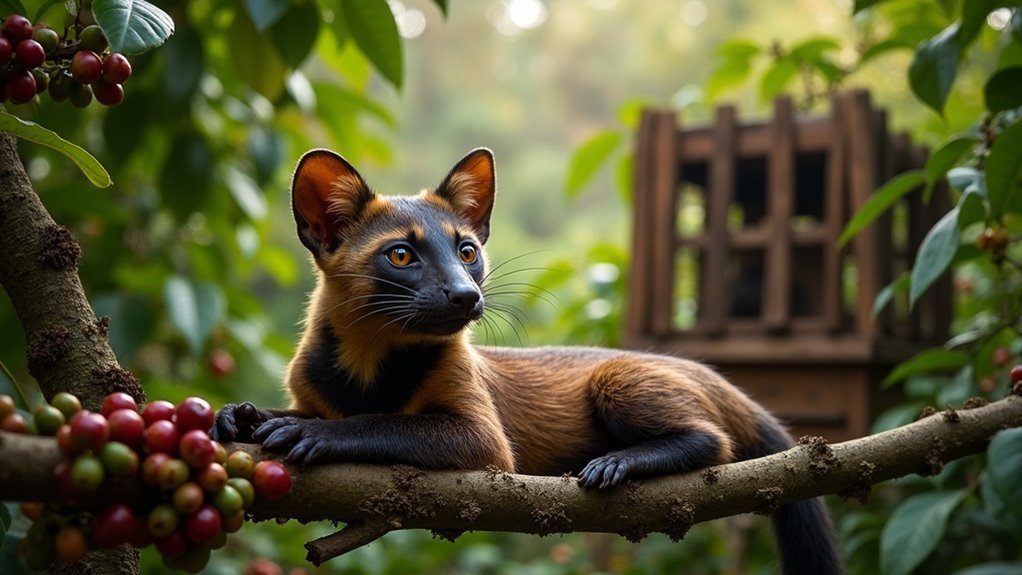
Civet coffee raises significant ethical concerns, particularly regarding animal welfare. Civets are frequently kept in cramped cages and force-fed coffee cherries, which can lead to distress and serious health problems. The unsanitary conditions they endure heighten the risk of disease, which could also pose a threat to human health. Additionally, the increasing demand for civet coffee has led to illegal wildlife trade and threatens the survival of wild civet populations. If you’re seeking ethical coffee options, consider exploring sustainable alternatives that emphasize animal welfare and responsible sourcing.
Key Takeaways
- Civet coffee production often raises ethical concerns due to the exploitation of civets, which are frequently kept in poor living conditions and fed unnatural diets.
- Many civets are confined to small cages, leading to psychological distress and health issues caused by force-feeding practices.
- The growing demand for civet coffee contributes to illegal wildlife trade and threatens wild civet populations, further compounding animal rights violations.
- Unsanitary conditions in these caged environments pose significant health risks, including the potential transmission of zoonotic diseases to humans.
- Ethical alternatives to civet coffee include supporting Fair Trade and Organic coffee roasters that prioritize animal welfare and sustainability in their sourcing practices.
The Ethical Dilemma of Civet Coffee Production
While civet coffee is often marketed as a luxurious and exclusive product, the ethical implications surrounding its production raise significant concerns.
The production of Kopi Luwak heavily relies on the exploitation of caged civets, which are often kept in poor conditions and fed an unnatural diet. Investigations reveal that many producers falsely claim their coffee comes from wild civets, contributing to animal cruelty and psychological distress in captive animals.
The production of Kopi Luwak exploits caged civets, leading to cruelty and distress in these animals.
Additionally, the demand for this type of coffee jeopardizes wild civet populations and poses public health risks through potential zoonotic disease transmission.
Ultimately, the ethical treatment of animals should guide your choices regarding civet coffee consumption.
Animal Welfare Concerns in the Civet Coffee Industry
While civet coffee is often marketed as a luxury item, it is crucial to address the significant welfare concerns affecting the civets involved in its production. The civet coffee industry frequently exploits Asian palm civets by confining them to small cages, resulting in both psychological distress and physical injuries. Many of these animals are subjected to force-feeding of coffee cherries, leading to various health problems. Despite claims of wild sourcing, the majority of kopi luwak is produced under inhumane conditions. Below is a summary of the key issues:
| Issue | Impact |
|---|---|
| Confined Living Conditions | Psychological Distress |
| Force-Feeding | Health Issues |
| Inhumane Treatment | Ethical Concerns |
| Population Decline | Animal Rights Violations |
Health Risks Associated With Civet Coffee
As the civet coffee industry continues to grow, it’s crucial to acknowledge the health risks associated with it, not only for the animals involved but also for consumers.
Farming civets in caged environments often results in unsanitary conditions, which can increase the likelihood of zoonotic diseases—diseases that can be transmitted from animals to humans. The presence of poor biosecurity measures further jeopardizes public safety, facilitating the spread of harmful pathogens.
These ethical concerns regarding animal welfare are closely linked to significant health risks, as history has demonstrated the dangers posed by the exploitation of wildlife.
The past pandemics serve as a stark reminder of these risks. It’s essential to address these issues to ensure the safety of coffee production while prioritizing the health of both humans and animals alike.
The Impact of Demand on Wildlife
The rising popularity of civet coffee has considerable implications for wildlife populations, raising serious ethical and ecological issues. As coffee enthusiasts seek distinctive flavors, the caging of civets has surged, contributing to the illegal wildlife trade. Numerous wild civets are captured for this purpose, while those confined to farms often experience dire living conditions. The exorbitant price of Kopi Luwak, which can soar to $600 per pound, sustains this unethical production cycle. Moreover, the exploitation of civets raises concerns about the potential transmission of zoonotic diseases to humans.
| Impact | Details | Consequence |
|---|---|---|
| Caging of Civets | Many civets are kept in substandard environments | Compromised animal welfare |
| Illegal Trade | Rising demand fuels illegal wildlife activities | Threat to wild populations |
| Misleading Marketing | Coffee marketed as “wild” often comes from caged civets | Consumer deception |
| High Prices | Drives unethical practices in production | Suffering for civets |
| Disease Risk | Exploitation can lead to zoonotic disease transmission | Public health threats |
Seeking Alternatives: Ethical Coffee Choices
With the ethical concerns surrounding civet coffee becoming increasingly apparent, many consumers are now exploring alternatives that prioritize animal welfare and sustainable practices in their coffee choices.
Ethical coffee options include supporting local coffee roasters and brands with Fair Trade and Organic certifications, which ensure responsible sourcing practices. High-quality single-origin coffees offer unique flavors without the guilt of animal exploitation.