The coffee degassing sound you hear after roasting is the audible release of carbon dioxide (CO₂), signaling the freshness of the beans. This crackling noise occurs as the beans expel gas, a crucial process for achieving optimal brewing quality. Darker roasts tend to generate more pronounced sounds, while proper degassing enhances flavor and helps prevent sour notes. Paying attention to these sounds can guide you on when to brew for the best taste. Dive deeper into how this phenomenon influences your coffee experience!
Key Takeaways
- The coffee degassing sound is the audible release of carbon dioxide shortly after roasting, serving as an indicator of the beans’ freshness.
- The intensity of the degassing sound can vary based on the roast level; darker roasts typically generate more pronounced crackling noises.
- Recognizing the degassing sound is essential for assessing coffee freshness, which is vital for achieving optimal brewing quality.
- Adequate degassing is crucial to avoid uneven extraction and unwanted sour flavors in the brewed coffee.
- Monitoring the degassing process not only enhances the coffee’s flavor and aroma but also makes timing critical for maximizing its taste potential.
Understanding Coffee Degassing Sound
While you mightn’t think much about the sounds your coffee makes, understanding the coffee degassing sound is essential for appreciating the freshness of your beans.
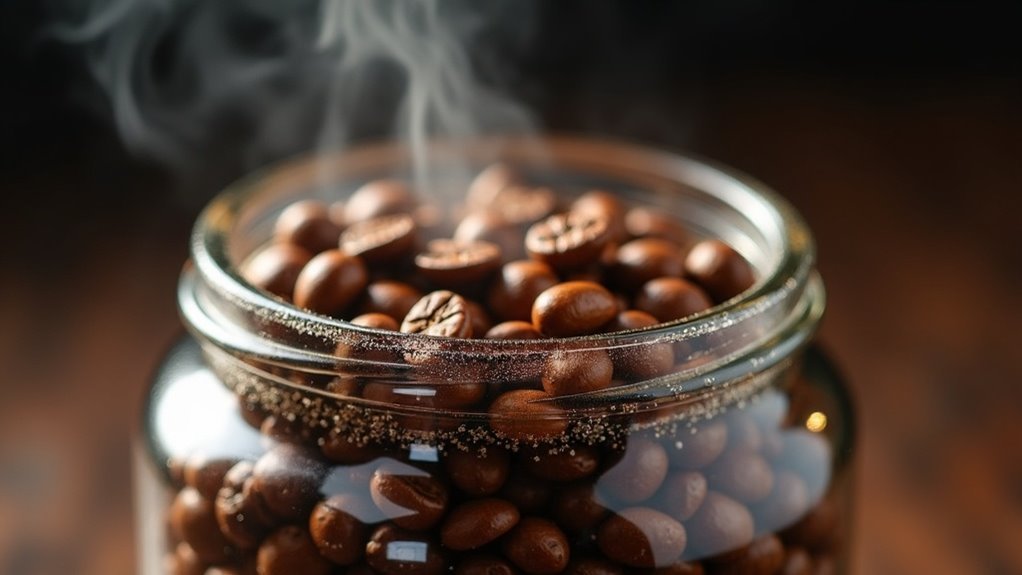
This audible release of carbon dioxide occurs shortly after roasting, particularly during the degassing phase when freshly roasted coffee beans are most active.
The intensity of the sound can vary based on roast level and storage conditions; darker roasts often produce more pronounced crackling.
Recognizing the significance of the first crack and subsequent degassing sounds helps you gauge coffee freshness, ensuring you brew at the ideal time for the best flavor extraction.
The Importance of CO₂ Release in Coffee
Understanding the sounds of coffee degassing is just the beginning; the actual release of CO₂ from roasted beans is crucial for achieving optimal brewing quality. Proper coffee degassing ensures an ideal CO₂ release, which helps prevent uneven extraction that can lead to sour or under-extracted flavors.
Depending on the roast level, the necessary degassing times vary: light roasts typically require 7-14 days, medium roasts need 5-10 days, and dark roasts only require 2-7 days.
Furthermore, CO₂ plays a significant role in contributing to the creamy texture of espresso, thereby enhancing its overall flavor profile. Effectively managing this gas release has a considerable impact on the success of your brewing process and the overall enjoyment of your coffee.
Factors Affecting the Degassing Process
Several key factors influence the degassing process of roasted coffee beans, affecting how and when carbon dioxide is released.
The roast profile plays a critical role; darker roasts degas more quickly due to their porous structure, making them a favorite among those who enjoy bold flavors.
Darker roasts degas rapidly, thanks to their porous structure, appealing to those seeking bold and intense flavors.
Bean density also matters; denser beans release carbon dioxide slowly, which can impact the overall brewing experience.
Additionally, the processing method impacts degassing duration, with natural coffees taking longer than washed types, often resulting in more complex flavor profiles.
Storage conditions—like exposure to oxygen, temperature, and humidity—can accelerate degassing and affect coffee quality, making proper storage essential for maintaining freshness.
Finally, brewing methods dictate timing; for instance, espresso requires a 5 to 7-day degassing period for ideal flavor extraction of volatile compounds, ensuring that each cup is rich and aromatic.
Impact of Degassing on Coffee Flavor
As roasted coffee beans release carbon dioxide during the degassing process, this phenomenon significantly impacts the flavor profile of your brew.
Properly degassed coffee allows for optimal extraction, enhancing both taste and aroma. Brewing too soon can result in excess carbon dioxide creating bubbles that hinder water-coffee contact, leading to under-extraction and a sour flavor.
Different roast types require varying degassing periods; for instance, light roasts benefit from 7-14 days, while dark roasts are best enjoyed after 2-7 days.
Best Practices for Roasting and Brewing
Proper degassing is just one aspect of achieving the finest flavor from your coffee.
Proper degassing is essential in unlocking the true potential of your coffee’s flavor.
To enhance your roasting and brewing practices, consider the following:
- Track degassing time; aim for 2-14 days post-roasting.
- Use one-way valve bags for ideal storage, allowing CO₂ to escape.
- For espresso brewing, let beans degas for 5-7 days for balanced flavor.
- Implement a rotation system in roasting to guarantee a constant supply of rested coffee.
- Monitor environmental factors like temperature and humidity, as they can impact both degassing and flavor extraction.
This website is dedicated to coffee enthusiasts and aims to provide valuable insights into the art of coffee roasting and brewing.