Rinsing cloth filters with hot water is essential for maintaining the flavor of your coffee. It effectively removes residual oils and particles that can lead to rancid tastes in future brews. Hot water also eliminates bacteria and yeast, ensuring safer brewing and improved extraction. This simple step not only enhances the quality of your coffee but also helps preserve the longevity of the filter. Discover more about proper maintenance techniques and community experiences to elevate your coffee brewing process even further.
Key Takeaways
- Rinsing with hot water effectively removes residual coffee oils, which helps prevent rancid flavors in future brews and enhances the overall flavor quality of your coffee.
- Using hot water eliminates bacteria and yeast, ensuring safer brewing conditions and minimizing health risks associated with wet cloth filters.
- Regular rinsing helps maintain the integrity of the filter, ultimately extending its lifespan and improving the extraction process during brewing.
- Soaking filters in hot water can provide a deeper clean, further enhancing the flavor of your coffee and preventing undesirable off-flavors from developing.
- Consistent rinsing after each use significantly enhances the aroma and richness of your coffee, leading to a more enjoyable brewing experience.
Importance of Rinsing Cloth Filters
Why is rinsing cloth filters essential for your coffee brewing process? Rinsing with hot water removes residual coffee oils and particles that can lead to rancidity, enhancing the flavor quality of your brews.
This thorough rinse cleans the filter fibers, minimizing the risk of bacteria and yeast growth in wet cotton, ensuring a clean cup of coffee. By eliminating off-flavors and contaminants from previous use, you prepare the filter for optimal extraction.
Regular rinsing not only prevents flavor taint but also maintains the integrity of your cloth filter, contributing to its longevity and reducing the need for frequent replacements.
Enjoying a great cup of coffee starts with proper filter care!
Benefits of Using Hot Water
When you rinse cloth filters with hot water, you not only enhance the cleanliness of your brewing equipment but also elevate the quality of your coffee.
Hot water dissolves and removes residual oils and coffee particles, preventing rancid flavors in future brews. It also eliminates bacteria and yeast that can develop in wet fibers, ensuring a safer brewing environment for your coffee.
Hot water effectively cleanses cloth filters, removing oils and bacteria for fresher, safer coffee brewing.
By pre-warming the filter, hot water improves brewing temperature and extraction, which is crucial for achieving the best flavor from your coffee beans.
Furthermore, using hot water reduces the absorption of unwanted flavors, resulting in a cleaner taste profile.
This thorough cleaning and proper storage method maintains the integrity of the cloth filter, ensuring long-lasting use and consistently delicious coffee.
Preventing Off-Flavors in Coffee
To prevent off-flavors in your coffee, it’s essential to tackle oil absorption and microbial growth in your cloth filters.
Rinsing your filter with hot water effectively removes residual oils and reduces the risk of bacteria and yeast developing.
This straightforward step not only enhances the flavor of your brew but also ensures a consistent and enjoyable coffee experience.
Oil Absorption Concerns
While cloth filters can elevate the flavor profile of your coffee, neglecting their upkeep can lead to serious oil absorption problems. Regularly rinsing them with hot water is essential to prevent the buildup of oils from turning rancid, which can result in undesirable flavors in your brews. Here’s a brief overview of oil absorption issues you should be aware of:
| Issue | Impact |
|---|---|
| Oil Absorption | Rancidity |
| Neglected Rinsing | Off-Flavors |
| Accumulated Oils | Unpleasant Tastes |
| Regular Cleaning | Enhanced Flavor Clarity |
| Immediate Rinsing | Better Future Brews |
Bacteria and Yeast Growth
If you overlook the cleanliness of your cloth filters, you risk introducing bacteria and yeast that can compromise the flavor of your coffee.
Wet cotton fibers create a perfect breeding ground for these microorganisms, leading to undesirable off-flavors. By rinsing your cloth filters with hot water, you eliminate residual oils and particles that contribute to microbial growth.
Since bacteria thrive in warm, damp environments, immediate cleaning is essential. Regular rinsing greatly reduces the risks of rancid oils and contamination, ensuring your coffee remains delicious.
While storing filters submerged in water can help, hot water rinsing is still a critical step in maintaining cleanliness and preserving the rich flavors of your coffee.
Steps for Proper Rinsing Technique
Rinsing your cloth filter is essential for maintaining the integrity of your coffee’s flavor.
Start by using hot water to ensure all residues and oils are effectively removed, preventing off-flavors in future brews.
By following a proper rinsing technique, you’ll enhance your coffee experience and prolong the filter’s lifespan.
Enjoy the rich and aromatic flavors of your coffee by keeping your filter in top condition!
Importance of Rinsing
To ensure your coffee consistently delivers the best flavor, properly rinsing cloth filters is essential. Rinsing with hot water removes residual coffee oils, preventing previous flavors from tainting future brews.
This process maintains the filter’s cleanliness by eliminating bacteria and yeast that thrive in wet cotton fibers. Additionally, pre-wetting the filter guarantees even saturation, enhancing the extraction of coffee flavors during brewing.
Failure to rinse adequately can lead to unwanted off-flavors, negatively impacting your coffee experience. By ensuring both sides of the filter are clean and free of dry patches, you elevate the overall quality of every cup served.
Rinsing Technique Steps
Properly rinsing your cloth filter is essential for ensuring optimal coffee flavor and extraction.
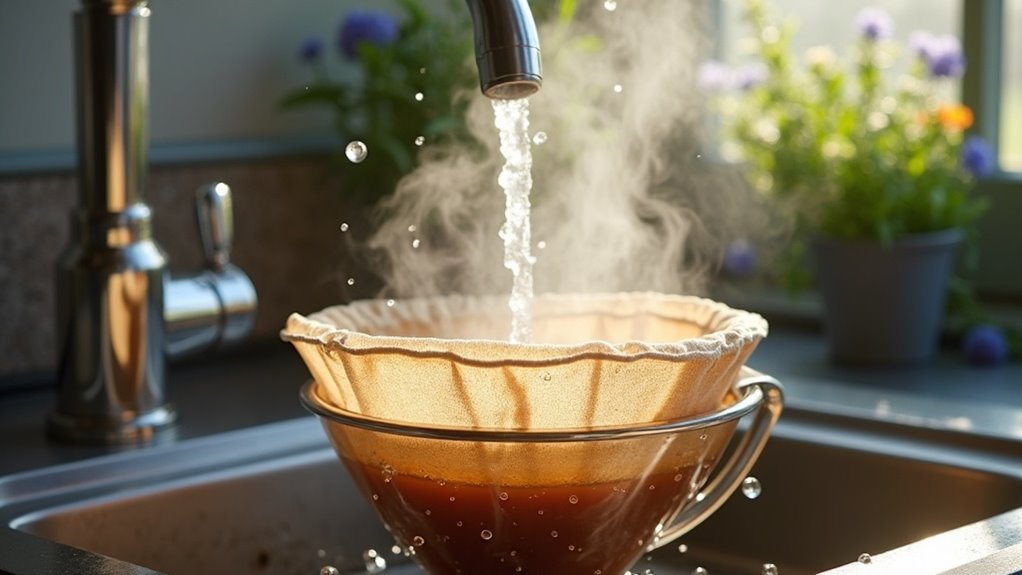
Begin by rinsing the cloth filter under running hot water to remove any residual coffee oils and particles that may affect the taste of your brew. Make sure to thoroughly clean both the inside and outside of the filter to eliminate any contaminants.
For a more thorough clean, consider soaking the filter in hot water, which can help dissolve trapped oils and bacteria.
After rinsing, gently pat the filter dry with a towel, leaving it slightly damp.
Lastly, store the rinsed cloth filter submerged in cold water in the refrigerator to prevent rancidity and maintain its quality for your next coffee-making session.
Benefits of Hot Water
Hot water serves as a powerful ally in the rinsing process of cloth filters, greatly enhancing the effectiveness of your coffee cleaning routine. Using hot water guarantees that residual oils and bacteria are dissolved, improving the taste of your brew and eliminating any unpleasant flavors. It also removes dust and contaminants, leading to a cleaner brewing process. Pre-wetting the filter prepares it for ideal extraction, reduces clogging, and helps maintain the filter’s integrity. The table below summarizes these benefits:
| Benefit | Description | Impact on Coffee Taste |
|---|---|---|
| Removes Residual Oils | Dissolves and eliminates oils | Enhances flavor profile |
| Eliminates Contaminants | Cleans dust and impurities | Provides cleaner taste |
| Prepares for Extraction | Expands the filter for better flow | Reduces risk of off-tastes |
Maintenance Tips for Cloth Filters
Maintaining cloth filters is essential for guaranteeing the quality of your coffee, as improper care can lead to off-flavors and diminished performance.
After each use, rinse cloth filters under hot running water to remove coffee grounds and prevent oil buildup. Periodically soak them in a coffee cleaning chemical solution in boiling water to eliminate stubborn residues.
Store clean cloth filters submerged in water in the refrigerator to keep them fresh. Avoid letting them dry out completely, as this promotes bacteria growth.
Finally, always rinse thoroughly after soaking to ensure that no cleaning chemicals remain, preserving the delicious flavor of your coffee.
Common Mistakes to Avoid
Many coffee enthusiasts unknowingly make critical mistakes when it comes to caring for their cloth filters. One common error is neglecting to rinse the filter immediately after brewing, which can lead to oil buildup and off-flavors in future cups of coffee.
It’s important to store the filter submerged in water to prevent rancidity from exposure to air. Additionally, failing to soak the filter in a cleaning solution after heavy use can contaminate new brews with lingering flavors.
Remember to use hot water for rinsing, as it effectively dissolves oils and removes bacteria. Finally, always pat the filter dry before brewing to ensure maximum extraction of those delicious coffee flavors.
Enhancing Coffee Flavor Profiles
While you might focus primarily on the quality of your coffee beans, the method of brewing and the condition of your cloth filter play equally critical roles in enhancing the flavor profile of your coffee.
Rinsing your coffee filters with hot water before brewing helps eliminate residual oils and odors that could compromise your coffee’s taste. Pre-wetting the filter ensures even saturation of the grounds, promoting optimal extraction.
Furthermore, hot water dissolves any impurities and warms the filter, helping to maintain the ideal brewing temperature. Regular rinsing also preserves the integrity of the cloth filter, allowing it to amplify the rich flavors of your coffee over time.
Community Insights and Experiences
Rinsing cloth filters has become a widely discussed practice among coffee enthusiasts, with numerous users sharing insights on its benefits.
- Eliminates residual flavors for a cleaner taste
- Pre-warms brewing equipment for better temperature stability
- Reduces risk of rancidity and off-flavors
- Enhances flavor extraction for a richer brew
Community experiences emphasize that thoroughly rinsing both sides of the filter removes trapped oils and debris, which can adversely affect the flavor of your coffee.
Many agree that consistent rinsing after each use considerably improves the overall quality of brewing, leading to a more aromatic and enjoyable coffee experience for everyone involved.