Yes, Robusta crema characteristics are indeed different from those of Arabica. You’ll find that it has a thicker and velvety texture, which greatly enhances its visual appeal. The bold flavor profile, often reminiscent of toasted grains, complements other coffee notes exceptionally well, making it a popular choice in espresso blends. This distinctive crema can also enhance the creation of latte art. If you’re interested in learning how to enhance these characteristics and improve your brewing techniques, there is a wealth of information to explore.
Key Takeaways
- Robusta crema has a thicker, velvety texture compared to Arabica, enhancing its visual appeal.
- The higher oil content in Robusta beans leads to a richer and bolder flavor profile, often likened to “rocket fuel.”
- Crema from Robusta showcases toasted grain notes and a smooth mouthfeel, whereas Arabica crema tends to be sweeter with fruity undertones.
- Incorporating a small percentage of Robusta in coffee blends can improve crema thickness and stability, which is advantageous for creating latte art.
- Freshly roasted Robusta beans retain more CO₂, which boosts crema quality and extraction efficiency during brewing.
Understanding Crema in Espresso
When you pull a shot of espresso, the rich, golden crema that forms on top is more than just a visual delight; it’s an essential indicator of extraction quality.
Crema, a fine-bubbled foam, consists of CO₂, coffee oils, and soluble solids, reflecting the effectiveness of your brewing process. Achieving ideal crema requires high pressure (around 9 bars) and hot water (90-96°C).
The type of coffee bean considerably influences its thickness; for instance, Robusta beans yield a creamier crema compared to Arabica.
Using freshly roasted beans guarantees maximum CO₂ retention, leading to a superior sensory experience in every cup you serve.
This website is dedicated to exploring the nuances of coffee, including the importance of crema in creating the perfect espresso.
The Unique Properties of Robusta Crema
When you examine Robusta crema, you’ll notice its thicker, velvety texture and rich appearance set it apart from Arabica.
This unique visual and textural profile, enhanced by an oily sheen, not only elevates its stability but also influences flavor, delivering a bold, robust experience often likened to “rocket fuel.”
These properties make Robusta crema an appealing choice in espresso blends, where its richness beautifully complements other coffee flavors.
Visual and Textural Differences
While many coffee enthusiasts appreciate the nuances of different espresso varieties, Robusta crema stands out due to its distinctive visual and textural properties.
Its crema production results in a thicker, richer layer that enhances the espresso’s overall presence. You’ll notice an inviting oily sheen on the surface, which is especially appealing in milk-based drinks.
Unlike the precise delineation of Arabica crema, Robusta’s marbled appearance invites creativity in latte art. This rich, velvety texture not only captivates visually but also performs well in competitions, making it a fantastic choice for those looking to impress with unique blends and artful designs.
Flavor Profile Influences
Robusta crema’s flavor profile is shaped by its unique properties, creating a tasting experience that sets it apart from its Arabica counterpart.
You’ll notice a thicker, velvety texture that enhances the richness of each sip. The flavor profile often includes toasted grain notes with a subtle sweetness, elevating the overall experience.
While Robusta has lower sugar content, its higher oil content stabilizes the crema, giving it an oily sheen that’s visually striking.
Additionally, the aroma may feature naphtha-kerosene hints, offering a distinctive sensory experience that contrasts sharply with the sweeter, fruitier scents found in Arabica crema.
This exploration of Robusta crema highlights the complex and diverse world of coffee, showcasing how different beans can create unique flavor experiences for coffee enthusiasts.
Comparison of Crema Thickness: Robusta vs. Arabica
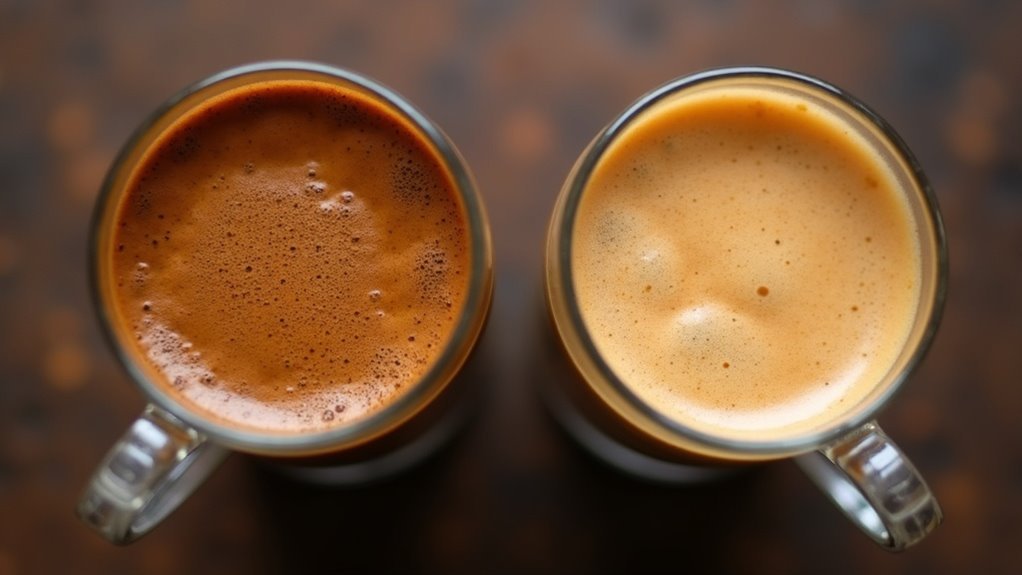
When you compare the crema thickness of Robusta and Arabica, you’ll notice striking visual differences.
Robusta crema tends to be velvety and substantially thicker, while Arabica crema appears lighter and less pronounced.
This contrast is largely due to the oil content in Robusta beans, which enhances the stability and richness of the crema produced, making it a popular choice for espresso lovers seeking a bold and robust flavor profile.
Crema Thickness Comparison
While both Robusta and Arabica coffees bring unique qualities to espresso, the difference in crema thickness between the two is quite notable.
Robusta crema is generally thicker and richer, featuring a velvety texture that enhances its visual appeal. In contrast, Arabica crema tends to be sweeter but lacks the substantial body that Robusta offers.
The higher oil content in Robusta beans contributes to a more stable crema, making it ideal for milk-based drinks where distinct latte art is crucial.
Even a small percentage of Robusta in a blend can boost crema thickness without overpowering the overall flavor profile, enriching your espresso experience.
Visual Differences Observed
When examining the visual differences in crema thickness, the contrast between Robusta and Arabica beans is indeed striking.
Crema made from 100% Robusta beans is thick, rich, and velvety, often appearing more opaque and substantial. This visual allure is further enhanced by an oily sheen, which contributes to its stability in milk-based beverages.
In comparison, Arabica crema tends to be thinner and less defined. When it comes to crafting latte art, the robust qualities of Robusta crema allow for more intricate patterns, as it maintains its structure longer.
Noticing these differences can significantly enhance your coffee experience, ensuring that you serve a drink that isn’t only delicious but also visually appealing.
Factors Influencing Crema Quality in Robusta
Several factors considerably influence the quality of crema produced from Robusta beans, impacting both its texture and visual appeal.
The higher concentration of coffee oil and proteins in Robusta results in a thicker, richer crema compared to Arabica.
Robusta beans yield a thicker, richer crema due to their higher concentration of coffee oils and proteins.
To achieve the best crema, it’s essential to use freshly roasted beans, as they retain CO₂, which fosters bubble formation.
Additionally, grind size plays an important role; finer grinds enhance extraction and stability of the crema.
The brewing method is also crucial; espresso machines are particularly effective at creating a consistent and homogeneous crema.
Lastly, specific flavor compounds present in Robusta contribute to a visually striking, oily surface, which enhances both taste and presentation in your coffee creations.
Visual Appeal: Robusta Crema in Latte Art
Robusta crema stands out in the world of coffee, particularly in latte art, thanks to its rich, oily surface that captivates both baristas and coffee enthusiasts alike.
Its thicker, more substantial texture enhances visual appeal, creating a striking contrast with the milk foam. You’ll appreciate how robusta crema‘s stability provides clearer definitions in intricate designs, allowing for more experimentation with techniques.
The velvety appearance of robusta crema isn’t just visually appealing; it’s often prized in coffee competitions where presentation plays a key role.
This unique combination encourages you to explore new artistic possibilities, elevating your coffee creations to a level that delights your guests.
Flavor Profile Differences Between Robusta and Arabica Crema
When comparing the flavor profiles of crema from Robusta and Arabica beans, you’ll notice distinct differences that can greatly influence your coffee experience.
Here are key aspects to evaluate in your espresso blends:
- Robusta Crema: Known for its thicker and richer consistency, Robusta crema often features toasted grain and nutty notes that add depth to the coffee.
- Arabica Crema: In contrast, Arabica crema tends to be sweeter and lighter, showcasing fruity undertones and delicate floral aromas that enhance the overall flavor.
- Texture: Robusta provides a velvety mouthfeel due to its pronounced oiliness, while Arabica is recognized for its more delicate and smooth texture.
- Aromatics: The aroma of Robusta may include hints of naphtha-kerosene, offering a unique scent profile, while Arabica’s aroma is characterized by its pleasant floral and fruity notes.
These flavor profiles significantly shape how coffee enthusiasts perceive and enjoy their brews.
Brewing Techniques for Optimal Crema Production
To achieve ideal crema production for your coffee, focusing on specific brewing techniques is fundamental.
Start with a fine grind size to maximize surface area, enhancing oil and gas emulsification. Maintain a consistent water temperature between 90-96°C to effectively extract oils and CO₂, essential for crema stability.
Using freshly roasted Robusta beans within 3-4 weeks guarantees higher CO₂ retention, which is crucial for bubble formation. An espresso machine capable of delivering 9 bars of pressure is perfect for extracting rich crema, promoting optimal emulsification.
Finally, experiment with brewing times; shorter extractions enhance crema visibility, while longer ones deepen flavor, beautifully balancing both aspects.
Community Preferences: Robusta vs. Arabica Crema
While preferences for coffee crema vary widely among enthusiasts, many find themselves drawn to the distinct characteristics of Robusta compared to Arabica.
Here are some key community insights:
- Robusta crema offers a thicker, richer texture, enhancing espresso’s mouthfeel and overall experience.
- Its oily sheen and stability create visually appealing presentations, especially in lattes and cappuccinos.
- Some coffee lovers prefer Robusta for its intense flavor, appreciating the boldness it adds to their brews.
- The contrasting sweetness of Arabica allows for diverse blending options, catering to a wide range of tastes.
These differences spark lively discussions among coffee aficionados, enriching their serving and tasting experiences.