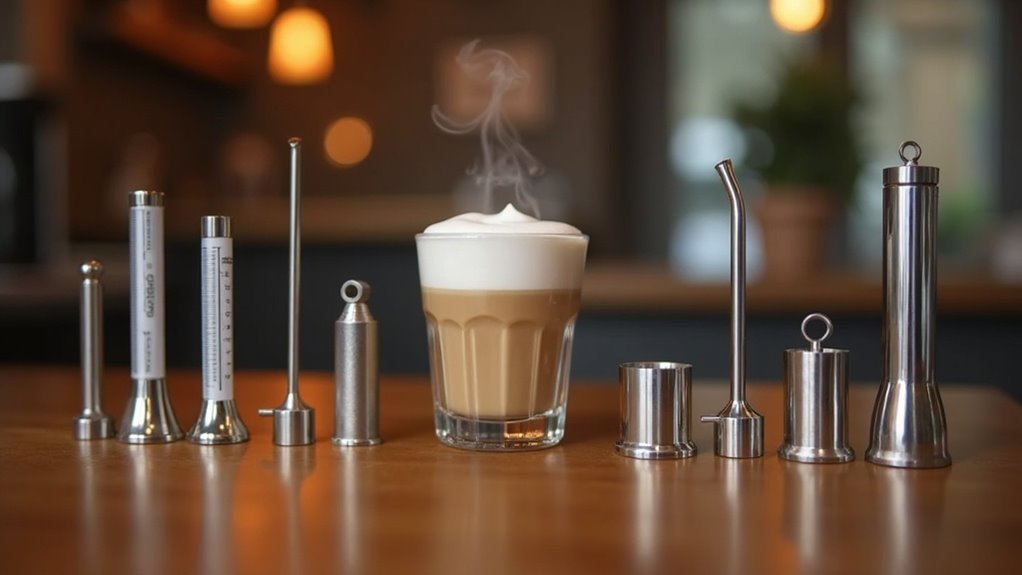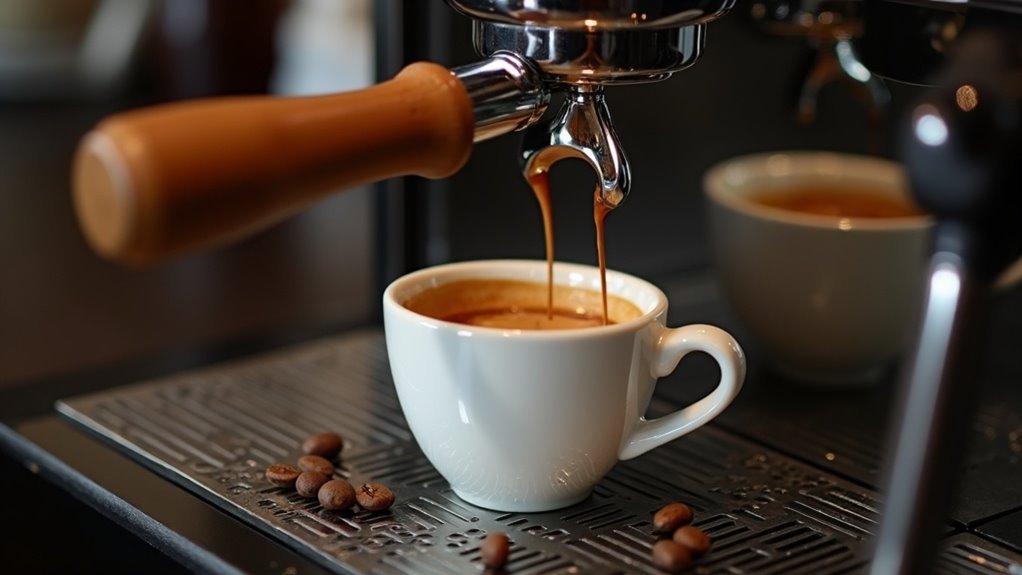
Yes, you can absolutely make espresso with decaf blends! These blends offer a bold, flavorful experience without the jitters of caffeine. The decaffeination process, whether using Swiss Water or CO₂ methods, preserves the rich flavors of high-quality beans. Dark roasts provide intense, smoky notes, while medium roasts balance sweetness and depth. By mastering brewing techniques, you can enhance the taste further. Discovering the right decaf espresso brands can elevate your coffee experience beyond expectations.
Key Takeaways
- Yes, espresso can be made using decaf coffee blends, allowing for flavorful coffee without the caffeine effects.
- Decaf espresso maintains rich flavors due to high-quality Arabica beans, enhancing the overall coffee experience.
- Brewing techniques, such as proper water temperature and pressure, are crucial for extracting flavor from decaf blends.
- Popular decaf brands, like Colapse and Lavazza, offer unique flavor profiles suitable for espresso preparation.
- Decaf espresso is perfect for those wanting to enjoy coffee anytime without the jitters or caffeine-related anxiety.
Understanding Decaf Espresso
Understanding decaf espresso can transform your coffee experience, especially if you crave the rich flavors without the jitters. Brewed from decaffeinated coffee beans, decaf espresso showcases the delightful characteristics of high-quality Arabica beans, renowned for their smoothness.
By using a medium or dark roast, you enhance the flavor, making each decaf espresso shot a luxurious treat. The ultra-fine grind size is essential for ideal flavor extraction during brewing, typically within 25 to 30 seconds.
With only 3 to 15 mg of caffeine per ounce, decaf espresso allows you to savor the experience without overwhelming stimulation, making it a perfect choice for coffee lovers who want to enjoy a delicious cup without the caffeine kick.
The Decaffeination Process
When you explore the decaffeination process, you uncover methods that shape the very essence of your coffee.
Techniques like the Swiss Water Process and CO₂ method not only strip away caffeine but also preserve the rich flavor profiles that define great coffee.
Understanding these methods is key to appreciating how they influence the taste of your decaf blends.
Decaffeination Methods Explained
Decaffeination methods play an essential role in shaping the flavor and quality of your coffee experience.
Understanding these techniques helps you serve the best decaf espresso to your guests.
- The Swiss Water Process removes caffeine without chemicals, preserving the flavor profile.
- The Carbon Dioxide Process uses pressurized CO2, effectively extracting caffeine while maintaining taste.
- The Solvent Process employs chemical solvents like methylene chloride, though it may alter the original flavor.
Each decaffeination method affects how much caffeine is removed and the overall taste of the decaf beans, allowing you to craft delightful decaf espresso that satisfies all palates.
Impact on Flavor Profile
The decaffeination process significantly impacts the flavor profile of your coffee, often resulting in intriguing variations that can surprise even the most discerning coffee enthusiasts.
Decaf coffee blends, made from decaffeinated beans, may showcase bolder flavors or milder, nuttier notes, depending on the roast level. Dark roasts deliver intense, smoky characteristics, while medium roasts provide a harmonious balance.
The extraction process also changes in the absence of caffeine, potentially lowering acidity and bitterness. To ensure a delightful experience, prioritize high-quality, fresh beans, as their quality directly influences the final taste.
Additionally, your choice of brewing method can further enhance these delightful flavor profiles.
Flavor Profile of Decaf Espresso
When you taste decaf espresso, you might notice its milder, sometimes nuttier flavor, shaped by the decaffeination process.
The roast level plays a pivotal role, with dark roasts delivering intense, smoky notes while medium roasts balance sweetness and depth.
To reveal the full potential of these flavors, proper brewing techniques and precise grinding are essential, ensuring a rich and enjoyable coffee experience.
Decaf Flavor Characteristics
While many coffee enthusiasts initially overlook decaf espresso, its flavor characteristics can be surprisingly nuanced and enjoyable.
The decaffeination process, especially with high-quality decaf coffee beans using the Swiss Water® method, preserves rich flavors.
Here are key points to take into account:
- Dark roasts deliver intense, smoky flavors, while medium roasts offer a balanced profile.
- Grind size is essential; a fine grind guarantees optimal flavor extraction.
- Decaf blends can exhibit unique tasting notes, often nuttier or sweeter, enhancing the overall coffee experience.
Roast Influence on Taste
Understanding how roast profiles influence the taste of decaf espresso can elevate your coffee experience immensely.
The roast profile plays a vital role in flavor; medium roasts offer balance, while dark roasts bring intense, smoky notes. Arabica beans, commonly used in decaf blends, deliver smooth, mellow flavors, whereas Robusta adds boldness and enhances crema.
The decaffeination process, especially Swiss Water®, retains more of the original boldness, enriching your espresso. However, freshness is key—older beans lose complexity, diminishing the overall espresso experience.
Selecting quality, well-roasted decaf can transform your coffee, ensuring each cup is rich and satisfying for you and those you serve.
Brewing Techniques for Flavor
To brew a decaf espresso that truly captivates your palate, attention to detail is essential. Focus on these key brewing techniques to enhance flavor extraction:
- Use finely ground decaf coffee, ideally 200-300 microns.
- Maintain water temperature between 195°F and 205°F.
- Employ a coffee dose of 7-9 grams for singles or 14-18 grams for doubles.
Opt for high-quality beans, especially those processed by the Swiss Water® method, to achieve a rich flavor with minimal bitterness.
Remember, consistent tamping pressure of 20-30 pounds is vital for a delightful crema, ensuring your decaf espresso experience is nothing short of exceptional.
Enjoy the nuances and complexities that a well-brewed decaf espresso can offer!
Brewing Techniques for Decaf Espresso
Brewing decaf espresso requires precision and care to release its rich flavors, much like its caffeinated counterpart.
Start with a grind size of 200-300 microns for ideal extraction. Maintain your water temperature between 195°F and 205°F to reveal the best flavor profile. Aim for a brewing time of 25 to 30 seconds, ensuring your shot isn’t over-extracted.
Utilize high-pressure water at around 9 bars to create that signature richness. Don’t underestimate the importance of consistent tamping pressure and dose; these brewing techniques elevate your decaf espresso experience, allowing you to serve a delightful cup that satisfies all coffee lovers.
Benefits of Choosing Decaf Espresso
Choosing decaf espresso opens up a world of flavor without the accompanying jitters, making it an ideal option for coffee enthusiasts at any hour. This option not only satisfies your palate but also offers significant benefits for coffee lovers:
Decaf espresso delivers rich flavors without jitters, perfect for coffee lovers any time of day.
- Enjoy the rich flavors of espresso late into the evening without the anxiety that caffeine can induce.
- Enhance your dining experience by pairing decaf espresso perfectly with desserts.
- Support your mental well-being and help lower blood pressure through regular consumption.
With decaf espresso, you can embrace the joy of coffee while minimizing the risks associated with caffeine, allowing you to savor every moment with a comforting cup that uplifts your spirit.
Selecting Quality Decaf Espresso Beans
How can you guarantee that your decaf espresso delivers the rich, satisfying flavors you crave?
Start by selecting the best decaf espresso beans that have undergone the Swiss Water Process or CO₂ method, ensuring a chemical-free decaffeination without sacrificing flavor.
Opt for Arabica beans for a smoother taste or blend in a touch of Robusta for added boldness.
Aim for medium or dark roast profiles—they beautifully balance sweetness and depth.
Always choose freshly roasted beans, as their flavor and aroma diminish over time.
Finally, check customer reviews and roaster reputations to confirm you’re selecting quality decaf that will delight your coffee-loving guests.
Popular Decaf Espresso Brands
When it comes to enjoying decaf espresso, several standout brands consistently impress coffee lovers with their exceptional quality and flavor. Here are a few remarkable options:
- Colipse Decaf Espresso: Features Swiss Water® Processing, ensuring rich flavor without chemicals.
- Lavazza Decaf Espresso: Blends 100% Arabica beans, achieving a full-bodied flavor through natural decaffeination methods.
- Starbucks Decaf Espresso: Known for its smooth flavor and consistent quality, making it a go-to choice.
These brands offer distinct flavor profiles that cater to decaf enthusiasts, ensuring you can savor the delightful experience of espresso brewing without caffeine.
Whether you’re a casual drinker or a coffee aficionado, these decaf options provide a satisfying alternative for any time of day.