Crust breaking in cupping is an essential technique that allows you to fully appreciate the diverse flavors and aromas of your coffee. After brewing, let the coffee steep for about four minutes before gently breaking the crust that forms from the foam, oils, and grounds. This action releases the trapped scents, significantly enhancing your tasting experience. Performing this step correctly is vital to avoid common mistakes that could diminish your overall appreciation of the coffee. Learn more about how to perfect your cupping technique for the best results.
Key Takeaways
- Crust breaking is a technique in coffee cupping that enhances flavor perception by releasing trapped aromas in the coffee crust.
- The process occurs approximately four minutes after brewing, allowing optimal flavor and aroma development.
- A cupping spoon is used to gently stir the surface three times before inhaling the released fragrances.
- Common mistakes include breaking the crust too early or late, stirring too vigorously, or standing too far from the cup.
- Consistency in the crust-breaking procedure is crucial for maximizing the tasting experience and appreciating the nuances of different coffees.
Understanding Breaking Coffee
When you immerse yourself in the world of coffee cupping, understanding crust breaking is essential for fully appreciating the brew’s nuances.
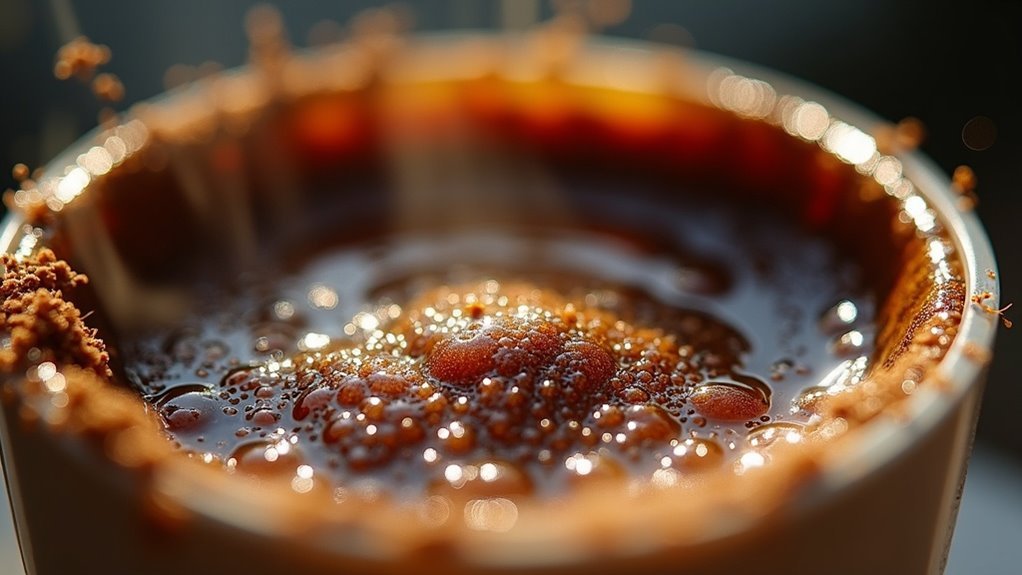
This vital step occurs around four minutes post-brewing, where the crust—composed of foam, oils, and grounds—insulates the coffee. By breaking this crust, you release trapped aromas that greatly enhance flavor perception.
Around four minutes after brewing, breaking the crust reveals trapped aromas, enhancing your coffee’s flavor perception.
To do this effectively, gently stir the surface with a cupping spoon three times, then lean in for an immediate whiff of the released scents.
Mastering crust breaking not only enriches your tasting experience but also reveals the complexity and hidden layers within each coffee brew.
How to Perform Crust Breaking During Coffee Cupping
To perform crust breaking effectively during coffee cupping, start by waiting roughly four minutes after brewing your coffee.
Then, use a cupping spoon to gently stir the surface three times to break the crust. This action releases the trapped aromas, enhancing your sensory experience.
Immediately lean in to inhale the released fragrances, allowing for a deeper appreciation of the coffee’s complexity.
After breaking, skim off any remaining grounds and foam with two spoons to prepare for tasting.
Mastering this technique is essential for fully experiencing the aromatic depth and flavor nuances of the coffee you enjoy.
Common Mistakes in Crust Breaking and How to Fix Them
While mastering crust breaking is essential for coffee cupping, many coffee enthusiasts make common mistakes that can detract from the overall tasting experience.
Mastering the art of crust breaking in coffee cupping is vital; avoid common mistakes to enhance your tasting experience.
To enhance your cupping technique, consider these helpful tips:
- Wait about 4 minutes after brewing to break the crust for the most ideal flavor extraction.
- Stir gently to preserve the delicate aromas instead of stirring too vigorously, which can disrupt the fragrance.
- Use a standard cupping spoon to minimize the introduction of sediment into your cup.
- Stand close to the cup after breaking the crust to fully inhale and appreciate the rich aromas that develop.
Role of Time Before Breaking
Understanding the role of time before breaking the crust is essential for optimizing your coffee cupping experience. Ideally, you should wait about 4 minutes after brewing to break the crust, allowing flavors and aromas to develop fully.
This timing helps sediment coffee particles, preventing floating fines from clouding your tasting experience. While variations between 3 to 5 minutes can yield subtle differences, consistency in your procedure is more critical than precisely hitting the mark.
Be cautious with longer wait times, as they may enhance flavor extraction but can also introduce more fines, affecting the clarity of your cup.
Effects of Different Timing
The timing of breaking the crust can significantly influence the flavor profile of your coffee.
Allowing the recommended 4 minutes for extraction and sedimentation achieves a balanced cup, while breaking it too early or too late may introduce subtle variations that only experienced coffee enthusiasts can discern.
Grasping these timing nuances is vital for elevating your overall coffee tasting experience.
Timing Impact on Flavor
Timing plays an essential role in the cupping process, as breaking the crust at the right moment can greatly influence the flavor profile of your coffee.
To optimize your tasting experience, consider these factors:
- Breaking the crust within the recommended 4-minute window is vital for capturing the best flavors.
- Delaying beyond this period may enhance extraction but can introduce undesirable fines.
- Subtle flavor distinctions may arise between breaking the crust at 2 minutes versus 8 minutes, affecting your overall tasting experience.
- Trained palates often detect nuanced variations in flavor, underscoring the importance of precise timing in the coffee cupping process.
Flavor Variations Over Time
While you might think that breaking the crust at any point will yield a similar flavor experience, the timing can greatly affect what you taste in your coffee.
Flavor variations become noticeable when you wait between 2 to 8 minutes before breaking the crust. Longer brewing allows for higher extraction of solubles, enhancing the rich flavors of your coffee, but be cautious of fines affecting the profile.
If you break the crust too late, temperature retention may alter your perception of the coffee’s nuances. For consistency and to maintain flavor integrity, aim to break the crust around 4 minutes, ensuring a more reliable tasting experience for those you serve.
Considerations for Cupping
When you approach cupping coffee, timing plays a critical role in flavor extraction and aroma evaluation. Breaking the crust at the right moment enhances your ability to assess the coffee’s characteristics while minimizing floating particles.
Timing Importance
Understanding the importance of timing in cupping can greatly enhance your coffee tasting experience. To achieve the best flavor extraction, aim to break the crust around four minutes after brewing.
Here are key considerations:
- A timing window of 3 to 5 minutes balances extraction and sedimentation, leading to a more flavorful cup.
- Breaking the crust too late can alter the flavor profile and diminish the nuances of the coffee.
- Subtle differences in taste become more apparent to trained palates, making timing crucial for accurate evaluation.
- Proper timing minimizes the impact of brewing technique on your coffee evaluation, allowing for a more precise tasting experience.
Aroma Evaluation Techniques
Aroma evaluation is a critical component of cupping, as it allows you to uncover the complex nuances of coffee.
Begin by examining the dry aroma in your cupping bowls, allowing the crust to remain unbroken for at least three minutes. After four minutes, gently stir the surface three times to release trapped aromas. Sniff as the foam runs down the back of your spoon, capturing the aroma’s full intensity.
Keep in mind that light roasts produce less crust, which may impact your aroma evaluation. Timely crust breaking is essential for maximizing aroma and ensuring an accurate examination of coffee quality.