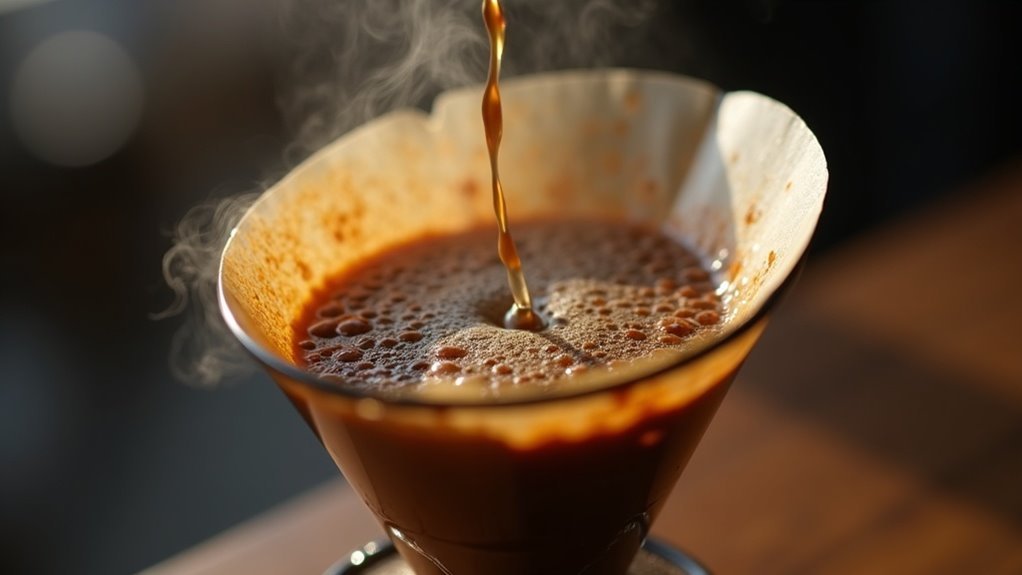
Coffee blooming in pour-over brewing is an essential process that enhances flavor extraction. During this stage, freshly roasted coffee grounds release carbon dioxide, creating bubbles that improve water saturation. To achieve ideal blooming, use double the weight of coffee in water and allow 30 to 40 seconds for degassing. By doing this, you’ll prevent sourness and encourage a balanced flavor profile. Understanding the nuances of blooming can elevate your coffee brewing experience even further.
Key Takeaways
- Coffee blooming refers to the release of carbon dioxide from freshly roasted coffee grounds during the pour-over brewing process.
- This process generates bubbles and foam, which enhances water saturation and flavor extraction.
- Optimal blooming is achieved by using double the weight of coffee in water and lasts for about 30 to 40 seconds.
- Factors such as freshness, roast degree, and grind size play a significant role in the blooming effect and the overall flavor of the coffee.
- Proper blooming techniques help prevent sourness and promote a well-balanced flavor profile in the brewed coffee.
Understanding the Coffee Bloom
The coffee bloom is a crucial step in the pour-over brewing process that significantly influences the flavor of your cup. During this phase, carbon dioxide trapped in freshly roasted coffee grounds escapes, creating bubbles and foam.
This 30 to 40-second process enhances flavor extraction by allowing water to saturate the coffee evenly. For optimal results, use about twice the weight of coffee in water and pay attention to factors like grind size and water temperature, ideally between 92-96°C.
Proper blooming helps prevent sourness and promotes a balanced flavor profile, ensuring you serve a delicious and satisfying cup to your guests.
The Science Behind Blooming
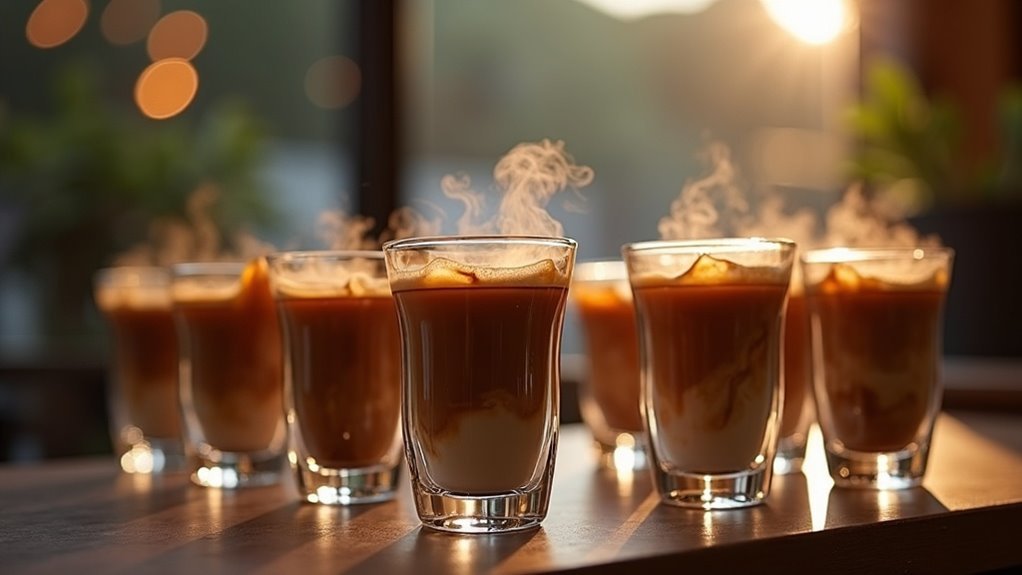
When you add hot water to freshly ground coffee, the rapid release of carbon dioxide (CO2) creates a bubbling effect known as blooming.
This CO2 release is essential for enhancing flavor extraction, as it allows water to penetrate the grounds more effectively.
Understanding this mechanism can help you optimize your brewing process, resulting in a richer and more flavorful cup of coffee.
Enjoying the perfect brew is all about mastering the science behind blooming!
CO2 Release Mechanism
As hot water meets coffee grounds, a fascinating chemical reaction unfolds, releasing carbon dioxide (CO2) that’s been trapped during roasting. This CO2 release is essential for effective brewing. Here’s what you should know:
- Timing: The majority of CO2 escapes within the first four hours post-roasting, impacting the blooming process.
- Roast Level: Fresher, lighter roasts produce a pronounced bloom due to higher gas retention.
- Indicators of Quality: Observing bubbling during blooming signals freshness and grind quality, directly affecting flavor extraction.
Understanding this CO2 release mechanism enhances your brewing technique, ensuring a flavorful cup of coffee for those you serve.
Impact on Flavor Extraction
Coffee blooming plays a crucial role in flavor extraction, greatly enhancing your brewing experience by allowing water to interact effectively with coffee grounds.
During the degassing process, freshly roasted coffee releases carbon dioxide, which can otherwise interfere with extraction. By allowing this gas to escape, even extraction of solubles and oils is achieved, resulting in a richer flavor and aroma that contributes to a balanced cup.
The ideal blooming period lasts between 30 to 40 seconds, setting the foundation for improved flavor development. Research indicates that coffee that has been allowed to bloom consistently tastes fuller, while un-bloomed coffee may come across as flat and overly acidic.
Freshness is key; the more recent the roast, the more pronounced the blooming effect will be.
The Pour-Over Brewing Process
To achieve a balanced and flavorful cup of coffee, mastering the pour-over brewing process is essential. Follow these steps for ideal results:
Master the pour-over brewing technique for a perfectly balanced and flavorful cup of coffee.
- Measure: Use a coffee-to-water ratio of 1:15 to 1:18 for effective flavor extraction.
- Bloom: Start with a pour that saturates the coffee grounds with double the water, allowing 30 to 45 seconds for the blooming process—this releases trapped gas.
- Temperature: Maintain water temperature between 195°F and 205°F to enhance saturation and promote proper flavor extraction.
Factors Affecting Coffee Bloom
While several factors can influence the blooming process of coffee, the freshness of your coffee beans stands out as a key element. Freshly roasted beans release more carbon dioxide, creating a vigorous bloom, whereas stale beans exhibit minimal blooming due to gas that has already been trapped.
The roast degree also plays a significant role; dark roasts typically bloom more due to their higher oil and gas content. Additionally, the grind particle size affects the speed of the bloom—finer grinds produce an energetic bloom, while coarser grinds result in a slower one.
Lastly, the ideal brewing water temperature and the flow of water during pouring enhance the extraction process, effectively promoting a blooming coffee experience.
Tips for Effective Blooming
To achieve effective blooming in your coffee brewing, start by maintaining a water ratio of roughly 2 grams of water for every 1 gram of coffee.
Pay close attention to your brewing temperature, aiming for 92-96°C (195-205°F) to optimize gas release from the coffee grounds.
Timing and technique are also crucial; allow the grounds to rest for 30 to 40 seconds while pouring water gently in a circular motion to ensure even saturation.
This method will help enhance the flavors and aromas of your coffee.
Proper Water Ratio
Achieving effective blooming in pour-over coffee hinges on the proper water ratio, as using approximately 2 grams of water for every 1 gram of coffee guarantees the grounds are fully saturated. This ensures a superior release of trapped gases, enhancing flavor extraction.
To refine your blooming technique, consider these tips:
- Pour enough water to saturate the grounds and allow them to swell for 30-40 seconds.
- Use a gentle initial pour to avoid disrupting the coffee bed.
- Experiment with water-to-coffee ratios, such as 1:15 to 1:18, to create a more flavorful cup of coffee while maintaining effective blooming.
Optimal Brewing Temperature
When it comes to effective blooming in pour-over coffee, the brewing temperature plays a crucial role in maximizing flavor extraction.
The ideal brewing temperature ranges from 92-96°C (195-205°F), which promotes rapid gas release and enhances the bubbling effect during blooming.
If your water temperature is too low, you may notice diminished gas release, resulting in a lackluster bloom.
Even slight deviations can hinder the effectiveness of the bloom.
Consistently monitoring your water temperature with a thermometer or temperature-controlled kettle ensures the best conditions for effective blooming, ultimately leading to a more flavorful cup of coffee that you can proudly serve to others.
Timing and Technique
While the right timing and technique are essential for effective blooming, understanding the nuances of your pour-over method can greatly elevate your coffee’s flavor profile.
To achieve ideal blooming, consider these tips:
- Pour 2-3 times the weight of coffee in hot water, ensuring proper saturation for optimal extraction.
- Allow 30 to 45 seconds for carbon dioxide to escape, which enhances the overall flavor of your coffee.
- Use a consistent pouring technique, like a spiral motion, to evenly saturate the grounds and prevent channeling, leading to a more balanced brew.
Exploring Different Pour-Over Methods
Pour-over methods like the Hario V60, Chemex, and Kalita Wave provide you with precise control over brewing parameters, which is crucial for optimizing the coffee blooming process.
Each device influences water flow and brewing time, directly affecting extraction. The Hario V60’s cone shape encourages even saturation of coffee grounds, enhancing the blooming stage.
Chemex’s thicker filters yield a cleaner taste while maintaining the integrity of the bloom. The ideal water temperature for blooming ranges from 195°F to 205°F, maximizing the release of carbon dioxide.
Allowing a bloom phase of 30 to 45 seconds guarantees rich flavor profiles, creating a delightful experience for anyone you serve with your pour-over coffee.