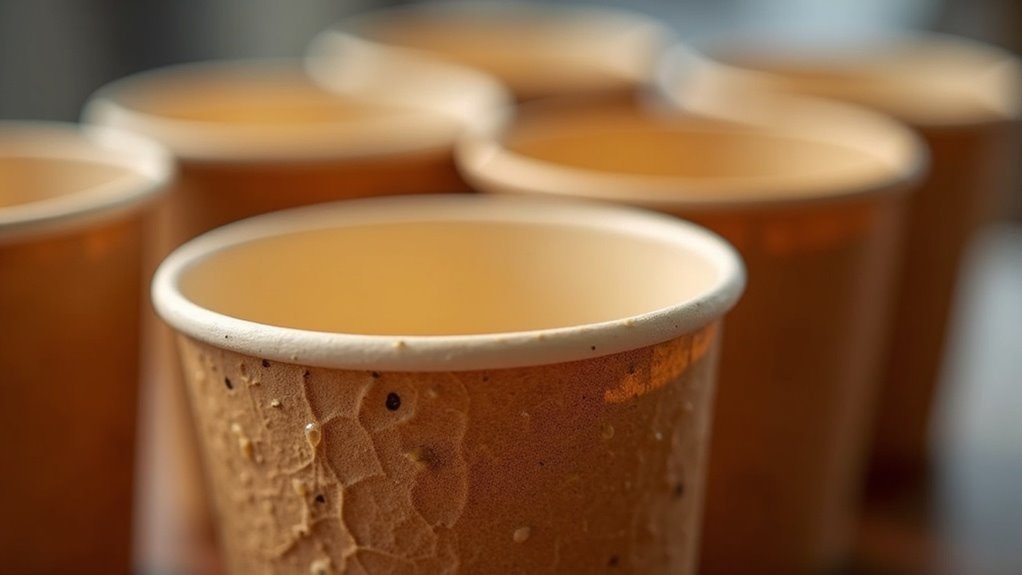
Yes, paper to-go cups used for coffee are typically lined with plastic, specifically polyethylene. This lining helps prevent leaks, ensuring that your hot beverage stays contained. However, it also complicates recycling efforts, resulting in over 99% of these cups ending up in landfills. Additionally, the plastic can leach harmful microplastics into your coffee. If you’re interested in sustainable coffee options, there are alternatives available that promise a lower environmental impact. If you’re curious about these eco-friendly solutions, there’s plenty more to discover!
Key Takeaways
- Most coffee to-go cups are lined with polyethylene plastic to prevent leaks and maintain structural integrity.
- This plastic lining complicates recycling, resulting in over 99% of coffee cups ending up in landfills.
- Some eco-friendly alternatives, like PLA-lined cups, are compostable but require specific industrial facilities for proper disposal.
- Plastic linings can leach harmful microplastics into coffee, posing potential health risks.
- Exploring innovations like edible or reusable coffee cups can help reduce the environmental impact of single-use paper cups.
Understanding the Plastic Lining in Paper Cups
When you grab a paper coffee cup, you mightn’t realize that it’s lined with a plastic layer, primarily polyethylene, to keep your drink from leaking. This plastic lining complicates recycling, with about 99.75% of disposable paper coffee cups ending up in landfills due to contamination.
While some eco-friendly alternatives, like PLA-lined cups, offer a compostable option, they still require industrial facilities for proper disposal. Be cautious of claims suggesting plastic-free linings, as they may contain unverified materials.
Opting for certified compostable coffee cups can help you serve your favorite brew responsibly and reduce waste in our environment. Choose wisely for a sustainable coffee experience!
The Environmental Impact of Plastic-Lined Cups
Many coffee lovers don’t realize the significant environmental impact of plastic-lined to-go cups commonly used for their favorite brews.
These cups, often coated with polyethylene, complicate recycling efforts, causing over 99% to end up in landfills. The production of these cups consumes thousands of barrels of oil, furthering our reliance on fossil fuels.
When disposed of improperly, they leach harmful microplastics, posing a threat to wildlife and ecosystems. Moreover, the plastic lining inhibits proper composting; if composted, they can contaminate valuable compost with harmful chemicals.
By choosing compostable coffee cups instead, you can help reduce this environmental burden and promote a more sustainable future for your daily caffeine fix.
It’s time to reconsider our choices and serve the planet better with every cup of coffee.
Recycling and Composting Challenges
Although you might think paper to-go cups are easily recyclable, the reality is more complicated, especially for coffee lovers.
Most cups are lined with polyethylene, a plastic that creates significant recycling challenges. In fact, 99.75% of these cups can’t be recycled due to contamination from their plastic lining, which can be particularly concerning for those who enjoy their daily coffee on the go.
Composting isn’t an option either, as it risks polluting compost with microplastics that could affect soil health. Many recycling programs don’t accept these cups, leaving coffee drinkers with limited choices for waste management.
Misleading claims about their recyclability lead to improper disposal, worsening pollution. It’s essential for coffee enthusiasts to stay informed and advocate for better alternatives to support our environment effectively while enjoying their favorite beverage.
Health Concerns Associated With Plastic Linings
While you might enjoy your coffee on the go, the health concerns associated with plastic linings in paper cups are unsettling.
These linings can leach hazardous microplastics into your drink, leading to potential health risks, such as:
- Reproductive harm
- Metabolic disturbances
- Increased cancer risk
- Unknown long-term effects from toxic chemicals
Studies suggest that daily consumption could expose you to 75,000 microplastic particles.
As these microplastics contaminate your beverages, they pose serious risks to your health.
It’s essential to consider the impact of plastic-lined paper coffee cups on your well-being and explore safer alternatives, such as reusable cups or those made from eco-friendly materials, to enjoy your favorite brew without compromising your health.
Exploring Sustainable Alternatives to Paper Cups
What if you could enjoy your favorite cup of coffee without adding to the plastic pollution crisis? Sustainable alternatives to traditional paper cups are emerging, such as edible cups made from waffles, which completely eliminate waste.
PLA-lined cups provide a compostable option, although they require industrial composting for effective breakdown. Innovations in origami techniques are creating sustainable coffee cups that minimize material use and reduce environmental impact.
While some manufacturers are investigating latex-based linings, their benefits are still unverified. Transitioning to reusable cup systems can significantly decrease single-use options, making a positive impact on our planet while allowing coffee lovers to indulge in their favorite brews more responsibly.