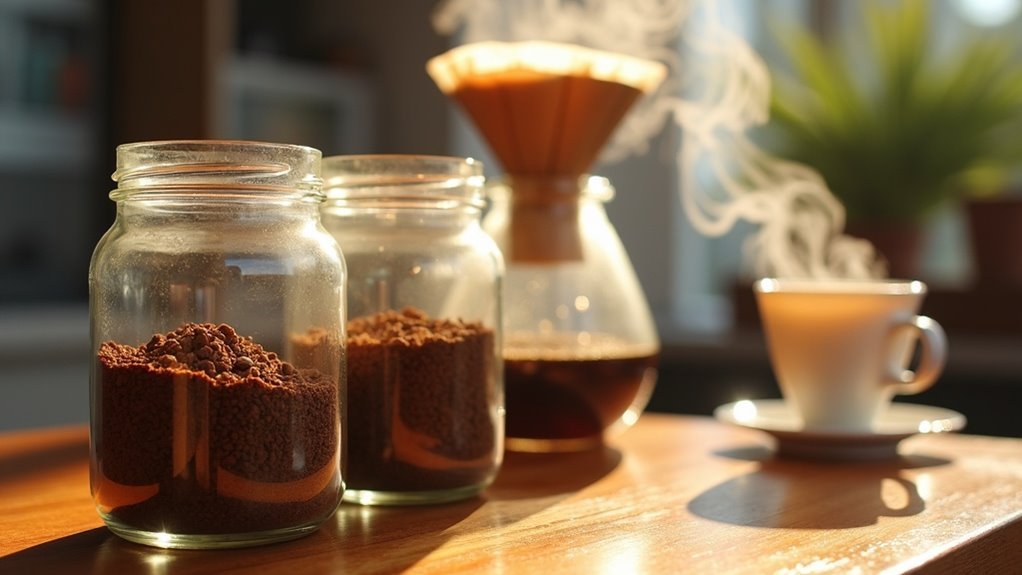
For the perfect pour over coffee, aim for a medium to medium-fine grind, similar to table salt. This grind size enhances extraction, balancing flavor without tipping into sourness or bitterness. If you’re using a Chemex, adjust to a medium-coarse grind due to its thicker filters. Remember, consistency in grind size is key to even extraction, leading to a richer cup. There’s much more to explore about fine-tuning your brew for exceptional results, ensuring you enjoy every sip of your coffee experience.
Key Takeaways
- The ideal grind size for pour over coffee is medium to medium-fine, similar to table salt, for balanced extraction.
- Chemex requires a medium-coarse grind due to its thicker filters, while Hario V60 benefits from a medium-fine grind.
- Consistent grind size ensures even extraction, enhancing flavor balance and overall brew quality.
- Coarser grinds are better for darker roasts to prevent over-extraction, while lighter roasts benefit from medium-fine grinds for brightness.
- Experiment with grind sizes based on brew time to optimize flavor, noting preferences in a tasting journal for refinement.
Understanding Extraction in Pour Over Coffee
Extraction is the key process in making a great cup of pour over coffee, and understanding it can greatly enhance your brewing results.
The relationship between coffee grind sizes and extraction directly affects flavor. If you use a grind that’s too coarse, you risk under-extraction, resulting in sour notes. Conversely, a grind that’s too fine may lead to over-extraction and bitterness.
Aim for a medium-coarse to medium-fine grind, which balances brew time and extraction. Additionally, maintaining a coffee to water ratio of 1:16 guarantees sufficient extraction, allowing your brewing method to shine and delight those you serve with rich, nuanced flavors.
Ideal Grind Size for Pour Over
Getting the grind size right is essential to achieving ideal flavor in your pour over coffee. Typically, a medium to medium-fine grind, similar to table salt, guarantees balanced extraction. If you’re using a Chemex, consider a medium-coarse grind for its thicker filters. For the Hario V60, a medium-fine grind allows for better control over flow rate and extraction time. Remember, adjusting your grind size based on brew time is vital; a coarser grind may be needed if the brew takes too long, while a finer grind speeds things up.
| Grind Size | Suitable Brewing Methods |
|---|---|
| Medium Grind | Standard Pour Over |
| Medium-Fine Grind | Hario V60 |
| Medium-Coarse | Chemex |
The Importance of Grind Consistency
While you might focus primarily on the grind size itself, the consistency of that grind plays an equally important role in your pour over coffee.
A consistent grind size guarantees even extraction, allowing water to flow uniformly through the coffee grounds. This enhances flavor balance and overall brew quality, ensuring that each cup of coffee you serve is delicious and satisfying.
A consistent grind size ensures even extraction, enhancing flavor balance and brew quality for a delicious cup of coffee.
Conversely, variability in grind size can lead to uneven extraction, causing your coffee to taste sour or bitter. Aim for a medium to medium-fine grind, resembling table salt, for optimal results.
Using a burr grinder provides greater control and precision, improving extraction efficiency and preventing clogging. This attention to grind consistency ultimately creates a more enjoyable coffee experience for you and your guests, making every sip a delight.
Experimenting With Different Coffee Beans
As you dive into the rich world of coffee, experimenting with different beans can reveal a delightful range of flavors that may surprise you.
The grind size you choose plays a crucial role in flavor extraction and brewing time. For example, using a coarser grind for darker roasts helps prevent over-extraction and enhances their natural sweetness. On the other hand, lighter roasts benefit from a medium-fine grind, which brings out their distinctive brightness.
Keeping a tasting journal is vital to track your preferences and refine your brewing technique.
- Explore various coffee beans to discover nuanced flavors.
- Adjust your grind size to optimize brewing time and taste.
- Document your findings to perfect your coffee-making skills.
Coffee to Water Ratio for Pour Over
Finding the right coffee to water ratio is essential for brewing the perfect pour over. The ideal ratio typically hovers around 1:16, which means you should use 55 grams of coffee for every liter of water.
For a standard two-cup serving with a V60, target approximately 36 grams of coffee and 600 grams of water. Consistency in measurements is crucial—utilizing a digital scale enhances accuracy and ensures optimal flavor extraction.
Experimenting with the coffee to water ratio can significantly influence your brew’s strength and flavor, allowing you to customize the experience for your guests while taking into account grind size and grounds.
Adjusting Grind Size for Personal Preference
After establishing the right coffee to water ratio, adjusting your grind size becomes a key factor in tailoring your pour-over coffee experience.
Your personal preferences can greatly influence this adjustment, so consider:
- A medium-fine grind typically balances extraction time and flavor profile for a well-rounded cup.
- Darker roasts might benefit from a coarser grind to prevent bitterness, while lighter roasts may shine with a finer grind, highlighting their intricate flavors.
- Consistently taste-test various grind sizes to discover unique flavors, starting with medium and making small tweaks to find your ideal brew.
This approach allows you to customize your coffee experience, ensuring each cup is perfectly suited to your taste.