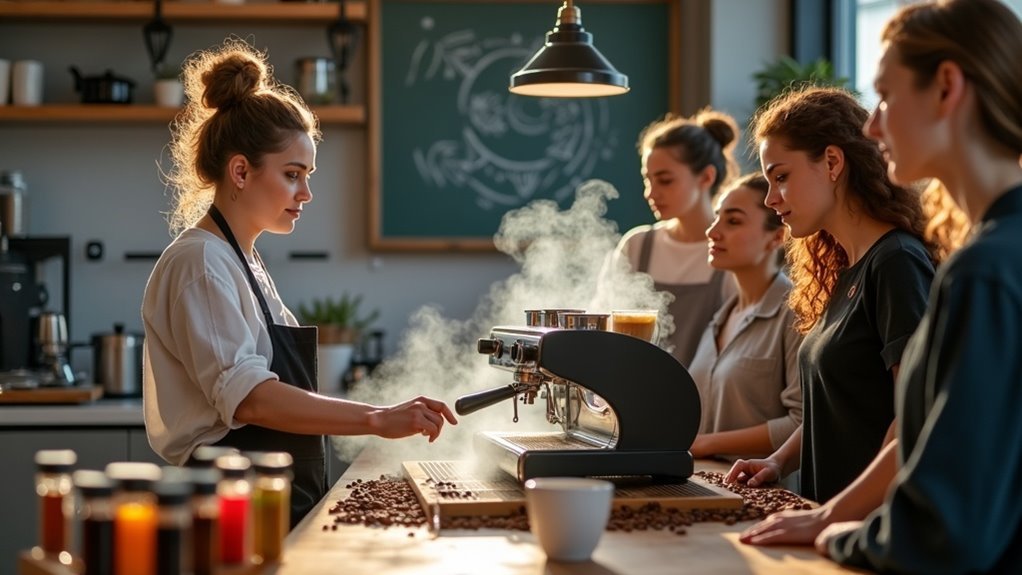
To train baristas effectively, blend hands-on experience with essential coffee knowledge. Start by mastering espresso preparation, customer service, and equipment maintenance. Use role-play to improve communication and multitasking skills. Create a structured training program that includes shadowing and regular feedback. Incorporate timed exercises to boost efficiency under pressure and foster a supportive learning environment. As you implement these strategies, you’ll set your baristas up for success and enhance the customer experience with quality coffee. There’s so much more to explore in the world of coffee!
Key Takeaways
- Create a comprehensive training manual that outlines the essential responsibilities of baristas, effective coffee preparation techniques, and expectations for customer service to provide clear guidance in the coffee shop environment.
- Incorporate hands-on practice and roleplay exercises to refine technical skills and enhance customer interactions, mimicking real-world coffee shop scenarios to prepare baristas for the daily hustle.
- Conduct regular assessments to monitor progress, offering constructive feedback and encouraging self-reflection among baristas to promote continuous improvement in their coffee-making skills.
- Promote teamwork through partner runs and communication exercises, fostering a supportive community that encourages collaborative growth and skill development among baristas.
- Encourage baristas to take part in workshops and coffee competitions to stay informed about the latest industry trends and inspire adaptability and resilience in their craft.
Understanding Barista Responsibilities
As a barista, you play an essential role in the coffee shop experience, blending artistry with technical skill. Your responsibilities include mastering barista skills, from espresso preparation to customer service.
You’ll start each shift by setting up espresso machines, flushing out debris, and adjusting grind sizes for peak flavor. Interacting with customers is crucial; you take their orders and share your knowledge of coffee and menu items, ensuring a memorable experience.
Maintaining equipment hygiene and restocking coffee supplies keeps the shop running smoothly. Embrace these responsibilities, and you’ll not only serve coffee but also create connections with every cup you pour.
Essential Barista Skills
To thrive as a barista, mastering essential coffee skills is key to delivering an exceptional coffee experience.
Start by getting comfortable with espresso machines and other coffee-making apparatus like Aeropress and French presses, ensuring accuracy in every brew.
Getting familiar with espresso machines and brewing devices is essential for precision in every cup.
Effective communication allows you to engage with coffee lovers and understand their preferences.
Knowledge of health and safety standards keeps your cafe clean and compliant.
Explore coffee history and sensory analysis to provide expert recommendations tailored to various coffee types.
Finally, perfecting your Latte Art techniques adds a visual flair to your drinks, elevating the overall coffee experience for customers and making your service truly memorable.
Training Approaches for New Baristas
When you’re training new baristas, it’s essential to recognize that everyone learns differently, so a blend of hands-on practice and theoretical knowledge about coffee can greatly enhance their skills.
Utilize training labs to simulate real-world coffee-making scenarios, giving them practical experience and confidence in crafting beverages.
Incorporate roleplay activities to practice communication skills and multitasking in a controlled setting, preparing them for busy shifts at the coffee shop.
Timed trials can motivate baristas and assess their efficiency in brewing and serving, making training engaging.
Finally, provide regular feedback and supportive communication about their coffee knowledge and techniques. This helps them overcome challenges and build resilience, ensuring they’re well-prepared to serve customers with excellence in every cup.
Practical Training Techniques
When it comes to practical training techniques for coffee baristas, it’s essential to create experiences that mirror real-world coffee shop scenarios.
Incorporating timed skill assessments, roleplay, and instant replay can sharpen your baristas’ abilities in crafting the perfect espresso and steaming milk, while boosting their confidence.
These methods not only enhance their coffee-making skills but also prepare them for the fast-paced environment they’ll encounter in a bustling café setting.
Simulated Real-World Scenarios
How can you effectively prepare baristas for the challenges of a bustling café environment? Simulated real-world scenarios are key. Set up training labs that mimic busy service environments, allowing baristas to practice behind the espresso machine under pressure. Roleplay exercises enhance communication skills, while partner runs build teamwork. Remember, it’s important to conduct instant replay sessions, allowing trainees to review their performance and identify areas for improvement.
| Scenario Type | Skill Developed | Benefit |
|---|---|---|
| Busy service lab | Multitasking | Prepares for peak hours |
| Roleplay exercises | Customer interaction | Builds problem-solving skills |
| Partner runs | Team coordination | Enhances communication |
This approach ensures that baristas are well-equipped to handle the dynamic and fast-paced nature of café service, maintaining quality and customer satisfaction.
Timed Skill Assessments
To truly thrive in a fast-paced café environment, baristas must hone their skills under pressure, and timed skill assessments provide the perfect opportunity for this.
These assessments simulate busy service hours, encouraging quicker decision-making and execution. By challenging yourself to make multiple coffee drinks within a set timeframe, you not only assess your skill level but also inject some fun into training.
Regular practice builds muscle memory, boosting your confidence and efficiency in coffee preparation. Incorporating games during these sessions fosters camaraderie among your team, creating a supportive learning atmosphere that enhances everyone’s journey toward becoming a professional barista.
Roleplay and Instant Replay
Building on the skills developed through timed assessments, roleplay and instant replay techniques take coffee training to the next level.
Roleplay allows you to simulate real-world scenarios in a café, enhancing your ability to handle customer interactions under pressure while serving coffee. Practicing during peak hours boosts your confidence and efficiency in a bustling coffee shop environment.
Instant replay sessions help you observe your barista performance, providing constructive feedback to reinforce learning and identify areas for improvement in brewing techniques and customer service.
Partner runs during roleplay exercises foster teamwork and communication skills, essential for a seamless workflow in delivering exceptional coffee experiences.
Structuring a Barista Training Program
Creating an effective barista training program requires a thoughtful approach that balances structure with flexibility, especially in a coffee-centric environment.
Start by developing a clear barista training manual that outlines expectations and responsibilities related to coffee knowledge and preparation. Implement structured onboarding with shadowing opportunities for hands-on experience with various coffee brewing methods.
Consider these key elements:
- Customizable training programs tailored to different café concepts and coffee offerings
- A mix of training techniques such as roleplay scenarios and timed trials to enhance coffee-making skills
- Regular assessments to track progress on coffee preparation and customer service
- Constructive feedback to boost confidence in coffee knowledge and skills
- Incorporation of online barista training resources from industry professionals to deepen understanding of coffee origins and brewing techniques
This approach fosters an environment where new baristas can thrive and provide exceptional coffee service.
Supporting Baristas Through Their Learning Journey
As you support baristas through their coffee-making journey, fostering an atmosphere of encouragement and collaboration is essential. Providing emotional support from peers boosts their confidence in handling customer service pressures. Incorporate diverse training methods like roleplay in customer interactions and hands-on practice with coffee brewing techniques to cater to different learning styles. Regular feedback loops on their coffee creations help baristas recognize their progress and areas for improvement, fostering a growth mindset. Create a safe environment for mistakes, allowing them to learn without fear. Emphasizing optimism and resilience will help baristas navigate challenges in the coffee industry and develop essential soft skills.
| Training Methods | Benefits |
|---|---|
| Roleplay | Builds confidence in customer scenarios |
| Hands-on Practice | Engages different learning styles with coffee-making |
| Feedback Loops | Encourages continuous improvement in skills |