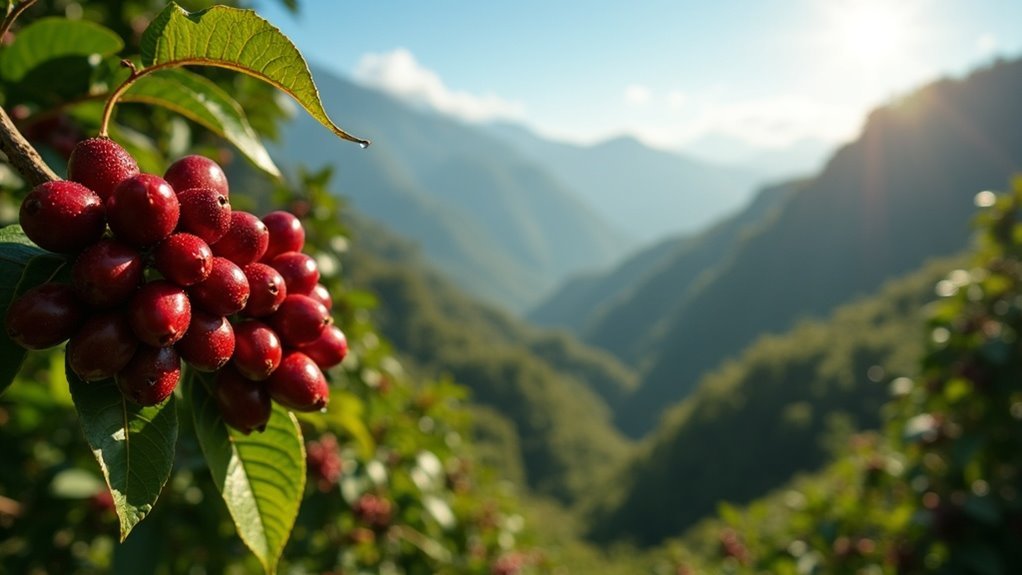
Biodynamic coffee is cultivated through holistic farming practices that focus on enhancing soil health, promoting biodiversity, and establishing ecological balance. This approach uses composting, cover crops, and crop rotation to create self-sufficient ecosystems, setting it apart from conventional methods. By prioritizing ecological relationships, biodynamic coffee not only offers a more sustainable choice but also delivers a richer flavor profile. Curious about how these practices impact the quality of your coffee? There’s plenty more to uncover about the benefits of biodynamic coffee for coffee enthusiasts and the environment alike.
Key Takeaways
- Biodynamic coffee is produced using holistic farming practices that enhance ecological balance and biodiversity within coffee plantations.
- It employs regenerative methods like composting, cover crops, and crop rotation to improve soil health and promote self-sufficient ecosystems.
- This approach focuses on integrating diverse agricultural practices, distinguishing it from traditional organic coffee farming methods.
- Biodynamic coffee offers health benefits, being rich in antioxidants and free from toxins, heavy metals, and mycotoxins.
- Sourced from certified family-run farms, it supports equitable partnerships and meets 100% Demeter certification standards.
Understanding Biodynamic Coffee
As you explore the world of biodynamic coffee, you’ll discover that it’s more than just a beverage; it’s a product of holistic farming practices that seek to harmonize the relationships between plants, animals, soil, and climate.
Biodynamic coffee goes beyond organic coffee by employing regenerative practices that enhance soil health and promote biodiversity. This method integrates cover crops, composting, and crop rotation, creating a self-sufficient ecosystem rather than relying on monoculture.
The Principles of Biodynamic Farming
Biodynamic coffee farming operates on principles that intertwine ecological balance with agricultural productivity, ensuring that every element within the coffee farm ecosystem supports one another.
This holistic approach enhances soil health through practices like cover crops, composting, and crop rotation specifically tailored for coffee cultivation. By focusing on regenerative agriculture, biodynamic methods promote biodiversity and liveliness within coffee plantations, utilizing specific preparations made from manure, herbs, and minerals to enrich the soil.
This regenerative approach enhances soil health and promotes biodiversity through tailored practices like cover crops and composting.
Unlike traditional organic coffee farming, biodynamic coffee farms emphasize diverse, self-sufficient ecosystems rather than monoculture, fostering a healthier environment for coffee growth.
Developed by Rudolf Steiner in the 19th century, these practices have expanded from wine production to encompass coffee farming, offering a sustainable alternative to conventional coffee cultivation methods.
Biodynamic vs. Organic Coffee Practices
When comparing biodynamic and organic coffee practices, you’ll notice significant differences in their holistic farming approaches.
Biodynamic methods emphasize crop diversity and the intricate relationships between soil, plants, and animals, which are crucial for producing high-quality coffee.
In contrast, organic farming may not fully integrate these elements, potentially affecting the overall flavor and quality of the coffee beans.
This focus on ecological health and soil robustness often sets biodynamic coffee apart as a more sustainable and flavorful choice for coffee enthusiasts.
Holistic Farming Approach
While both biodynamic and organic coffee farming aim to promote sustainability, they do so through fundamentally different approaches that can greatly impact the health of the ecosystem crucial for coffee cultivation.
Biodynamic farming employs a holistic approach, integrating plants, animals, and soil to create a self-sufficient ecosystem that enhances coffee production. Unlike organic farms that may rely on specific fertilizers, biodynamic methods enhance soil health through crop diversity, cover cropping, and composting, all of which are vital for growing high-quality coffee.
Crop Diversity Requirements
Understanding the differences in crop diversity requirements between biodynamic and organic coffee farming can illuminate how these practices affect sustainability and ecosystem health in coffee cultivation.
Biodynamic farming prohibits monoculture, mandating the cultivation of diverse coffee varieties and companion crops that enhance soil health and create a regenerative ecosystem.
Unlike organic practices that may rely on specific fertilizers, biodynamic methods integrate all farm components, emphasizing interdependence.
Through cover cropping and crop rotation, coffee farmers can prevent soil nutrient depletion while promoting biodiversity.
Transitioning to biodynamic practices requires thorough assessments of current coffee farming methods, ultimately fostering resilience and ecological sustainability in your coffee-growing endeavors.
Soil Health Focus
Soil health plays a pivotal role in the cultivation of high-quality coffee, and both biodynamic and organic farming methods place significant emphasis on this aspect.
However, their approaches diverge in several key ways. Biodynamic coffee farming adopts a holistic perspective, harmonizing the interplay between plants, animals, and climate to create a self-sustaining ecosystem.
In contrast to organic farming, which may utilize specific fertilizers, biodynamic methods employ distinctive preparations made from manure and herbs to bolster soil vitality.
This dedication to diverse crop cultivation and composting not only supports long-term soil health but also results in nutrient-rich coffee beans that exhibit greater pest resistance.
The Health Benefits of Biodynamic Coffee
If you’re searching for a coffee option that not only satisfies your caffeine cravings but also supports your health, biodynamic coffee might be the answer.
This certified Biodynamic brew offers anti-inflammatory and antioxidant properties, providing health benefits similar to traditional coffee. Rich in polyphenols, it may enhance blood circulation and boost your energy levels.
The regenerative farming practices improve soil health, resulting in more nutritious beans. Additionally, its toxin-free nature supports gut health, ensuring you enjoy a cleaner product free from heavy metals and mycotoxins.
The Environmental Impact of Biodynamic Farming
When you explore biodynamic coffee farming, you’ll notice its profound impact on soil health and biodiversity.
By employing practices like composting and cover cropping, these methods not only restore soil vitality but also enhance the ecosystem surrounding your coffee plants.
Additionally, as you nurture the land, you’ll contribute to carbon sequestration efforts, helping combat climate change while boosting coffee yield and quality.
Soil Health Restoration
Biodynamic farming practices play an essential role in restoring soil health, particularly in coffee cultivation.
These methods, including cover cropping, composting, and crop rotation, enhance nutrient availability and biodiversity within the soil ecosystem, directly benefiting coffee plants.
By focusing on regeneratively grown coffee crops, you improve soil fertility and structure, which leads to better water retention and reduced erosion—key factors for thriving coffee farms.
This holistic approach eliminates harmful chemicals, promoting natural preparations that enrich the soil and boost microbial activity, ultimately resulting in healthier coffee plants.
Your commitment to biodynamic methods supports a balanced relationship among soil, coffee plants, and the surrounding ecosystem, greatly contributing to the restoration of soil health and revitalizing coffee-growing landscapes for future generations.
Biodiversity Enhancement
By integrating diverse coffee varieties and companion crops into a cohesive farming system, you can considerably enhance biodiversity on your coffee farm.
Biodynamic practices foster balanced ecosystems, improving soil health through cover crops and composting specifically tailored for coffee cultivation. This strategy supports a rich variety of plant and animal life, creating a self-sustaining environment beneficial for coffee growth.
By eliminating synthetic chemicals, you promote healthier habitats for beneficial insects, birds, and wildlife that contribute to coffee pollination and pest control, driving higher biodiversity.
Emphasizing regenerative methods, your coffee farm can restore ecosystems, allowing native species to thrive and increasing resilience against climate change.
Ultimately, these efforts contribute to ecological sustainability and a flourishing agricultural landscape that benefits both nature and the coffee community.
Carbon Sequestration Benefits
Carbon sequestration plays an essential role in mitigating climate change, and sustainable coffee farming practices greatly enhance this process.
By improving soil health through better structure and fertility, these methods increase the soil’s capacity for carbon sequestration. Diverse crop rotations and cover crops in coffee plantations create resilient ecosystems that store more carbon.
Additionally, the regenerative approach of sustainable coffee agriculture restores natural balance, leading to significant long-term benefits. Practices like composting and organic farming techniques foster healthier soils that effectively capture carbon.
When you choose coffee from sustainably certified farms, you support strict sustainability guidelines that actively contribute to carbon sequestration efforts for a healthier planet.
Sourcing and Certification Standards
While many coffee sourcing practices focus on sustainability, biodynamic coffee stands out due to its rigorous standards and ethical partnerships.
All biodynamic coffee is sourced exclusively from family-run farms and cooperatives that engage in regenerative, toxin-free agriculture. Each batch is 100% Demeter certified, ensuring a strict commitment to biodynamic farming practices.
This sourcing process emphasizes equitable partnerships with farmers, enhancing community welfare and promoting fair trade. Additionally, comprehensive lab testing guarantees the purity of the coffee, checking for contaminants such as mold and heavy metals.
The Future of Biodynamic Coffee Production
As the demand for cleaner, toxin-free coffee continues to rise, the future of biodynamic coffee production looks promising and transformative.
Expanding the limited biodynamic coffee farms will promote sustainable, ecological farming practices that enhance soil health and biodiversity. As coffee consumers increasingly prioritize health and sustainability, biodynamic coffee could become a preferred choice.
This shift encourages coffee farmers to adopt integrated methods, focusing on the entire ecosystem rather than just single crops. By leveraging regenerative techniques, biodynamic coffee production aims to restore natural balance and sequester carbon emissions, contributing to climate change mitigation.
Partnerships with dedicated coffee farmers will be essential for fostering this movement.