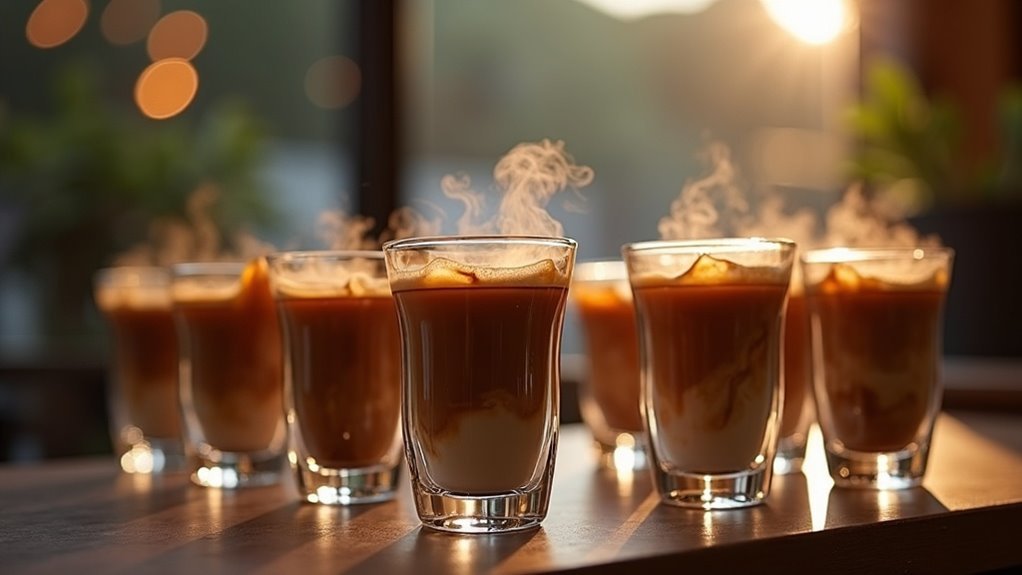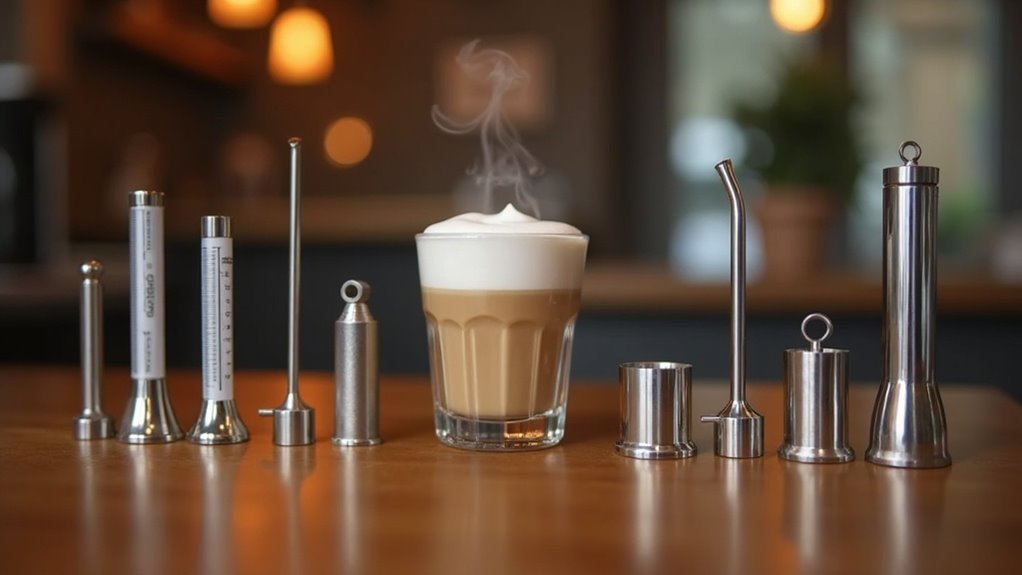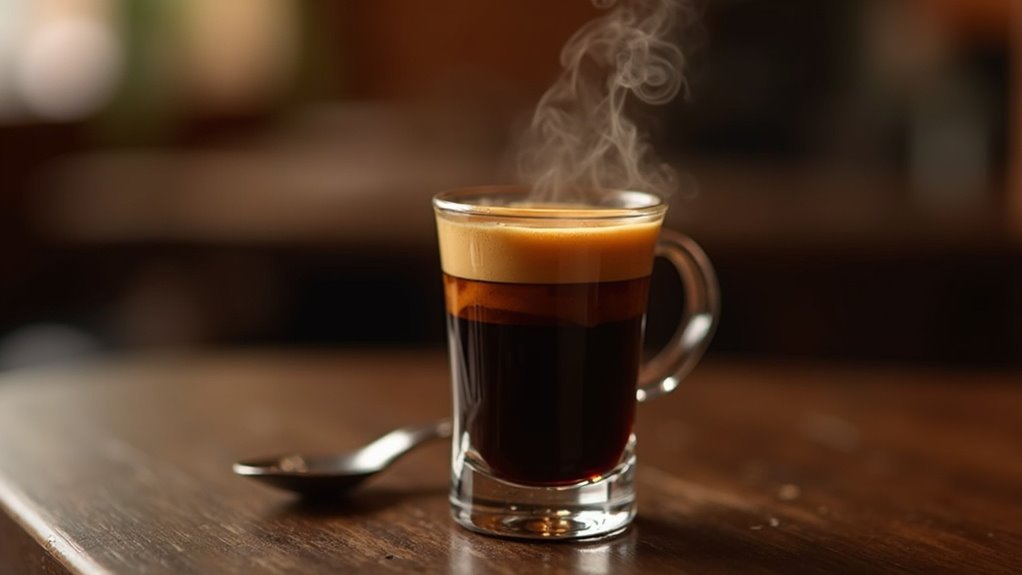
Updosed espresso utilizes 10 to 23 grams of coffee grounds, delivering a bolder flavor and richer crema compared to traditional espresso. This optimized coffee-to-water ratio enhances extraction, resulting in complex flavor notes and a fuller body. With its substantial caffeine boost, updosed espresso is ideal for kickstarting your day with energy. The preparation techniques involve a finer grind and precise tamping to ensure even flavor throughout. If you’re interested in how this unique espresso can be incorporated into various coffee drinks, there’s much more to discover.
Key Takeaways
- Updosed espresso is crafted using 10 to 23 grams of coffee grounds, resulting in a stronger flavor and a richer crema.
- It delivers a bolder taste profile with pronounced chocolate notes that stand out in comparison to regular espresso.
- The increased coffee-to-water ratio enhances flavor intensity and creates a fuller body in the beverage.
- The caffeine content in updosed espresso is significantly elevated, ranging from 80 to 120 mg per double shot.
- This espresso variation can elevate various coffee drinks, such as lattes and macchiatos, offering a more complex flavor experience for coffee enthusiasts.
Understanding Updosed Espresso
When you explore the world of coffee, you’ll discover that updosed espresso stands out as a bold and flavorful option.
This technique involves using 10 to 23 grams of coffee grounds, compared to the standard 7-9 grams for traditional espresso shots. By increasing the coffee-to-water ratio, you achieve greater flavor intensity and a richer experience.
The longer extraction time allows for enhanced flavor nuances, often revealing notes of chocolate with low acidity. With its fuller body and pronounced crema, updosed espresso is perfect for amplifying the flavor profiles of various coffee drinks, delivering a satisfying caffeine kick to your guests.
Differences Between Updosed and Regular Espresso
When comparing updosed espresso to regular espresso, the coffee dosage plays a significant role in shaping their distinct characteristics.
With updosed shots using 10 to 20 grams of coffee grounds, you’ll notice a bolder flavor and a richer crema compared to the standard 7 grams. This increase in dosage not only amplifies the intensity of the flavor but also elevates the overall coffee experience, making it worth exploring for coffee enthusiasts.
Coffee Dosage Comparison
Coffee dosage plays a pivotal role in shaping the flavor and character of espresso, and understanding the differences between updosed espresso and regular shots can elevate your coffee experience. Here’s a quick coffee dosage comparison:
| Type | Coffee Amount (g) | Flavor Profile |
|---|---|---|
| Regular Espresso | 7-9 | Balanced, lighter |
| Updosed Espresso | 10-20 | Rich, fuller-bodied |
| Grind Size | Coarser | Finer for updosed |
| Caffeine Concentration | Lower | Higher in updosed |
| Brewing Time | Shorter | Longer for updosed |
Explore the nuances of coffee and enhance your brewing skills with this insightful dosage comparison!
Flavor Intensity Differences
Understanding the nuances of coffee dosage not only enhances your brewing skills but also highlights the significant flavor intensity differences between updosed and regular espresso.
An updosed shot, using 10 to 20 grams of coffee beans, offers a more concentrated, flavorful experience with a fuller-bodied mouthfeel. The longer brewing time allows for even extraction, bringing out rich flavors while minimizing sharper notes.
You’ll notice a pronounced crema and deeper color, reflecting the intense extraction. With a balance of sweetness and bitterness, updosed espresso elevates your coffee consumption, making it an ideal choice for those seeking high caffeine with complex flavors.
Preparation Techniques for Updosed Espresso
To achieve the rich, intense flavor profile that updosed espresso promises, precise preparation techniques are crucial. You’ll typically use 20-22 grams of finely ground coffee for a double shot, adjusting the grind size to enhance extraction. Tamping pressure should be modified to create an even puck, minimizing channelling. Monitor extraction time carefully; higher doses can lead to over-extraction if not timed correctly. Incorporating pre-infusion can promote even extraction, enriching the flavor complexity.
| Technique | Importance |
|---|---|
| Coffee Dose | Guarantees a stronger flavor |
| Grind Size | Enhances extraction |
| Tamping Pressure | Prevents channelling |
| Extraction Time | Avoids over-extraction |
In the world of coffee, mastering these techniques can elevate your espresso experience to new heights.
Taste Profile and Physical Characteristics
The preparation techniques for updosed espresso play a crucial role in creating its unique taste profile and physical characteristics.
By using 10 to 21 grams of coffee, you achieve a richer, fuller-bodied flavor thanks to the higher concentration of coffee solids. This results in a thicker texture and pronounced crema, which enhances the overall mouthfeel.
With a higher coffee-to-water ratio, the espresso exhibits a dark color and complex aroma, often showcasing delightful notes of chocolate and caramel.
The increased caffeine content also contributes to a well-balanced flavor, merging sweetness with bitterness, while delivering a larger volume of 1.5 to 2 oz without compromising intensity.
Health and Nutritional Aspects
When you savor an updosed espresso, you’re indulging in a coffee beverage that boasts higher caffeine content, providing a robust energy boost.
This intensity not only amplifies your coffee experience but also offers potential health benefits, such as a reduced risk of certain diseases.
However, it’s crucial to monitor your caffeine intake to prevent undesirable side effects like anxiety or insomnia.
Caffeine Content Considerations
While updosed espresso provides a strong caffeine boost, it’s important to consider its health and nutritional effects. For coffee enthusiasts, understanding caffeine intake is crucial. A double shot of updosed espresso typically contains between 80-120 mg of caffeine, which is significantly higher than the 63 mg found in a standard shot. Consuming too much caffeine may result in increased anxiety and elevated heart rates, so moderation is essential. Here are some key details to keep in mind:
| Type | Coffee Amount (g) | Caffeine Content (mg) |
|---|---|---|
| Standard Espresso | 14 | 63 |
| Updosed Espresso | 18-22 | 80-120 |
Be mindful of your caffeine choices!
Potential Health Benefits
Considering the potential health benefits of updosed espresso can enhance your coffee experience beyond just a caffeine boost.
With a higher concentration of caffeine, each espresso shot may increase alertness while offering antioxidants that combat oxidative stress. Moderate consumption can reduce risks of type 2 diabetes, liver disease, and Parkinson’s disease, making it a smart choice for health-conscious coffee lovers.
Plus, the low-calorie nature of espresso is appealing for those monitoring calorie intake. Just remember, enjoying updosed espresso in moderation is key to reaping these health benefits without the discomfort of excessive caffeine.
Your coffee ritual can truly serve your well-being!
Updosed Espresso in Different Coffee Drinks
As you explore the world of coffee drinks, you’ll find that updosed espresso considerably enhances flavor profiles across a variety of beverages.
By using extra shots of espresso, you’ll create lattes and cappuccinos with a stronger coffee presence that balances beautifully with milk.
Extra shots of espresso elevate lattes and cappuccinos, enhancing their coffee richness and perfectly balancing with creamy milk.
In americanos, updosed espresso offers a robust flavor, enriching the experience through a higher coffee-to-water ratio.
For macchiatos, it amplifies sweetness and complexity, intensifying each sip.
Specialty coffee shops often feature updosed espresso in caramel macchiatos, providing a stronger coffee flavor that complements sweetness.
At many coffee establishments, you can customize your drink with extra coffee in the basket for an intensified experience.