You might think of the caffè latte as a modern creation, but its popularization is credited to Lino Meiorin in the 1950s at Caffè Mediterraneum in Berkeley. He adapted traditional recipes to create a creamier drink that transformed coffee culture in the U.S. The rise of espresso machines and the art of frothing milk played essential roles in its evolution. By exploring this topic further, you’ll discover how latte variations and art have shaped today’s vibrant coffee scene, showcasing the endless possibilities within the world of coffee.
Key Takeaways
- The term “caffè latte” first appeared in English in 1867, inspired by Italian coffee traditions that celebrate the blend of espresso and steamed milk.
- Lino Meiorin is credited with popularizing the modern caffè latte in the 1950s at Caffè Mediterraneum in Berkeley, California, where coffee enthusiasts sought a creamier beverage.
- Meiorin adapted the traditional cappuccino recipe to create a latte experience that emphasizes smoothness, serving it in wide-mouthed containers to enhance enjoyment.
- The introduction of espresso machines in the late 19th century revolutionized coffee preparation, paving the way for the latte’s evolution into a beloved café staple.
- The 1980s marked a surge in latte popularity, coinciding with the rise of latte art, which became a defining aspect of U.S. coffee culture and elevated the coffee experience.
The Origins of the Latte
While many enjoy a latte today as a comforting café staple, its origins reveal a rich history that dates back centuries.
The term “caffè latte” first appeared in English through William Dean Howells in 1867, inspired by his experiences in Italy. Initially, coffee and milk were blended in 17th-century Europe, well before espresso machines came into play.
The term “caffè latte” emerged in 1867, reflecting a rich tradition of blending coffee and milk that began centuries earlier.
The modern caffè latte took shape in the 20th century with the advent of steam wands for frothing milk. The drink gained immense popularity in the U.S. during the 1980s, especially in Seattle, thanks in part to Lino Meiorin’s influential standardization.
Today, the latte continues to be a beloved choice for coffee lovers around the world, showcasing the enduring appeal of this delightful combination of espresso and steamed milk.
Lino Meiorin and the Birth of the Caffè Latte
Lino Meiorin revolutionized the coffee scene in the 1950s by standardizing the caffè latte at Caffè Mediterraneum in Berkeley, California. His innovation transformed traditional cappuccino into a larger, milkier drink, catering to American coffee preferences.
- Adapted cappuccino recipe for a creamier experience
- Served in wide-mouthed containers, enhancing the drinking experience
- Paved the way for the emergence of latte art, adding an aesthetic element to coffee
- Coincided with the rise of espresso-based drinks, further popularizing coffee culture in the U.S.
The Evolution of Coffee Culture
The evolution of coffee culture has roots that stretch back centuries, with significant milestones shaping how people enjoy this beloved beverage today.
In the 17th century, the combination of coffee and milk marked the early forms of the latte, a precursor to the diverse coffee drinks we savor today.
The introduction of the espresso machine in the late 19th century revolutionized coffee preparation, paving the way for the rich variety of modern coffee beverages.
Lino Meiorin popularized the caffè latte in the 1950s, which greatly influenced coffee culture in the U.S.
The 1980s surge in latte popularity, especially in Seattle, saw the rise of latte art, enhancing the visual appeal and solidifying the latte’s esteemed status within the coffee community.
Latte Variations and Global Influence
As coffee enthusiasts explore new flavors and combinations, latte variations have emerged as a demonstration of the beverage’s versatility and global appeal.
Consider these exciting options:
- Flavored lattes like pumpkin spice, showcasing the trend towards customization in coffee drinks.
- Unique ingredients such as chai and matcha, which enhance and diversify taste profiles.
- Alternative milks including soy, oat, and almond, catering to various dietary preferences.
- Global adaptations like café au lait in France, highlighting the cultural influence on coffee preparation.
The influence of social media has further popularized these variations, encouraging espresso lovers to experiment beyond the classic steamed milk latte.
This proves that there’s a perfect cup for everyone.
The Impact of Latte Art on Coffee Trends
While many enjoy a well-crafted latte for its flavor, the artistry involved in creating intricate designs on the surface has become a significant factor in coffee culture.
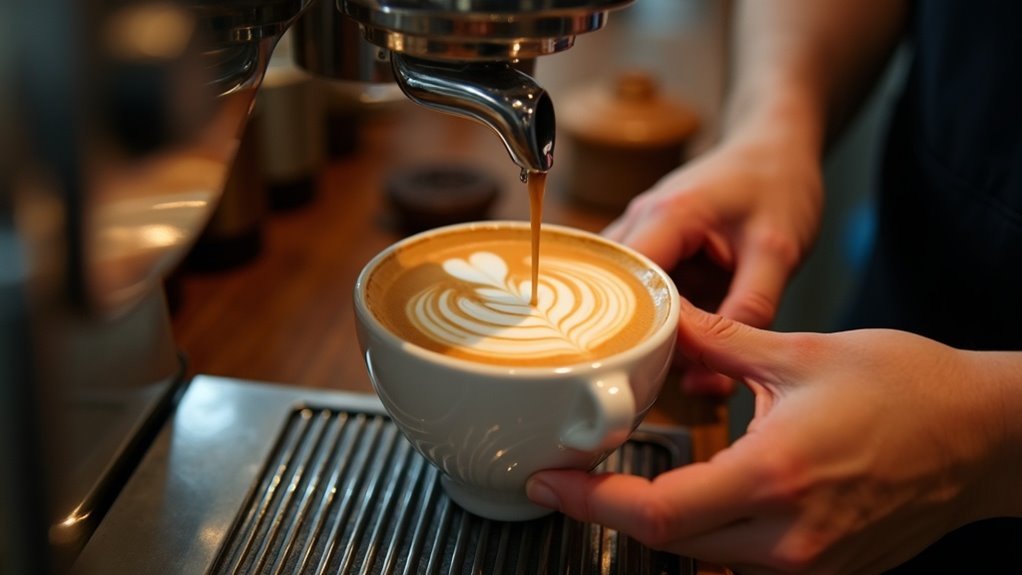
Latte art, utilizing steamed milk, enhances the visual appeal of each beverage, attracting attention on social media. Popular designs, like hearts and rosettas, encourage customers to share their experiences online, driving interest in specialty coffee.
Latte art captivates with its visual beauty, sparking social media buzz and elevating the specialty coffee experience.
Coffee shops that prioritize this innovation often appeal to a younger demographic, resulting in higher sales and consumer engagement.
Ultimately, latte art not only beautifies coffee but also shapes trends and fosters a vibrant coffee community, enhancing the overall coffee experience for enthusiasts and casual drinkers alike.